
Heavy Frost Buildup in the Freezer
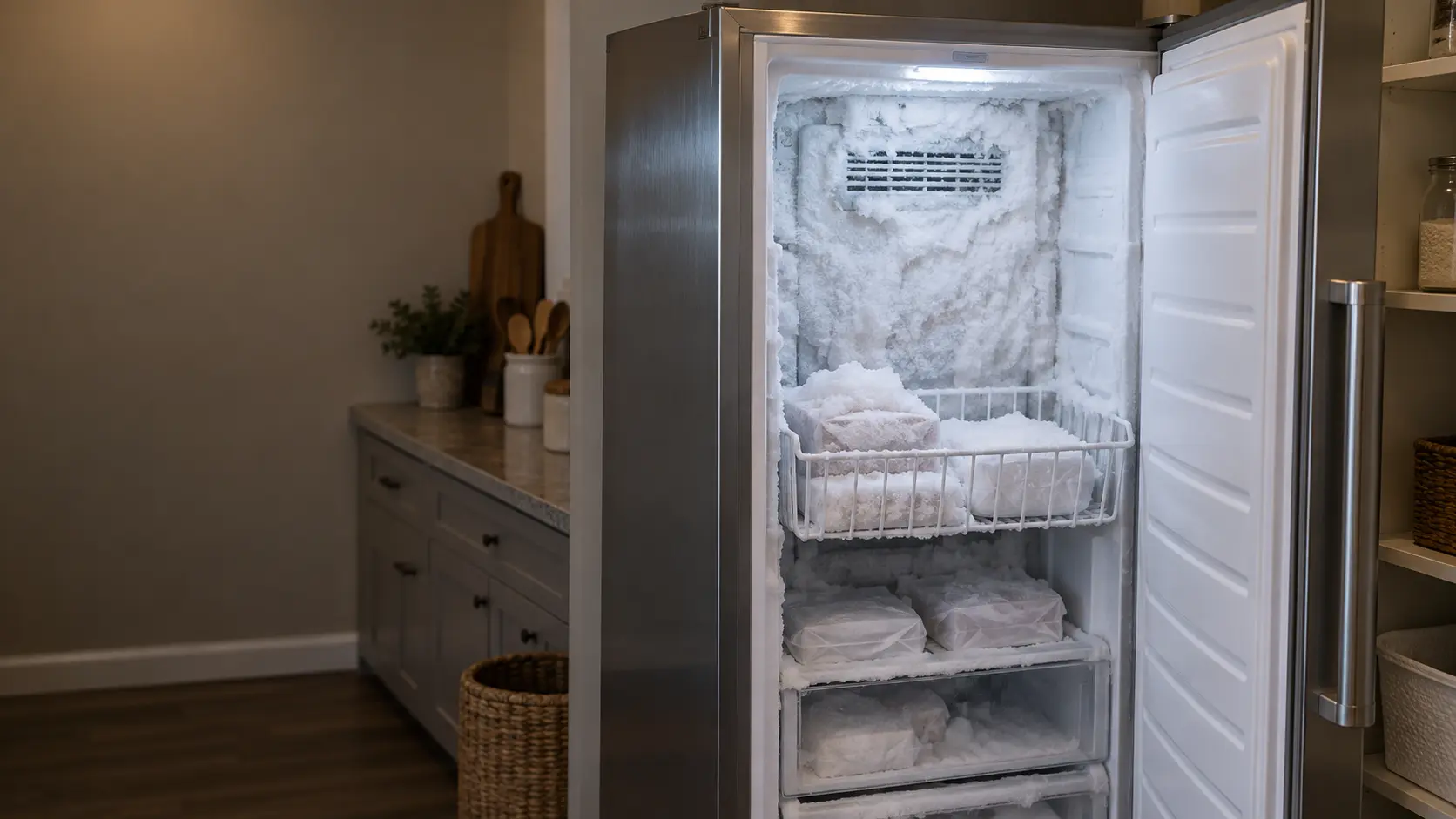
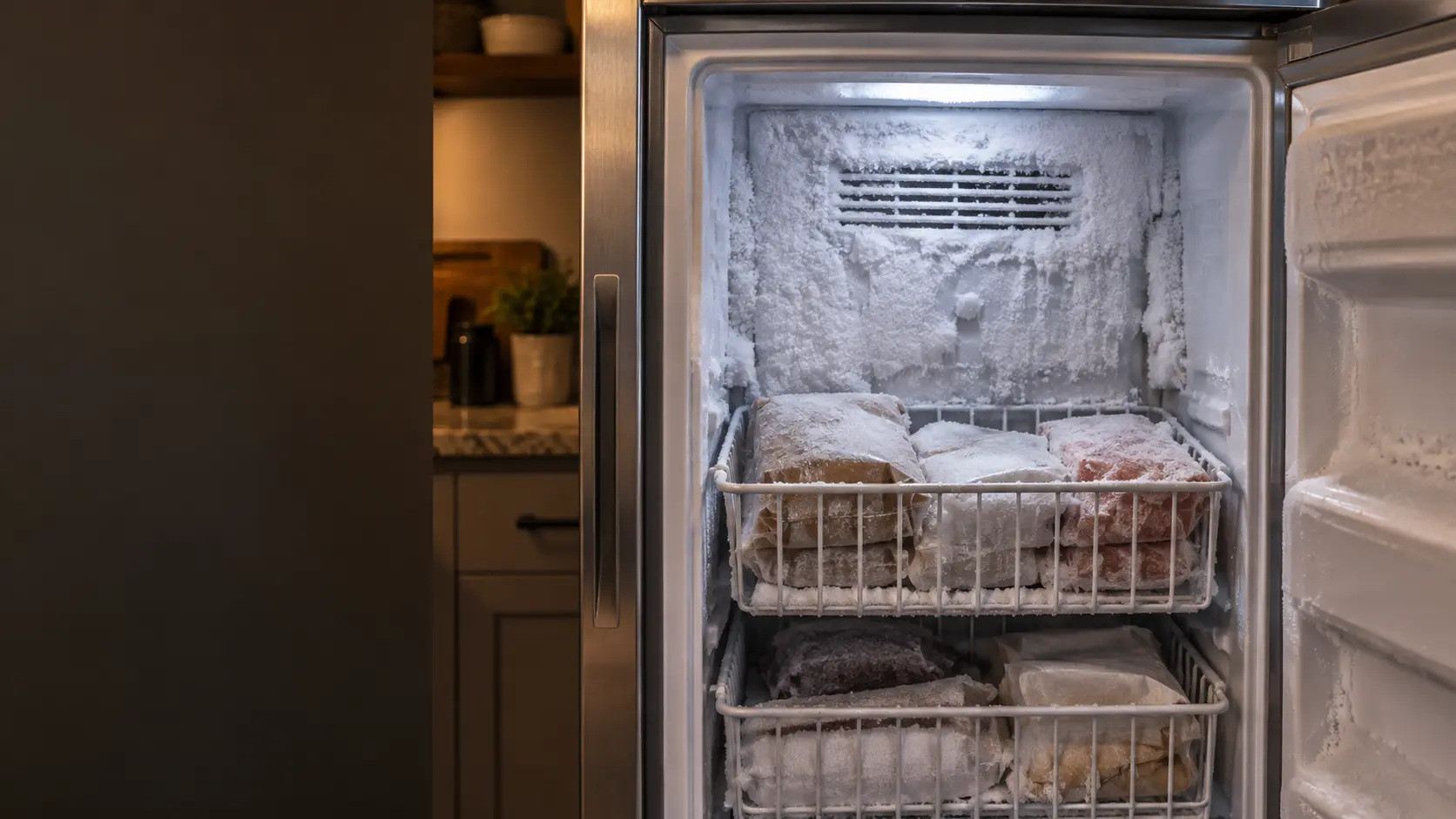
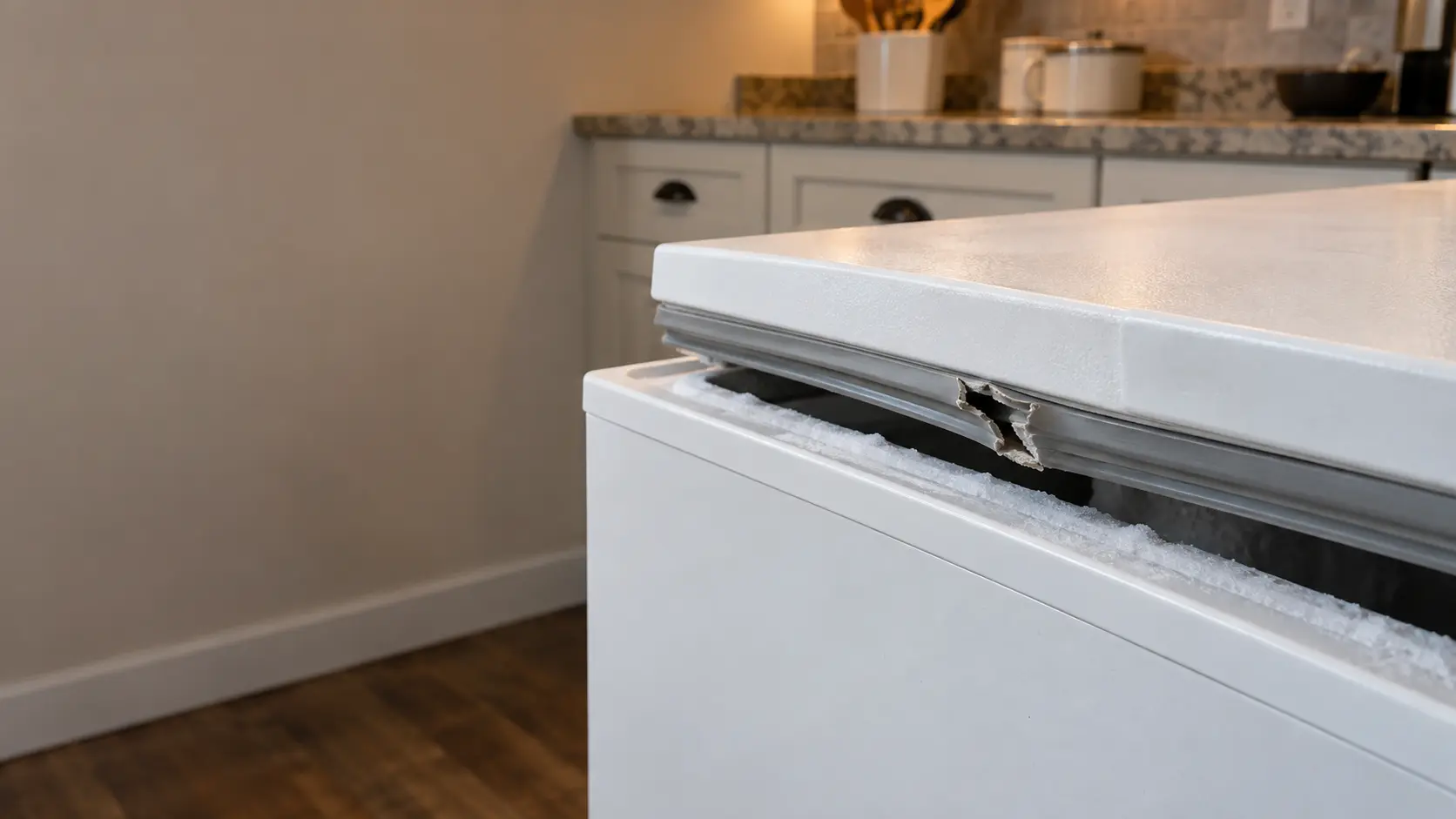
Frost buildup in the freezer: snow on packages, a white coat over the rear panel or the vents, frost around the door edge, and baskets that start to stick, on a model that is supposed to defrost itself.
Mon–Sat, 8am–8pm
- 5 checks before you book
- 5 questions that narrow it
- 5 causes, cheapest first
Book a visit
Three short steps, about a minute.
or call (844) 456-4651
Loading appointment form…
The appointment form couldn’t load. Please try again.
What it
usually means.
A frost-free upright, column or drawer melts its hidden coil on a schedule and drains the water away, so frost you can see inside the cabinet means either too much moist air is getting in or the melt is not happening. Fluffy frost on the packages and the front of the shelves usually comes from outside air: a door that does not seal or gets opened often, or food stored warm and uncovered. A solid layer on the back wall, especially behind the vent, points to the defrost system. A frozen drain adds a third pattern, with a sheet of ice on the floor of the cabinet. On a manual-defrost chest model, frost is normal and has its own page.
 The 5 causes, cheapest first
Answer these first
Where is the frost: on the packages, on the back panel, around the door edge or on the cabinet floor?
Is it light and fluffy, or hard and glassy?
Does your model say frost-free or automatic defrost, or is it manual?
How often is the door opened, and is anything stored uncovered or still warm?
Is the cabinet still holding 0°F, or starting to warm?
Check these
before you book.
Frost buildup in the freezer: 5 checks, and none of them costs anything.
Note where the frost sits, on the packages, the back wall, the door edge or the floor of the cabinet, and whether it is soft or hard.
Close a sheet of paper in the door at several points and pull it; if it slides out easily, the seal needs attention.
Check that nothing sticks out from a shelf or a basket and holds the door slightly open.
Also worth checking
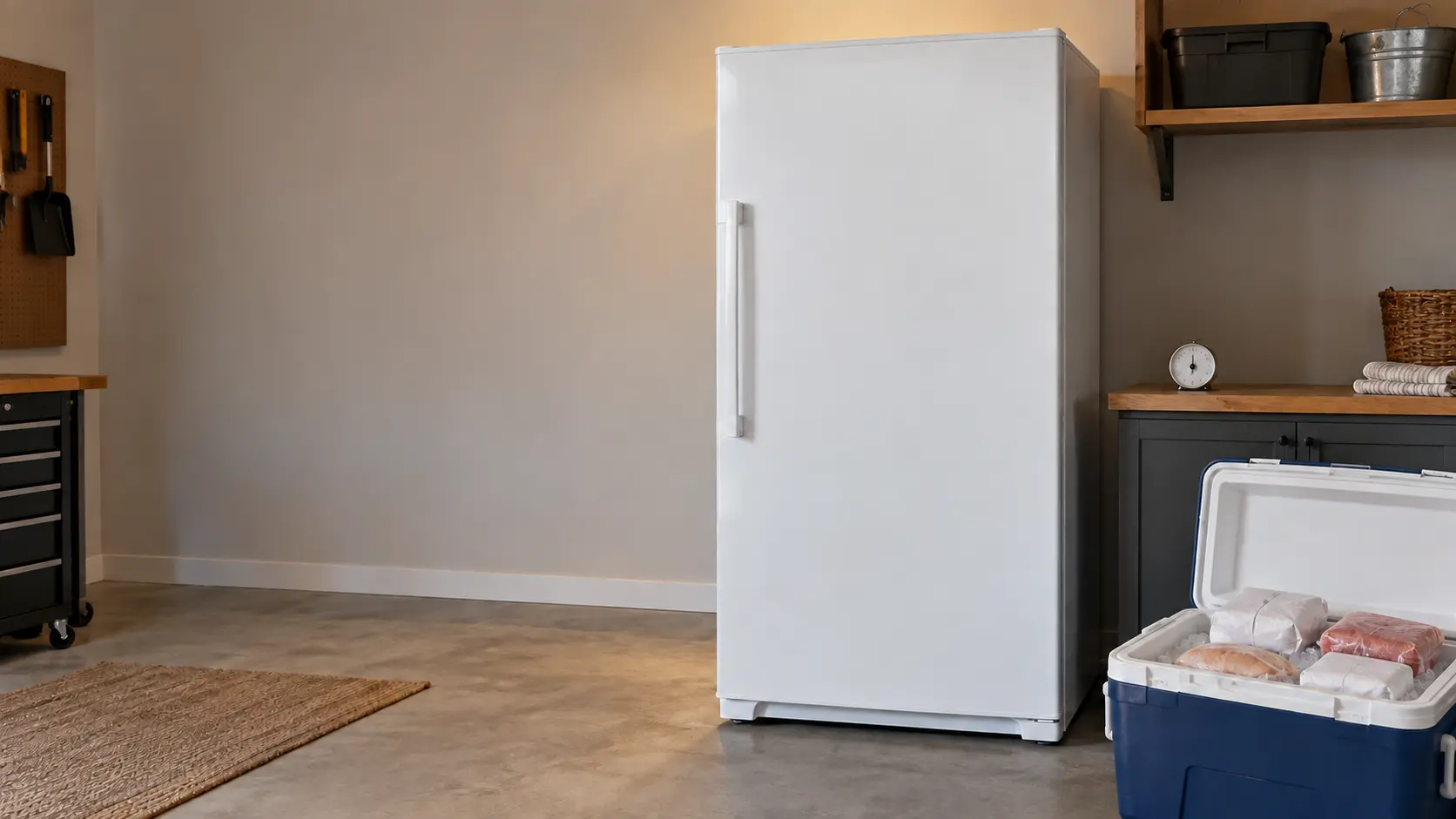
- Keep a thermometer in the cabinet; if it climbs above 10°F, move food to a working freezer or a cooler with ice.
- Tell us the model number and whether it is frost-free when you book.
How soon does it need a visit?
Frost is not urgent while the cabinet stays at 0°F. It becomes urgent when the thermometer starts climbing, because a coil sealed in ice stops cooling within days; book a visit before that happens.
The causes,
cheapest first.
5 things heavy frost buildup in the freezer turns out to be, from door opened often or stored food uncovered to drain frozen under the coil.
The cost guide-
01 no repair
Door opened often or stored food uncovered
Moist air from the room turns into frost on the coldest surface. Covering food, letting it cool first and fewer long openings reduce it.
-
02 low
Door gasket not sealing
A seal that is torn, flattened or folded lets humid air in all day. Frost gathers first around the door edge and near the gap.
-
03 low to moderate
Defrost heater or defrost thermostat failed
Without heat on schedule, frost on the coil turns to a solid block behind the panel, and frost spreads into the cabinet around the vent.
-
04 low to moderate
Defrost timer or board not starting the cycle
The heater is fine but nothing tells it to run. The coil ices over in the same way, often more evenly.
-
05 low
Drain frozen under the coil
Melt water that cannot leave refreezes on the floor of the cabinet as a sheet of ice under the bottom basket.
-
What it costs
Every repair on the site's cost scale, side by side
Open the cost guide
What else
it could be.
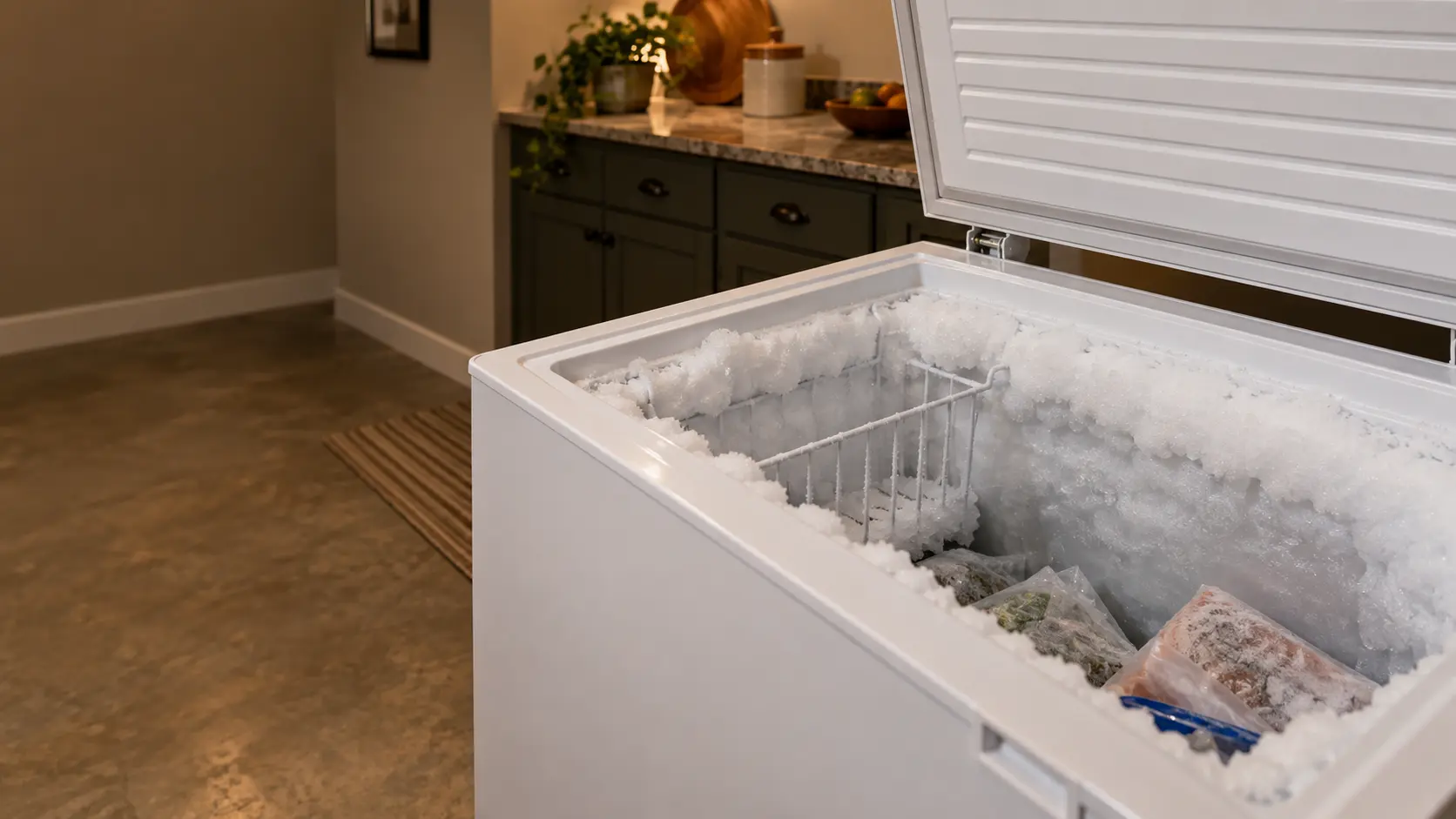
Most often confused with chest freezer ice on the walls, then freezer door or lid not sealing.
All problemsCodes that come with it
Door Unit OPENBertazzoni · Mode, not a failureDoor AlarmDacor · Mode, not a failureF2Fisher & Paykel · Defrost systemF42Fisher & Paykel · Defrost systemDoor Unit OPENFulgor Milano · Mode, not a failureDoor alarmGaggenau · Mode, not a failure
Also related
The makes
it happens on.
28 makes on this site; heavy frost buildup in the freezer can show up on any of them. Each mark opens that make's own page.
All 28 brandsHeavy Frost Buildup in the Freezer,
where we come out.
9 metros, each with its own page.
All service areasTampa BayFL · 31 areas
Miami / South FloridaFL · 47 areas
New York MetroNY · 75 areas
HoustonTX · 36 areas
ChicagoIL · 50 areas
Los AngelesCA · 95 areas
San DiegoCA · 31 areas

Questions about
heavy frost buildup in the freezer.
Can I defrost a frost-free model by hand to buy time?
Is it safe to scrape or heat the frost away?
Why is there frost only around the door edge?
Is a little frost normal on a frost-free model?
Back to your everyday
Still seeing heavy frost buildup in the freezer?
Book with what you checked above — 5 answers save the technician the first part of the visit.