
Chest Freezer Ice on the Walls
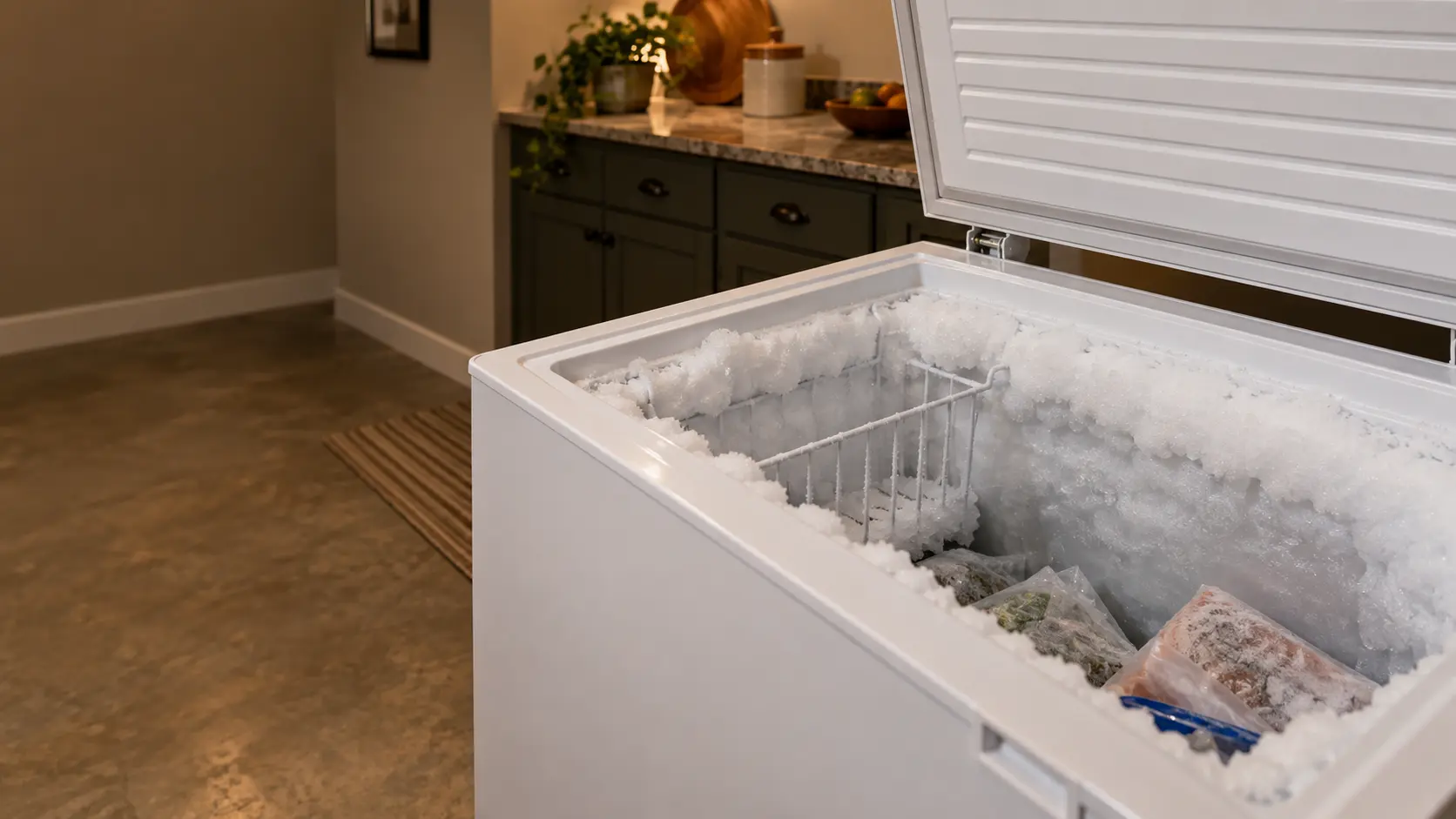
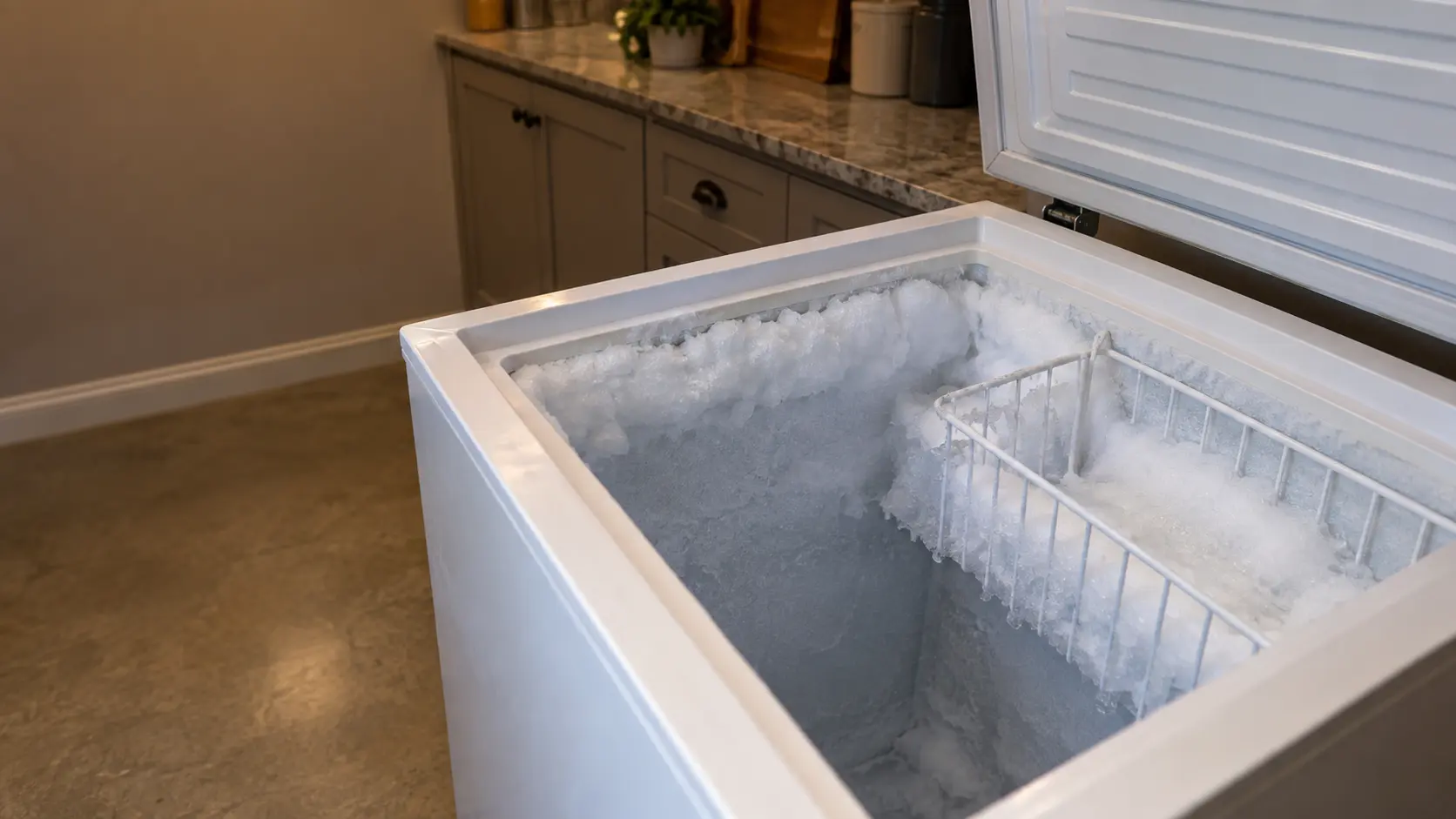
Chest freezer ice on walls grows from a thin rime to a thick band that steals space, traps the baskets and keeps the lid from dropping flat.
Mon–Sat, 8am–8pm
- 5 checks before you book
- 5 questions that narrow it
- 5 causes, cheapest first
Book a visit
Three short steps, about a minute.
or call (844) 456-4651
Loading appointment form…
The appointment form couldn’t load. Please try again.
What it
usually means.
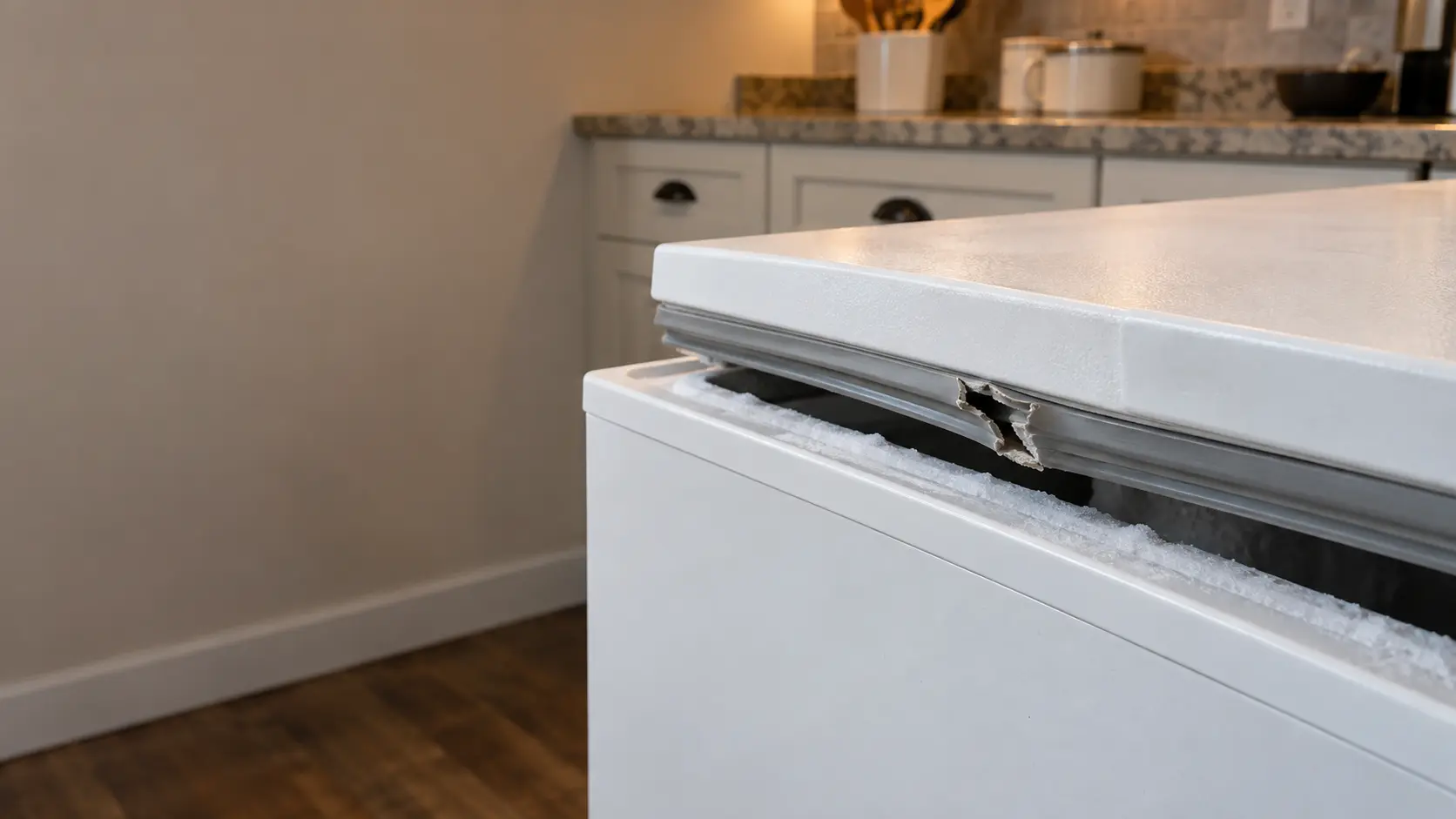
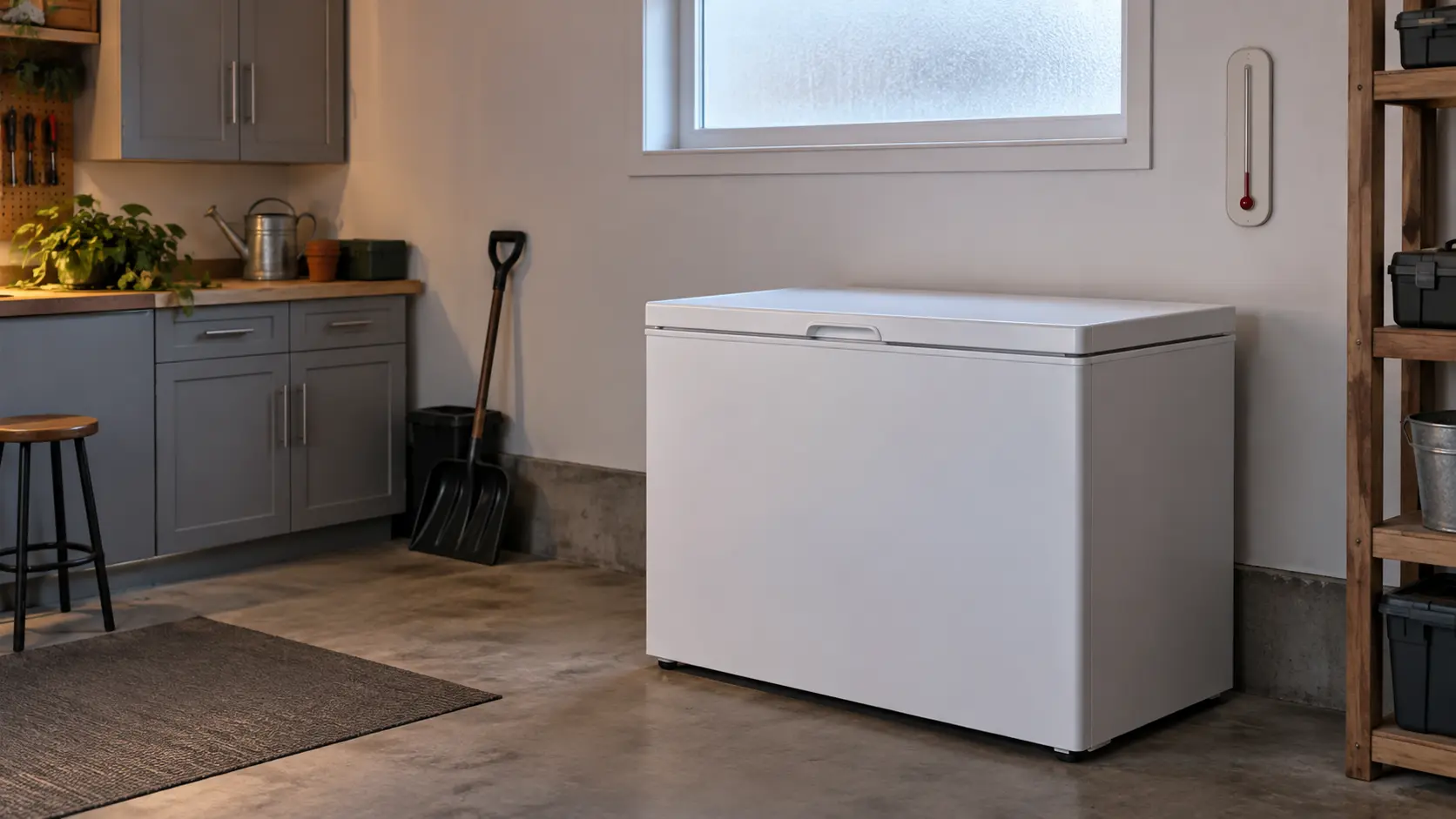
Most chest freezers have no defrost system at all. Their cooling tubes run inside the walls, and every time the lid opens, moist air meets those cold walls and leaves a little frost behind. Over months that frost becomes ice, and the owner removes it by hand: that is the design, not a failure. The questions this page answers are two. Is the ice growing faster than it should, which usually means a lid that does not seal, a unit that sits in a humid room, or a lid lifted often? And is the ice in a pattern that points to trouble, such as a heavy band only near the lid, where air is leaking in? A chest model with ice building quickly around the top edge often needs a gasket or a hinge, not a new appliance.
 The 5 causes, cheapest first
Answer these first
How thick is the ice, and how long since the last full defrost?
Is the ice even around the walls, or heaviest near the top edge and one corner?
Does the lid drop fully closed on its own, and does it rest flat on the seal all around?
Is the freezer in a humid basement, a garage or a laundry room?
Is the cabinet still reaching 0°F?
Check these
before you book.
Chest freezer ice on walls: 5 checks, and none of them costs anything.
Before defrosting, move the food to a working freezer or a cooler packed with ice, and keep that cooler closed.
Unplug the freezer, open the lid, set towels and a shallow pan on the floor, and let the ice soften; a bowl of hot water inside speeds it up.
Lift away loose sheets of ice by hand or with a plastic scraper; never chip at the walls with a knife, a screwdriver or an ice pick.
Also worth checking
- Close the lid on a sheet of paper at several points along the edge and pull; wherever it slides out freely, the seal is not gripping.
- Check that the drain plug inside the cabinet is in place before restarting, and wait until it reaches 0°F before reloading the food.
How soon does it need a visit?
Ice on the walls of a chest model is a maintenance job, not an emergency. It becomes a service call when the ice returns within weeks of a defrost, when it builds mainly at the top edge, or when the lid no longer closes flat.
The causes,
cheapest first.
5 things chest freezer ice on the walls turns out to be, from manual defrost overdue to thermostat holding the walls too cold.
The cost guide-
01 no repair
Manual defrost overdue
Once the ice passes about a quarter inch, it is time for a full defrost. Most owners do it once or twice a year, usually when the freezer is emptier.
-
02 no repair
Drain plug missing or left open
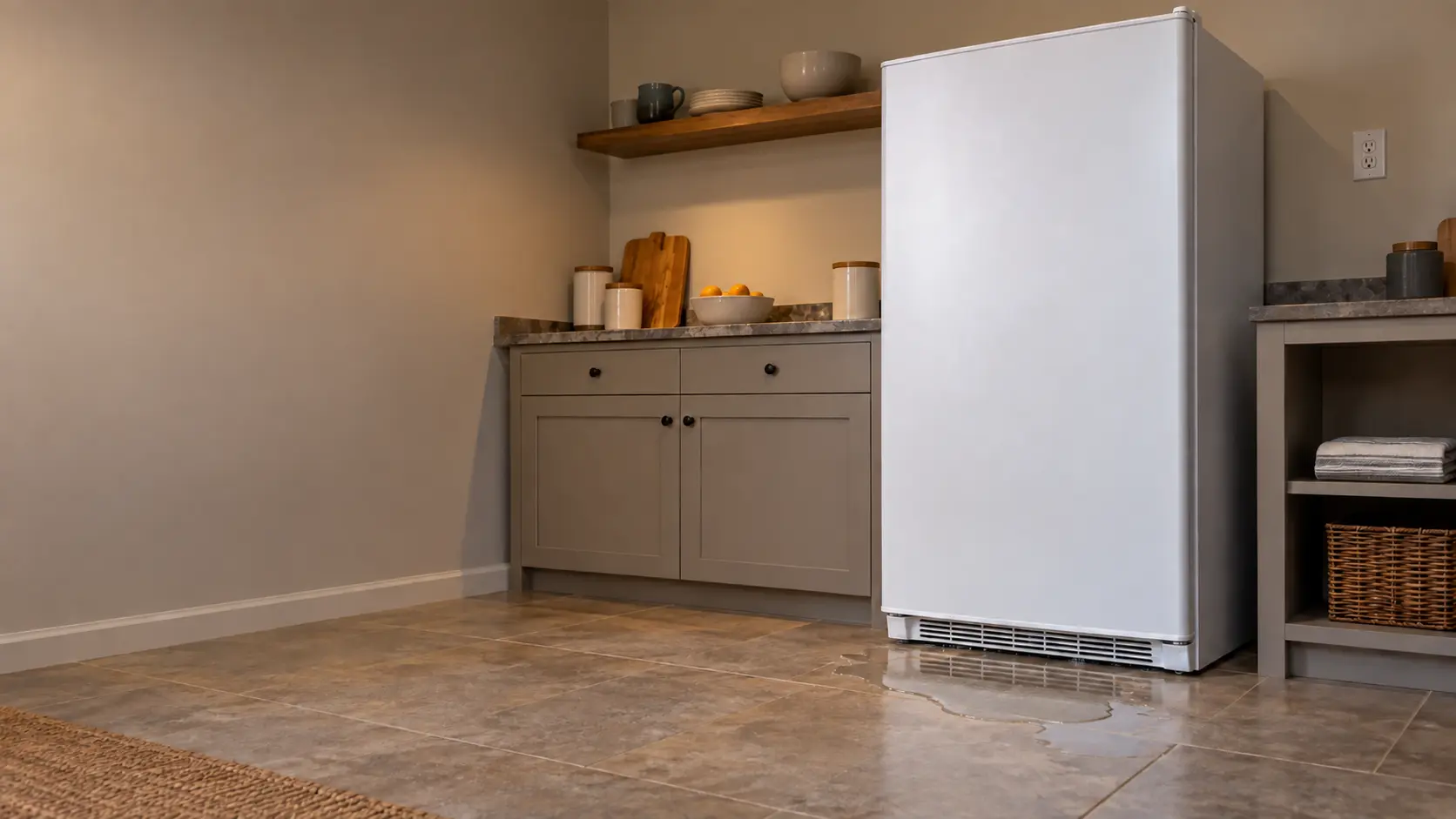
Many chest models have a drain plug inside the floor of the cabinet. If it is missing or open, outside air and moisture come in from below.
-
03 low
Lid gasket hardened or torn
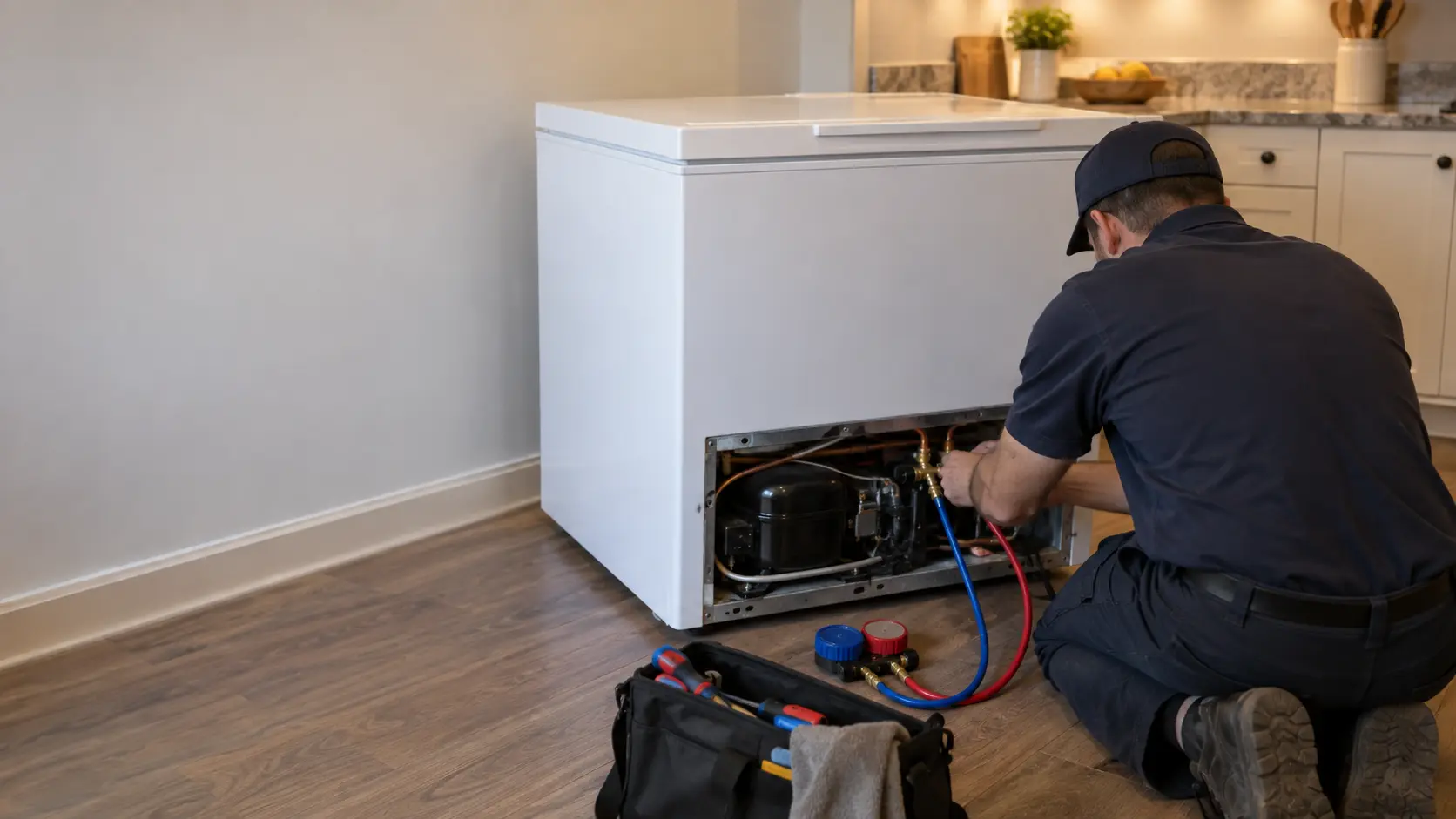
A seal that no longer grips lets a thin stream of moist air in all the time, building ice near the top edge far faster than normal.
-
04 low to moderate
Lid hinge sagging
Worn hinge springs or a bent hinge keep the lid from sitting square, leaving a gap at one corner. Ice gathers heaviest in that corner.
-
05 low to moderate
Thermostat holding the walls too cold
A thermostat stuck on makes the walls colder than needed, and frost forms faster on them.
-
What it costs
Every repair on the site's cost scale, side by side
Open the cost guide
What else
it could be.
Most often confused with heavy frost buildup in the freezer, then freezer door or lid not sealing.
All problems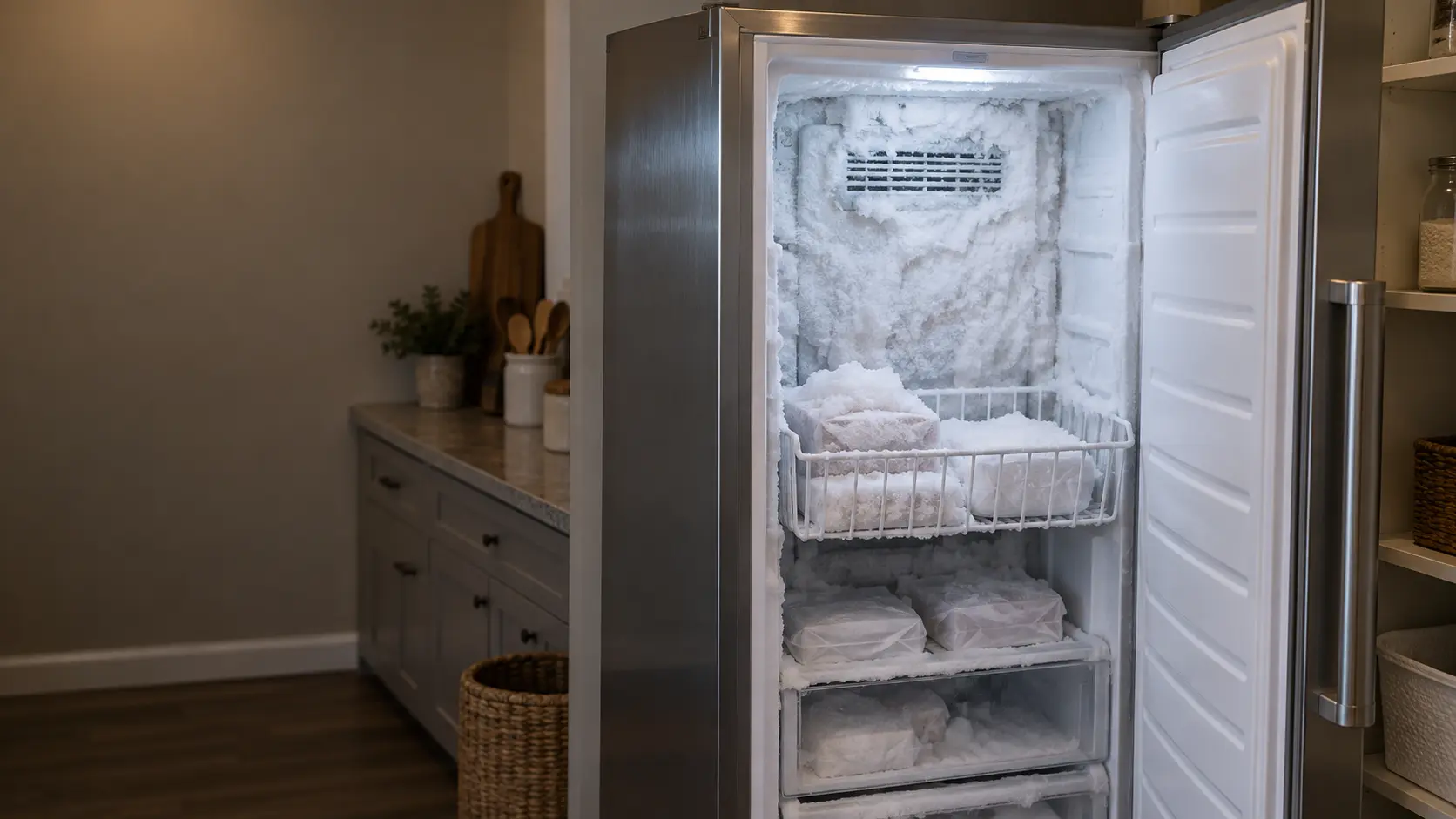
The makes
it happens on.
28 makes on this site; chest freezer ice on the walls can show up on any of them. Each mark opens that make's own page.
All 28 brandsChest Freezer Ice on the Walls,
where we come out.
9 metros, each with its own page.
All service areasTampa BayFL · 31 areas
Miami / South FloridaFL · 47 areas
New York MetroNY · 75 areas
HoustonTX · 36 areas
ChicagoIL · 50 areas
Los AngelesCA · 95 areas
San DiegoCA · 31 areas

Questions about
chest freezer ice on the walls.
How often should a chest model be defrosted?
Why is chipping the ice so risky?
How long does the food stay frozen during a defrost?
The ice is only near the top edge. What does that mean?
Back to your everyday
Still seeing chest freezer ice on the walls?
Book with what you checked above — 5 answers save the technician the first part of the visit.