
Freezer
Alarm Beeping
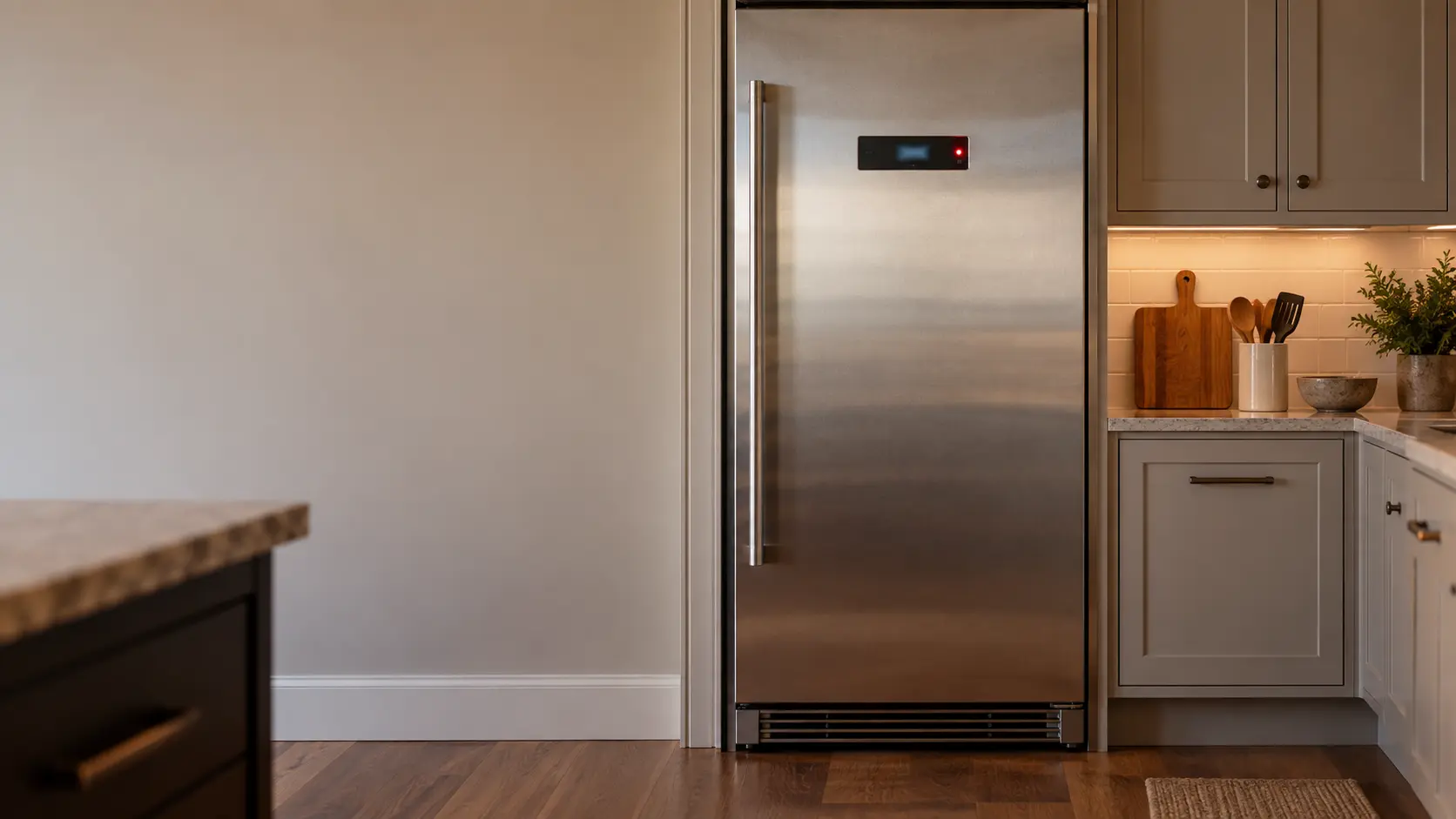
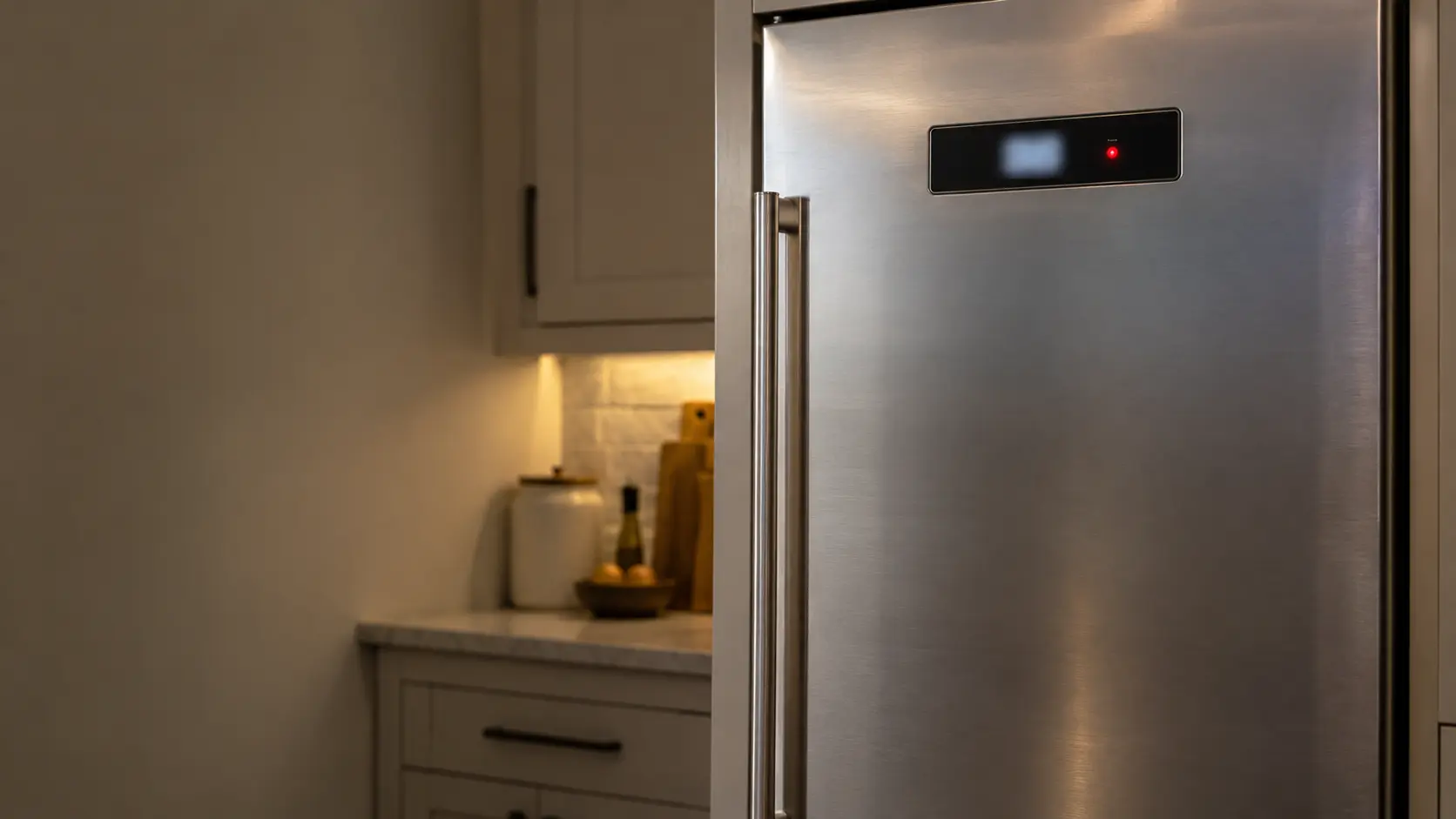
A freezer alarm beeping keeps sounding, from a short chirp that repeats to a steady tone, often with a flashing light or a temperature on the display that is higher than it should be.
Mon–Sat, 8am–8pm
- 5 checks before you book
- 5 questions that narrow it
- 5 causes, cheapest first
Book a visit
Three short steps, about a minute.
or call (844) 456-4651
Loading appointment form…
The appointment form couldn’t load. Please try again.
What it
usually means.
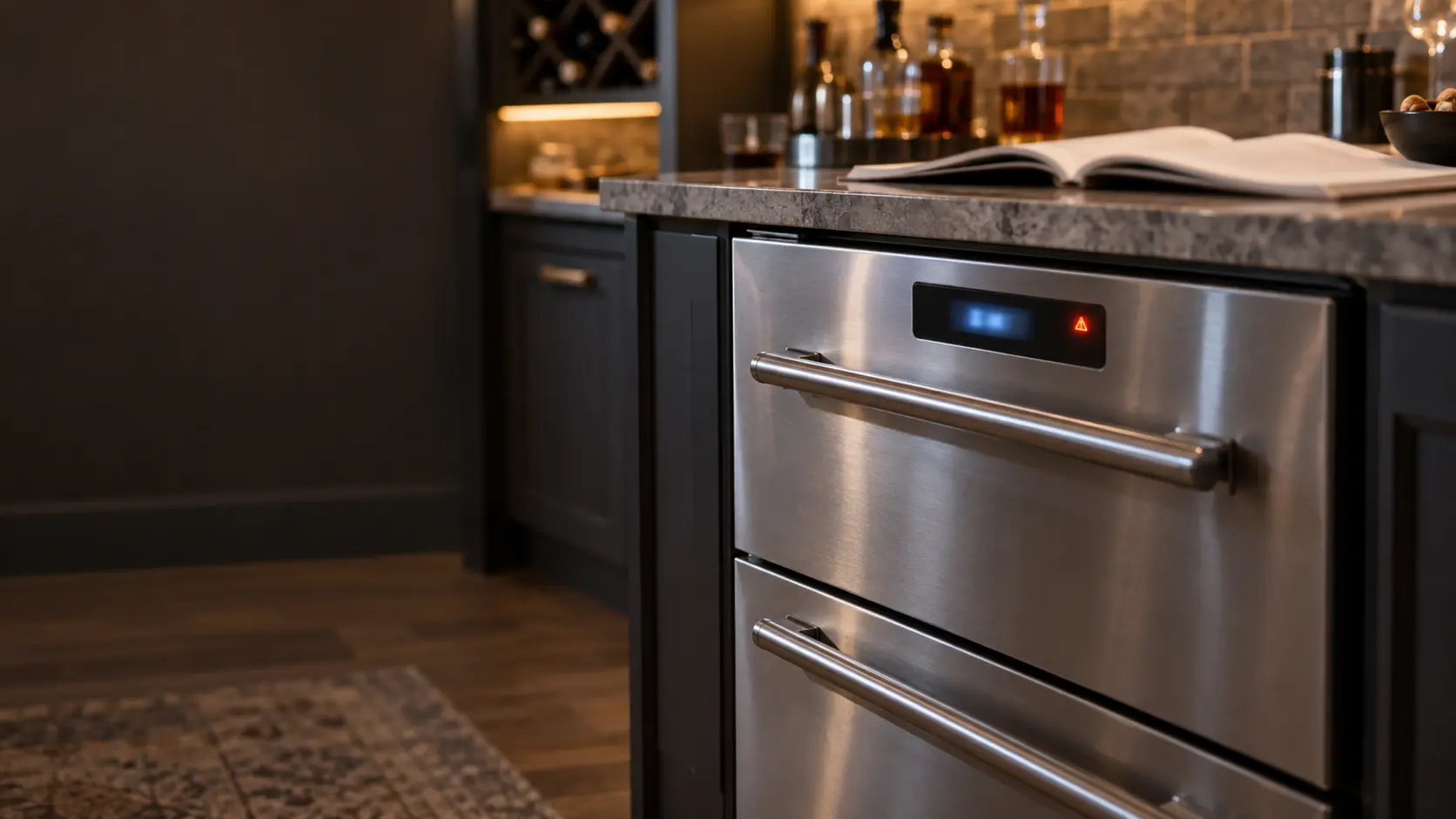
Freezer alarms exist for two reasons: a door or lid left open, and a cabinet that got warm. Built-in columns and undercounter drawers often add a third, a power-failure alarm that shows the warmest temperature the cabinet reached while the power was off. Some chest and upright models only have a warning light. When the alarm is right, it is doing its job and the question is why the cabinet warmed. When it is wrong, the usual reasons are a door switch that does not register the door as closed, a temperature sensor giving a false reading, or a control board with its own problem. The display, the pattern of the beeps and whether the alarm stops when you press the button are the clues.
 The 5 causes, cheapest first
Answer these first
Does the display show a temperature, a symbol for the door, or a code?
Does the alarm stop when you close the door firmly, or press the alarm button?
What does a thermometer in the cabinet read?
Did the power go out recently, even briefly?
Does it start again soon after you silence it?
Check these
before you book.
Freezer alarm beeping: 5 checks, and none of them costs anything.
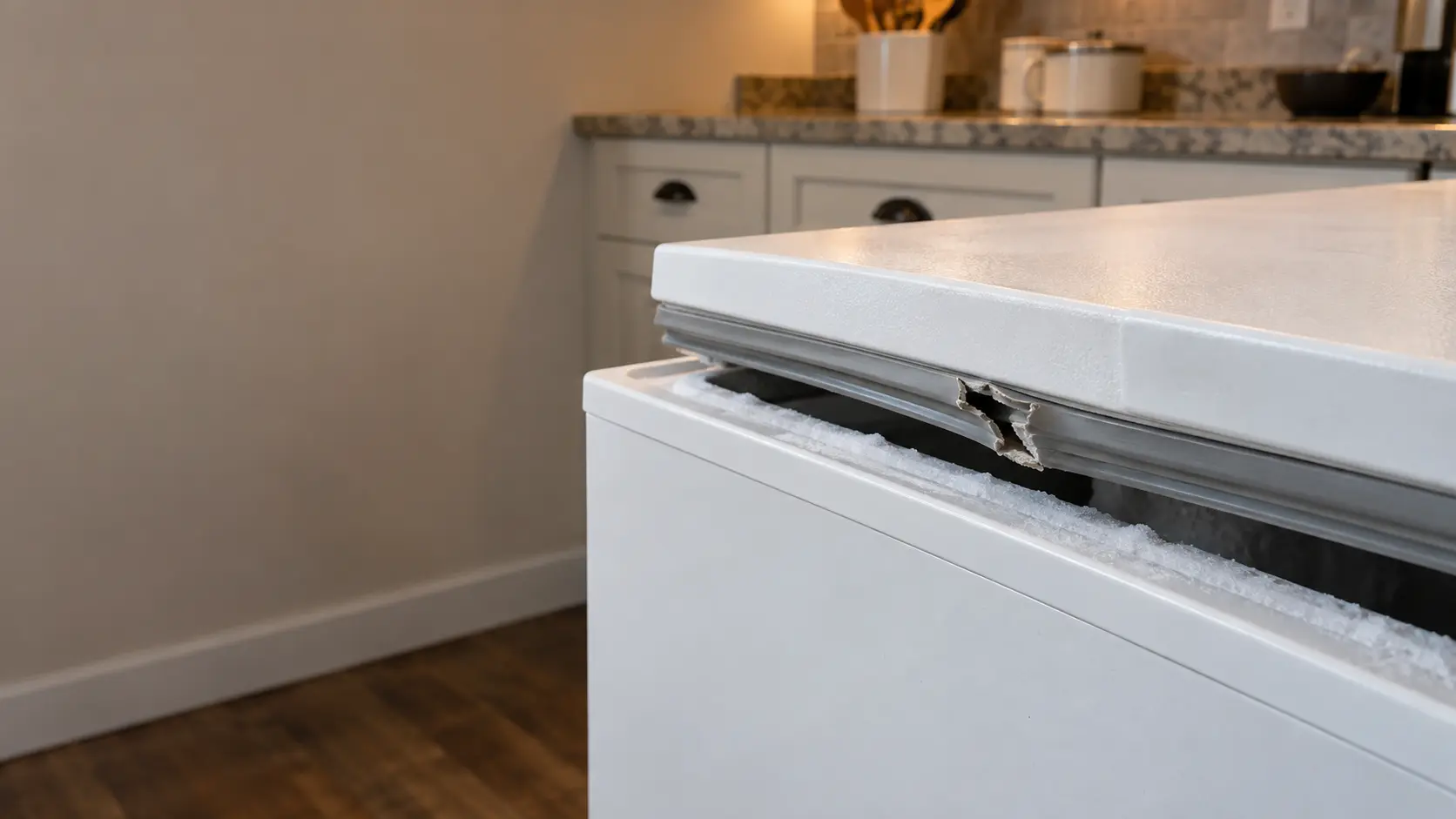
Push the door or lid firmly closed and check that nothing inside holds it open.
Put a thermometer in the cabinet and compare its reading with the display.
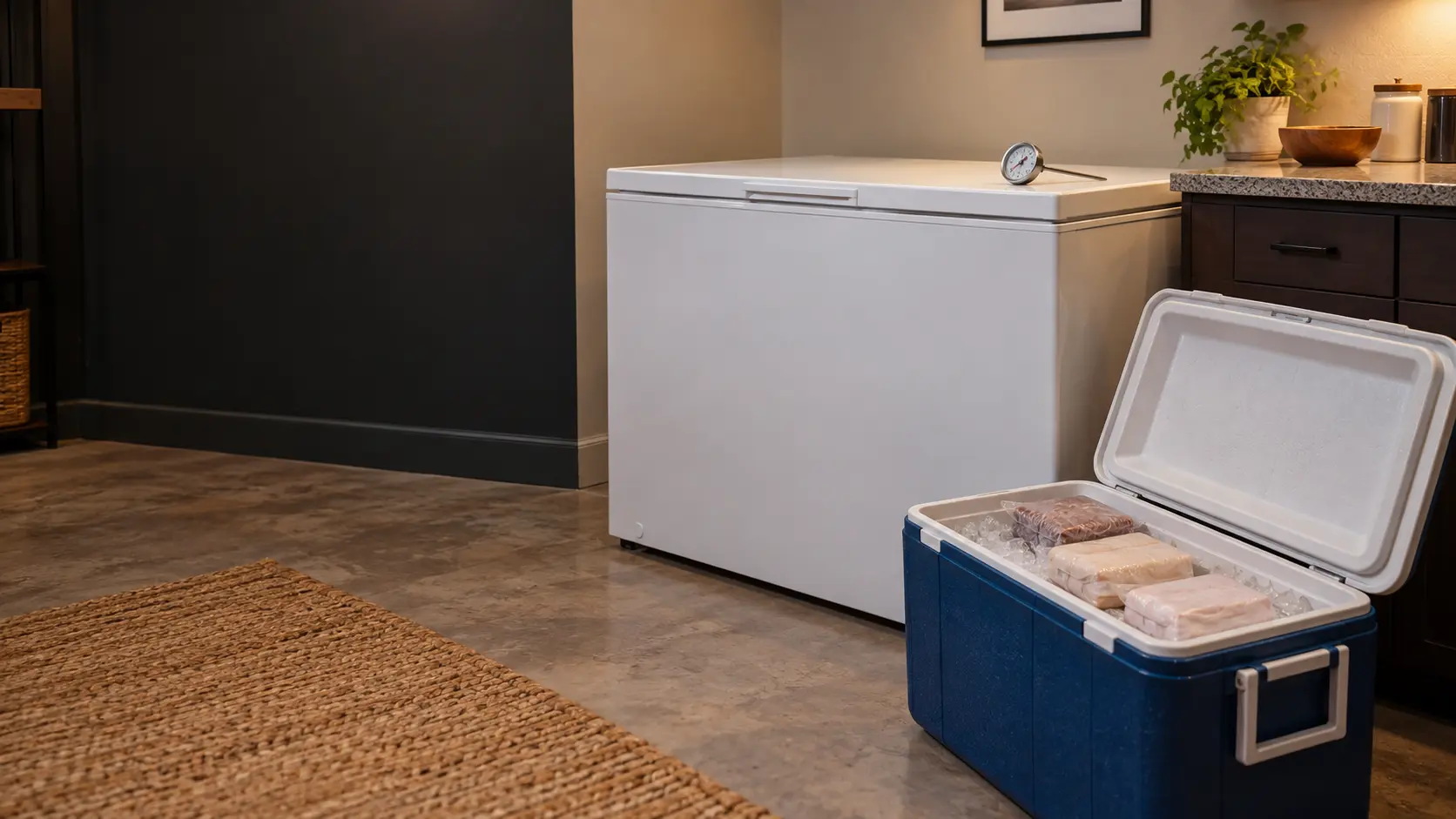
If the thermometer reads above 10°F, keep the door shut and move food to a working freezer or a cooler with ice.
Also worth checking
- Press the alarm or the power-failure button once and note whether it stays quiet.
- Photograph the display and any code and tell us the model number when you book.
How soon does it need a visit?
Take every alarm seriously until a thermometer says the food is safe. If the cabinet is cold and the alarm is false, it can wait days; if it confirms warming, the food comes first and the visit is urgent.
The causes,
cheapest first.
5 things freezer alarm beeping turns out to be, from door or lid ajar to cabinet really warming.
The cost guide-
01 no repair
Door or lid ajar
The simplest cause and the one the alarm is made for. A basket or a package holding the door a fraction open will set it off.
-
02 no repair
Warning after an outage or a big load
Many models sound after power returns or after a large warm load, until the cabinet cools back down. Pressing the alarm button once usually silences it.
-
03 low
Door switch not registering
The small switch that tells the control the door is shut can stick or fail, so the control thinks the door is open when it is not.
-
04 low to moderate
Sensor or control board false alarm
A sensor that reads warm, or a board with a failing part, sounds the alarm while the cabinet is actually cold.
-
05 varies
Cabinet really warming
If the thermometer agrees with the alarm, the alarm is telling the truth, and the not-freezing causes apply.
-
What it costs
Every repair on the site's cost scale, side by side
Open the cost guide
What else
it could be.
Most often confused with freezer error code, then freezer warming up with food inside.
All problemsCodes that come with it
Power Failure!!Bertazzoni · Temperature and alarmsDoor Unit OPENBertazzoni · Mode, not a failureError Code...Bertazzoni · Control board and communicationTemperature alarm messageBosch · Temperature and alarmsDoor alarm messageBosch · Temperature and alarmsDoor AlarmDacor · Mode, not a failure
Also related
The makes
it happens on.
28 makes on this site; freezer alarm beeping can show up on any of them. Each mark opens that make's own page.
All 28 brandsFreezer Alarm Beeping,
where we come out.
9 metros, each with its own page.
All service areasTampa BayFL · 31 areas
Miami / South FloridaFL · 47 areas
New York MetroNY · 75 areas
HoustonTX · 36 areas
ChicagoIL · 50 areas
Los AngelesCA · 95 areas
San DiegoCA · 31 areas

Questions about
freezer alarm beeping.
How do I turn off the power-failure alarm?
The alarm beeps but the food is solid. Should I worry?
Can I disable the alarm on my freezer?
Why does the alarm go off when I load groceries?
Back to your everyday
Still seeing freezer alarm beeping?
Book with what you checked above — 5 answers save the technician the first part of the visit.