
Keeping the freezer out of trouble
Maintenance and prevention
guides.
The small habits that keep a freezer off the repair list, from defrosting a chest freezer before the ice thickens to brushing the coils and checking the gasket every season.
Mon–Sat, 8am–8pm
- Three guides
- Read before you book
- Says where to stop
Book a visit
Three short steps, about a minute.
or call (844) 456-4651
Loading appointment form…
The appointment form couldn’t load. Please try again.
Maintenance and prevention,
guide by guide.
A freezer asks for very little, which is exactly why its few needs get forgotten. Frost left to thicken on a chest's walls, a condenser grille furred with pet hair, a torn lid seal and shelves packed so tightly that no air moves account for a good share of the calls we answer. This section covers those jobs, one guide each.
All 18 guides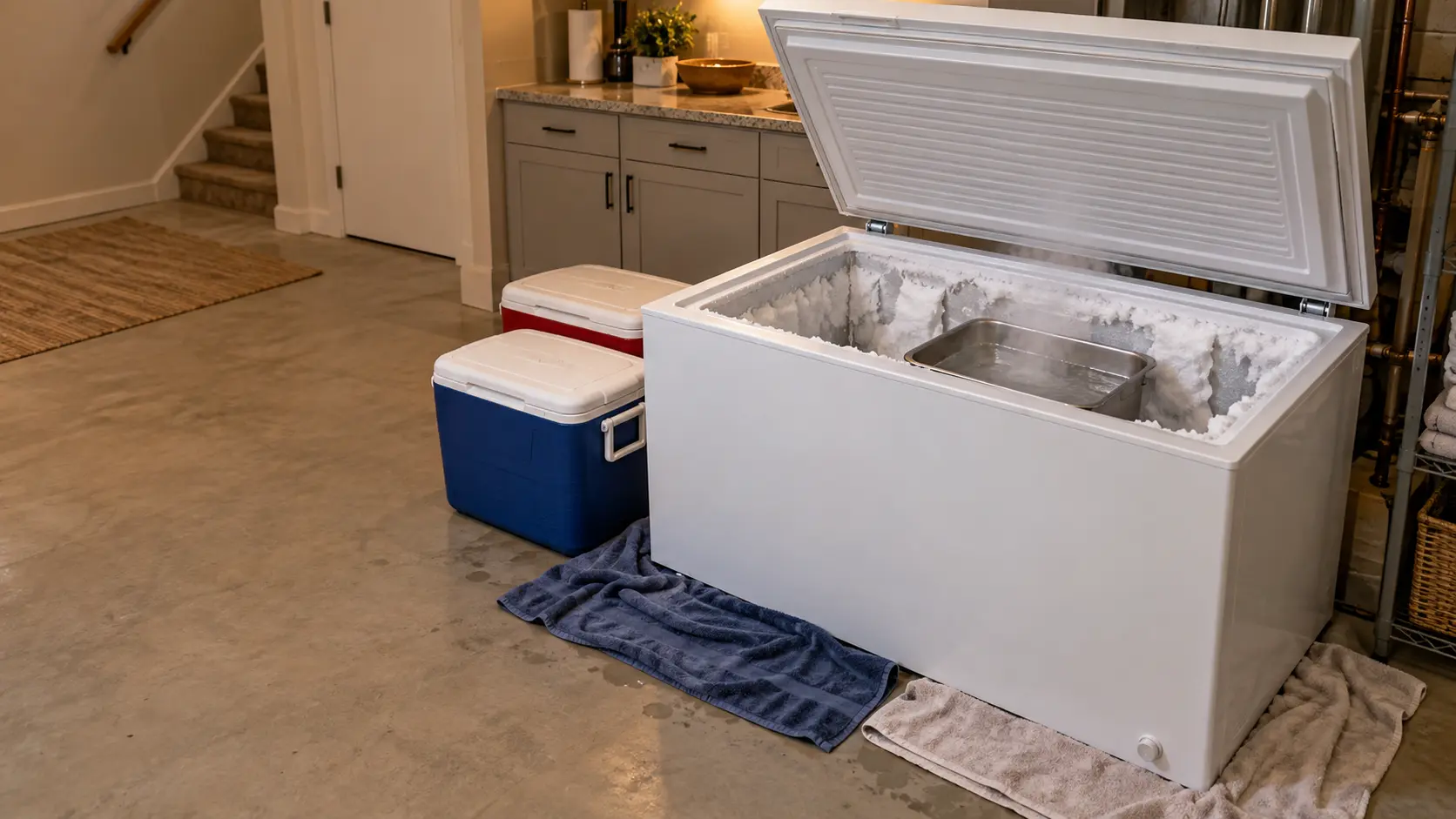
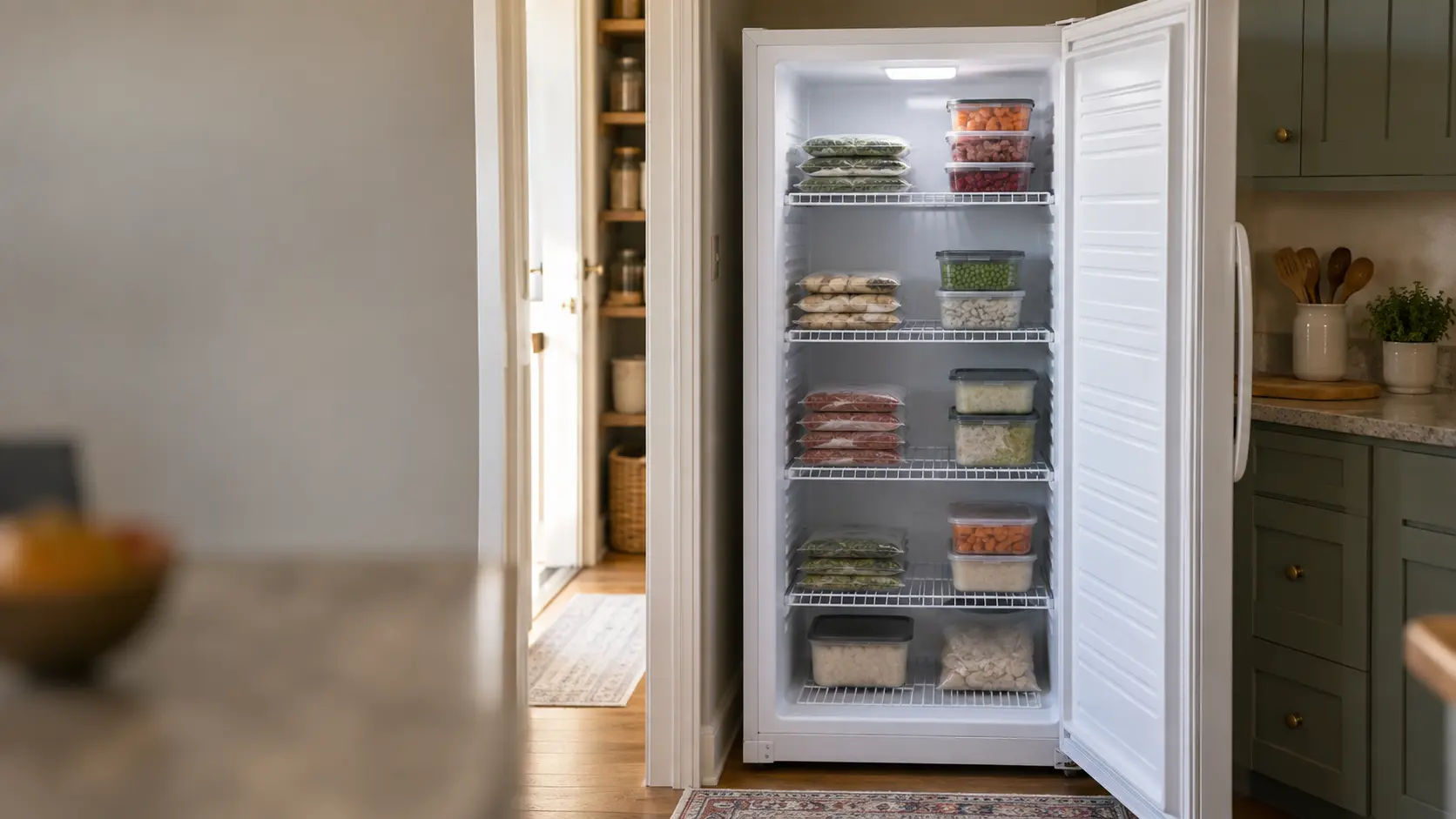
Keeping the freezer out of trouble.
They are written for the owner with a towel, a vacuum and an afternoon. Where a manufacturer publishes a number, such as the frost thickness that calls for a defrost, the baking soda mix for a gasket or how often a built-in condenser wants cleaning, the guide quotes it and links the page; food-handling advice comes from FDA and USDA.
Each guide also marks where upkeep ends. Chipping at frost with metal, working near an outlet with meltwater on the floor or opening panels the manual does not mention turns a maintenance job into a repair, and the guides say when to stop.
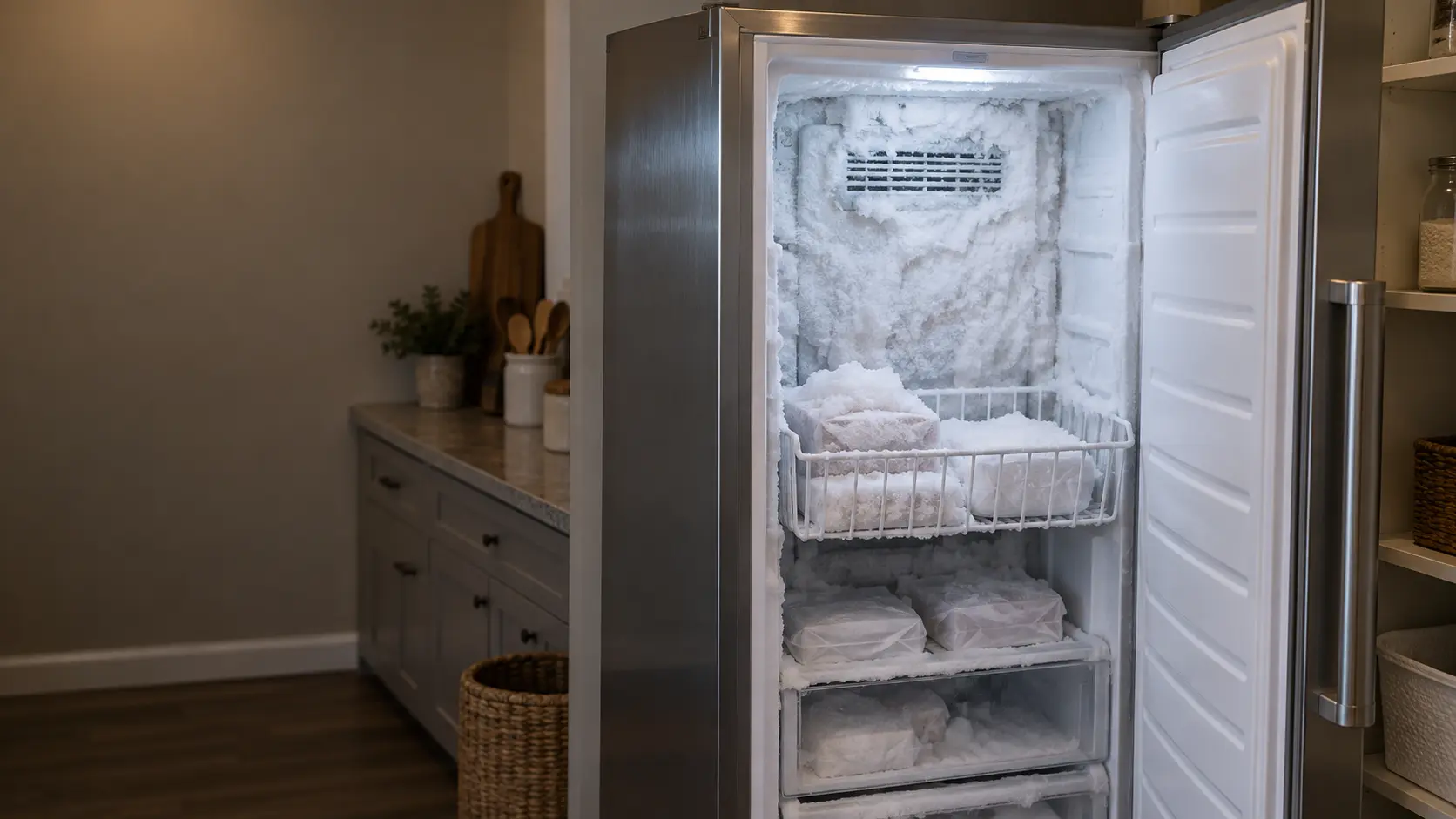
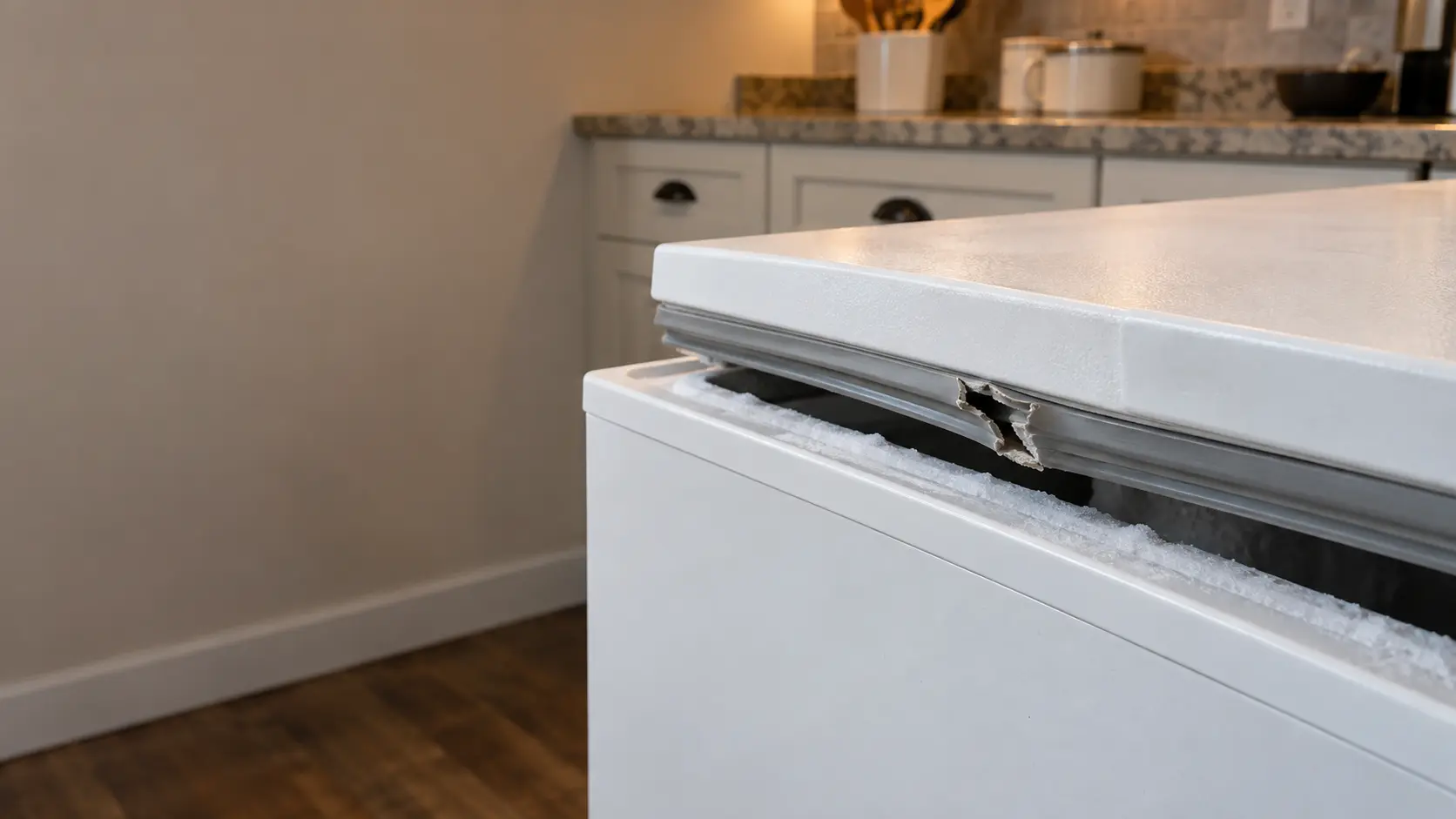
The three guides here run on a calendar, not on breakdowns. Defrosting a chest suits a cool season when the food can wait in coolers; the coils and gasket job fits any spare afternoon; reorganizing the shelves is worth repeating after every big shopping trip or harvest. A reader who sees frost thickening goes to the defrost guide, a door seal that has stopped gripping points to the gasket half of the cleaning guide, and uneven cold spots lead to the organizing guide. Log the date of each job on a sticky label near the handle.
Not sure where to start?The short answerDefrosting a chest freezer without chipping the liner
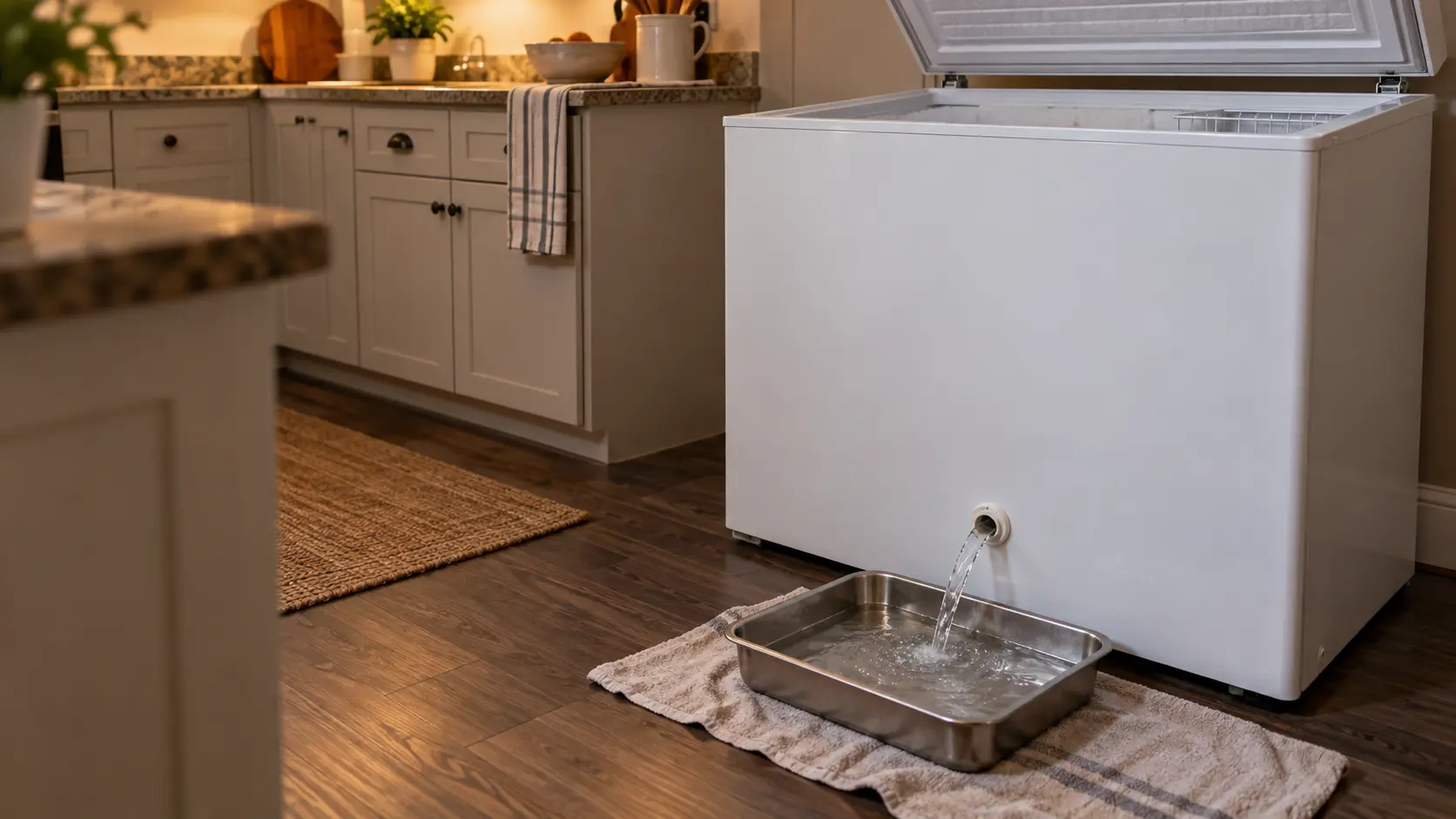
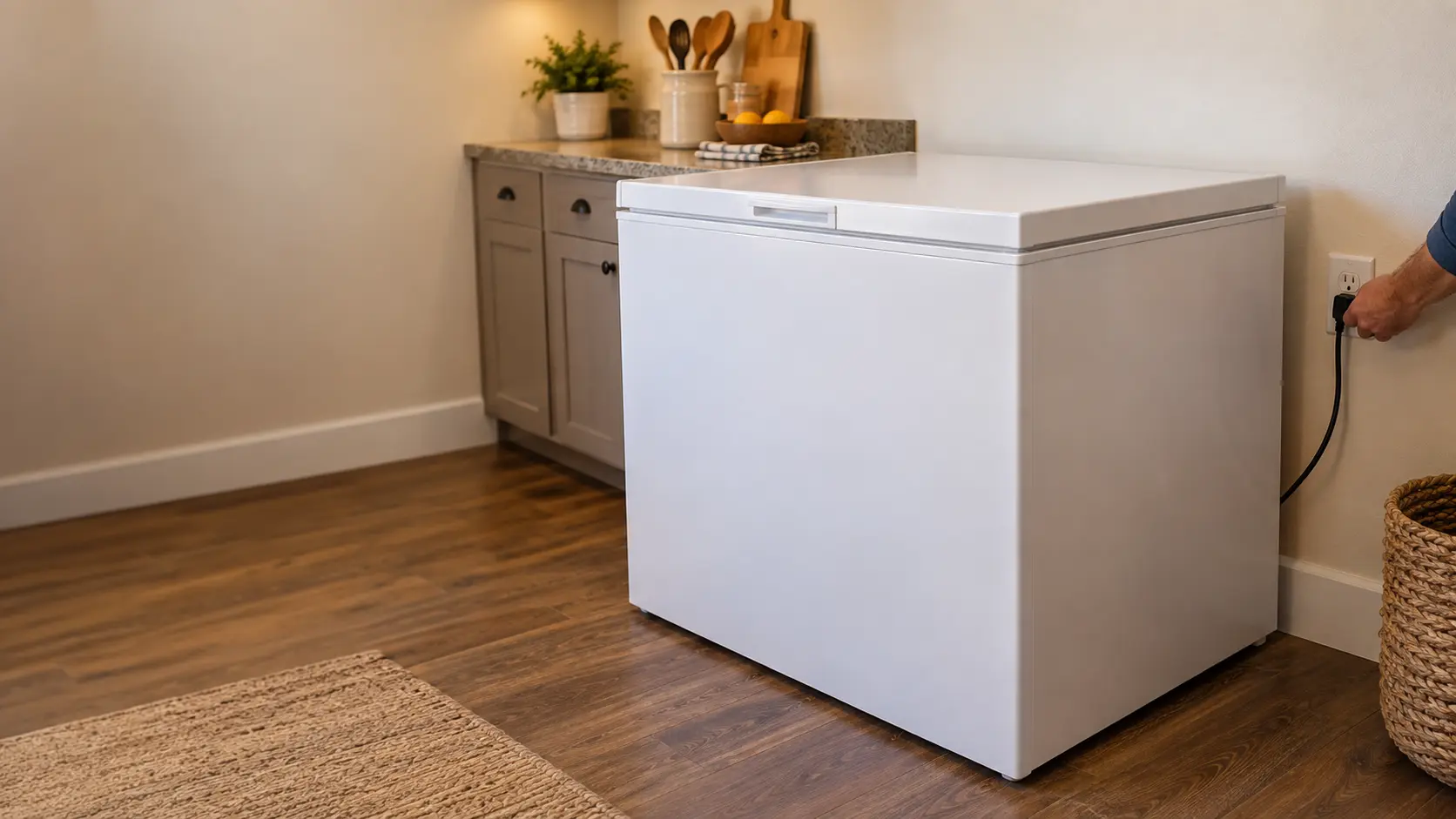
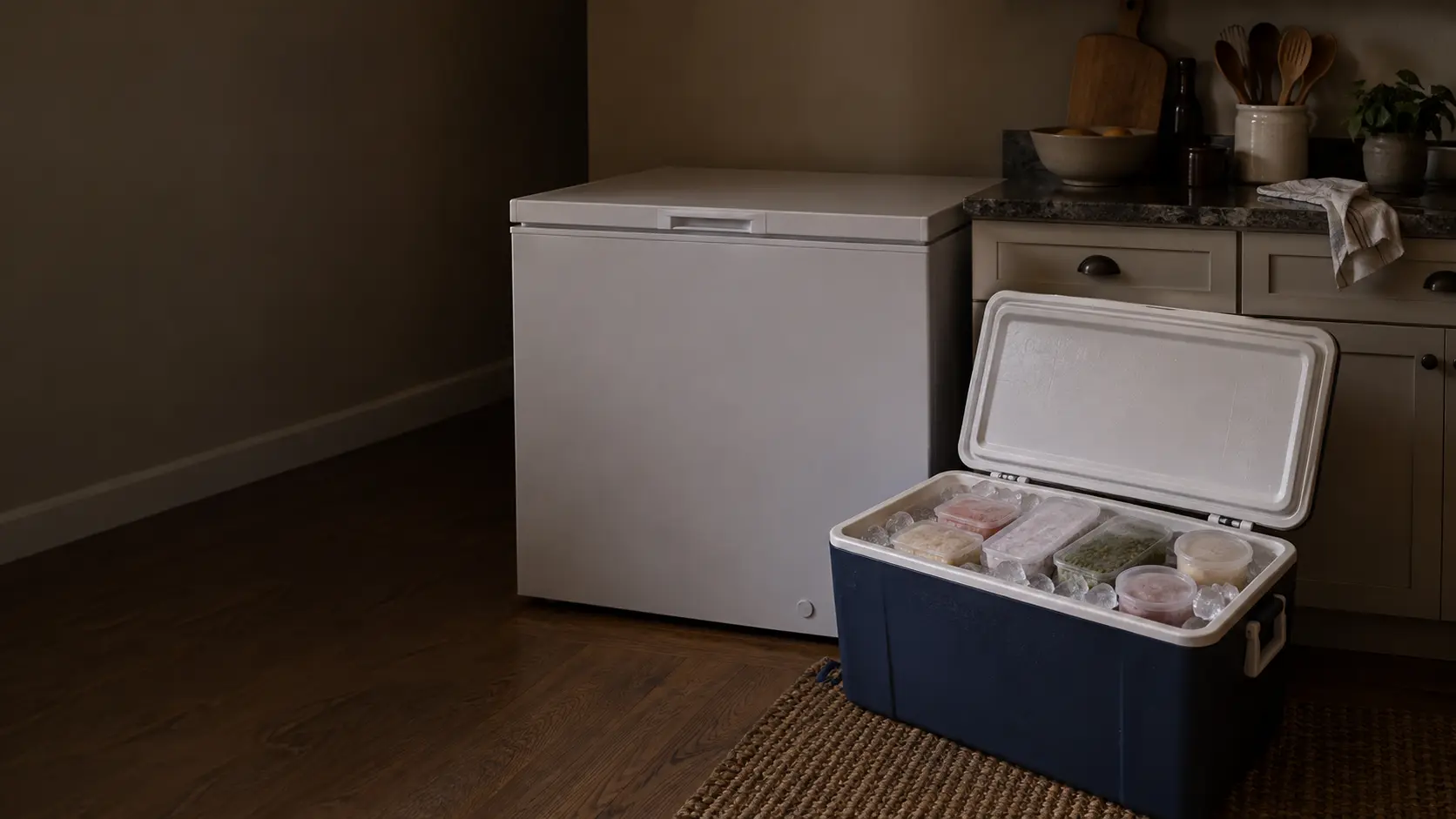
Here is how to defrost a chest freezer: once frost reaches about a quarter inch, switch it off and unplug it, move the food into coolers, drain or sponge the meltwater, speed things up with pans of hot water rather than sharp tools, then wash the interior with baking soda solution, dry it and restart it before the food goes back.
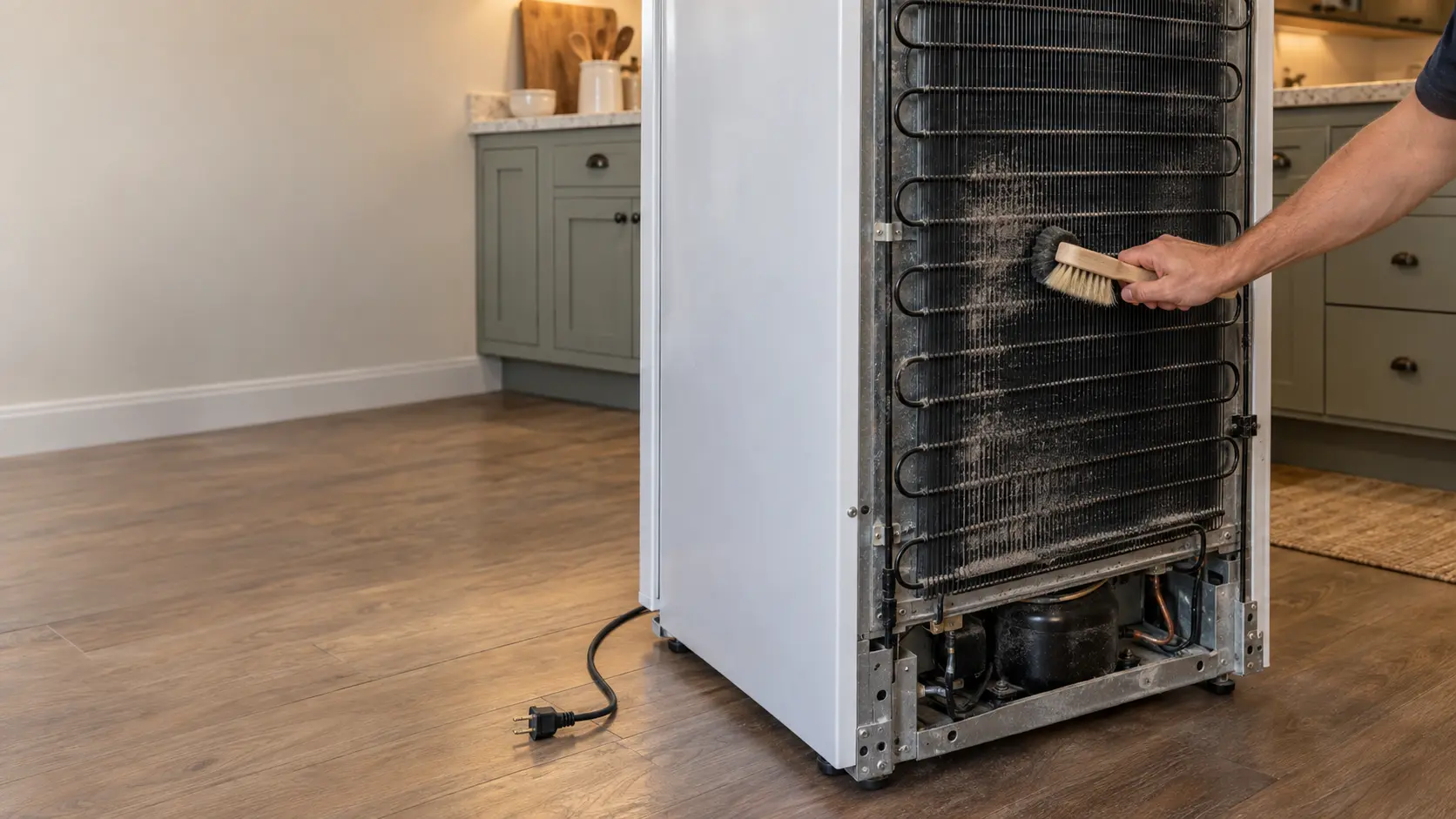
The short answerCleaning freezer coils and gaskets, starting with where the coils are
Many chest and upright models hide their freezer condenser coils inside the cabinet walls, so there is nothing to brush, only clearance to keep.
The short answerOrganizing a freezer so the cold air reaches every package
Knowing how to organize a freezer comes down to air and turnover: keep it at 0°F, never cram it so tightly that air cannot circulate, freeze new food in a single layer before stacking it, keep vents and the back wall clear, and group items by zone so the lid or door is open for seconds rather than minutes.
When reading
is not enough.
If the checks in these guides did not settle it, the visit picks up from there, stop by stop.
What repairs cost- 01Temperatures read before any part is named
- 02A figure before the work begins
- 03The common freezer parts in the van
- 04Brought back down to 0 degrees
The problems
these answer.
Each has a page of its own, with the causes in the order worth checking.
All 17 problems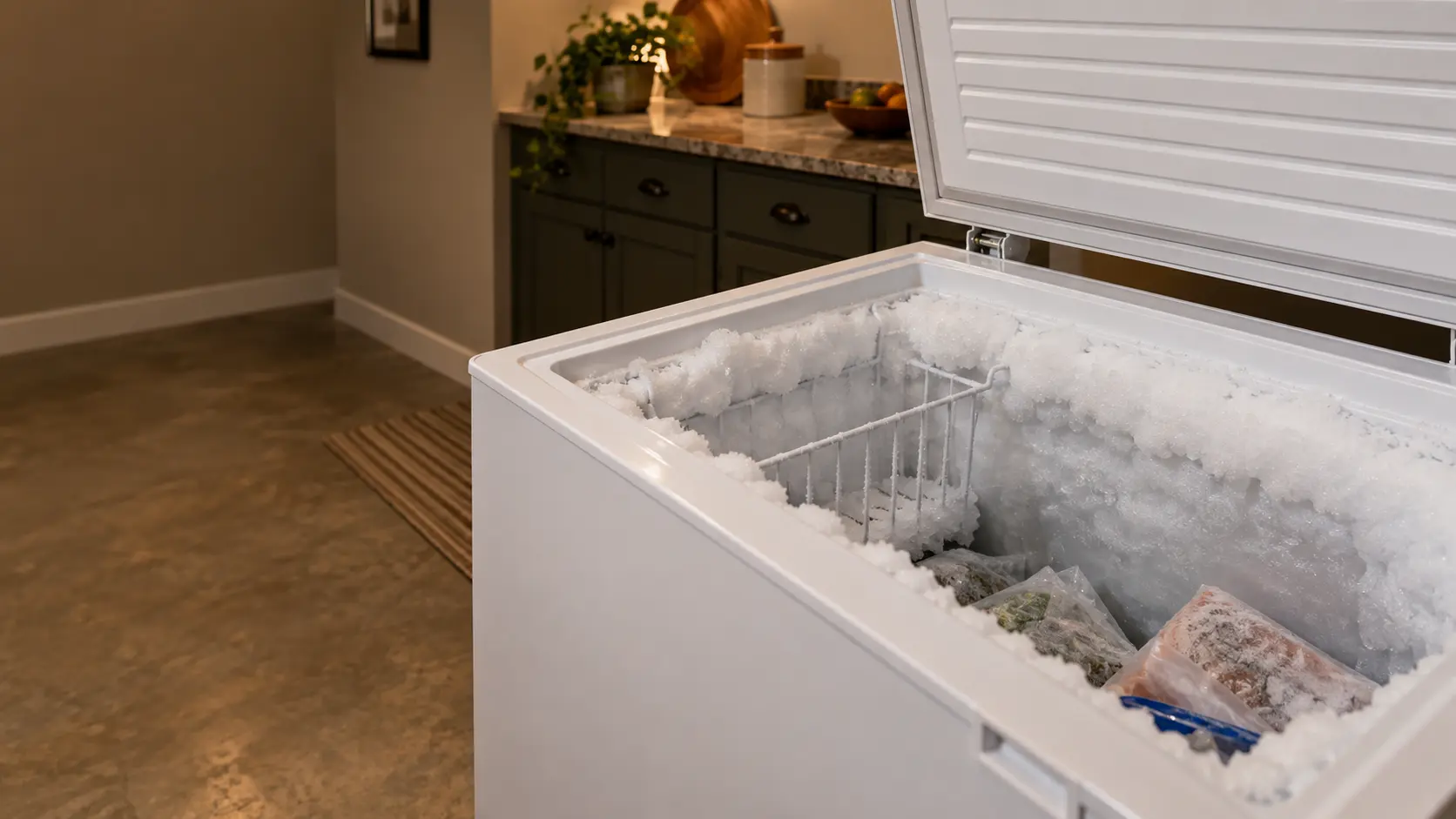


Questions about
maintenance and prevention.
How often does a chest freezer need defrosting?
My freezer has no coils on the back. What should I clean?
Does the way food is packed really affect the freezer?
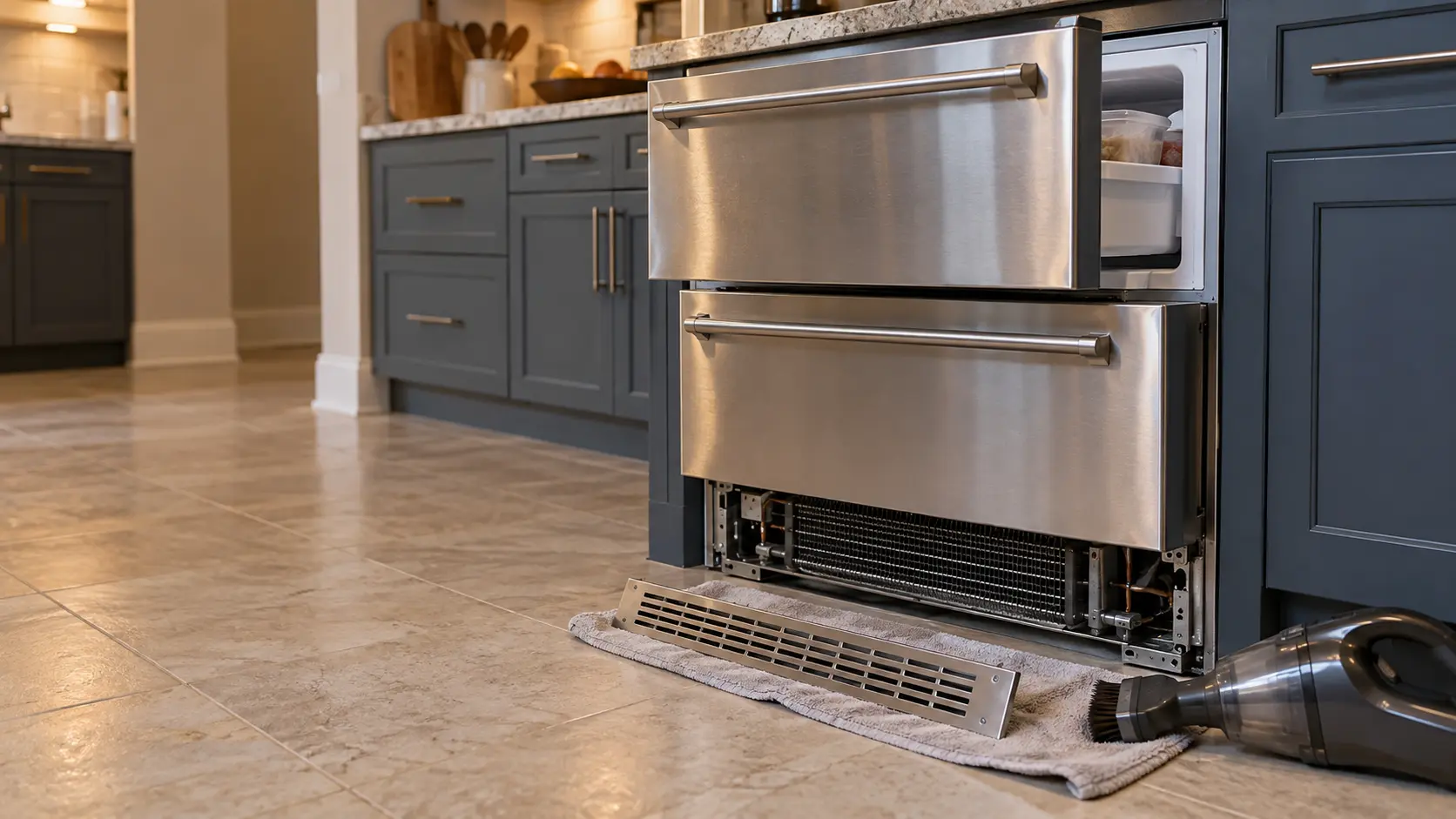
Which upkeep job matters most for a freezer column or undercounter drawer?
The other
sections.
Split by what you are trying to find out rather than by which part of the appliance it concerns.
All guides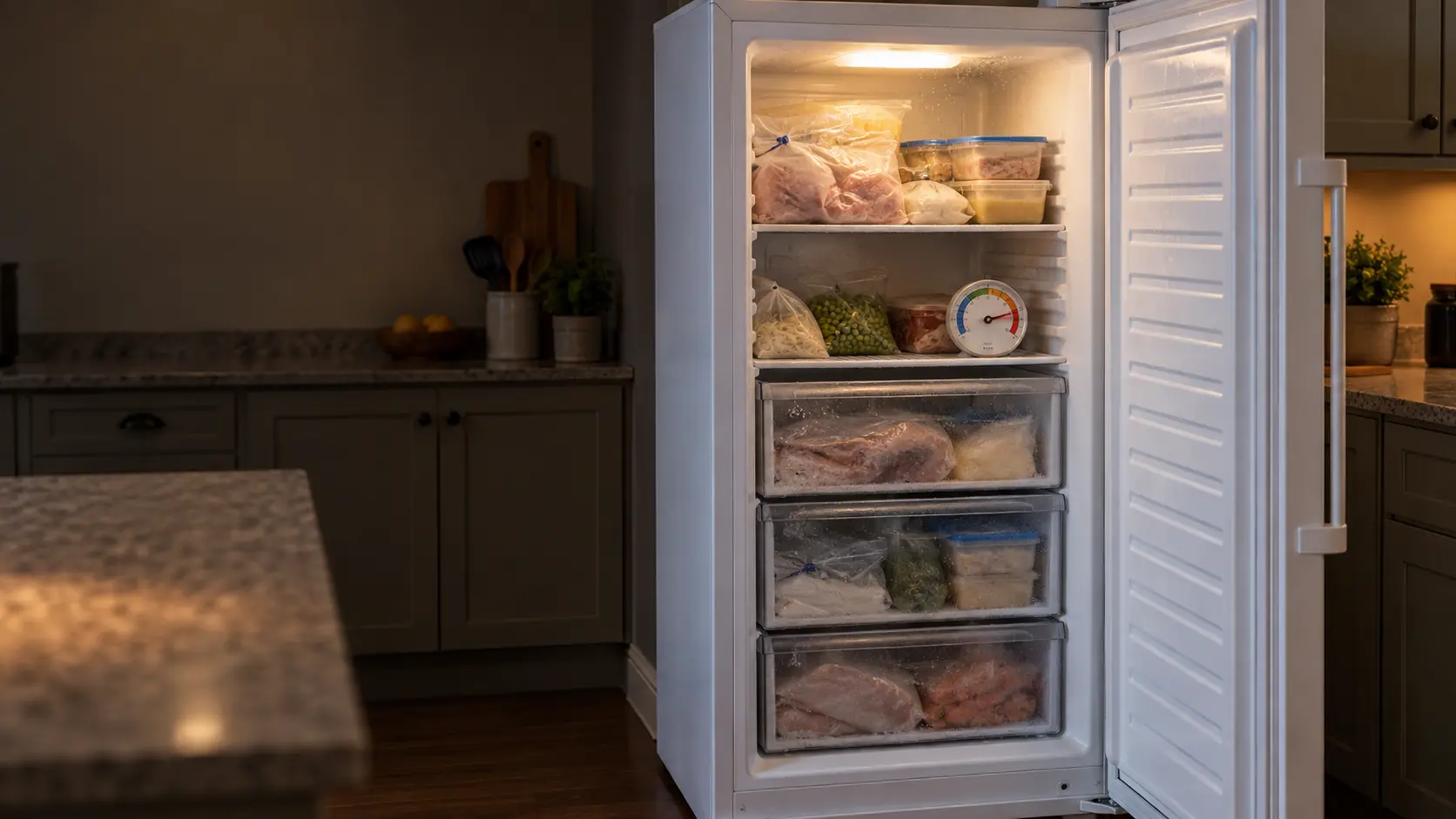

Back to your everyday
Let’s get your freezer working again.
Three short steps online, or one call. Tell us what you are seeing and pick a window that works.