Freezer troubleshooting starts with a real reading
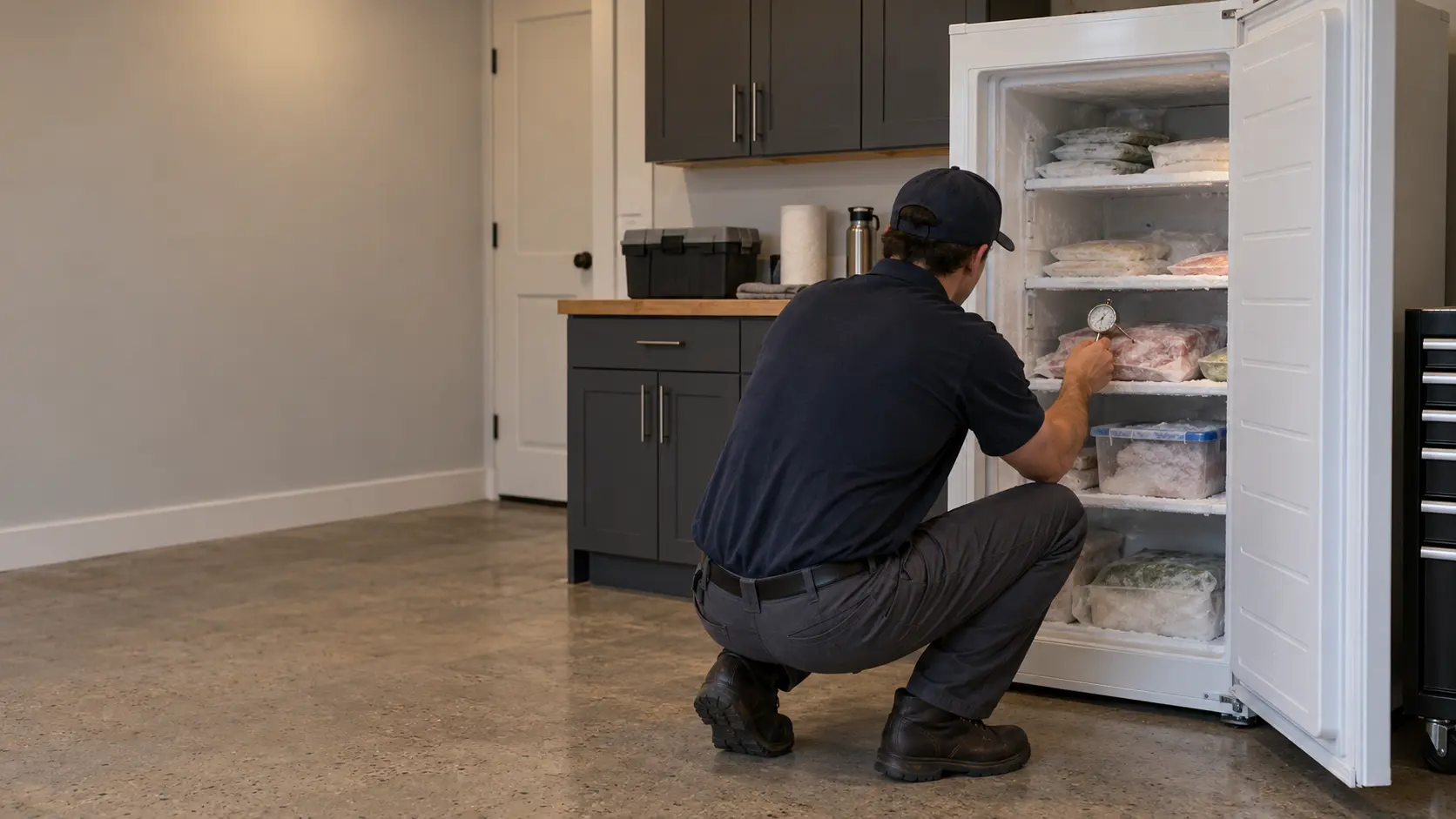
Displays on electronic freezers show a setting or a sensor at one spot, and neither is the same as the temperature of the food. An inexpensive appliance thermometer, which FDA recommends keeping in the freezer anyway, is the most useful tool you can own for this. Place it among the packages in the middle of the cabinet, close the door or lid and read it the next morning.
A reading at or below 0°F with food still hard means the complaint lies elsewhere: noise, frost, water or a warm cabinet exterior. A reading in the teens with soft packages confirms a cooling problem and makes every check below more urgent.
Source: FDA — Food and Water Safety During Power Outages and Floods — Keep appliance thermometers in the freezer; the freezer should be at or below 0°F
Follow the power from the panel to the freezer
A freezer that is completely silent, with no light and no display, usually has a power problem outside the cabinet. The path is short, and each link can be checked without tools.
The plug and the outlet
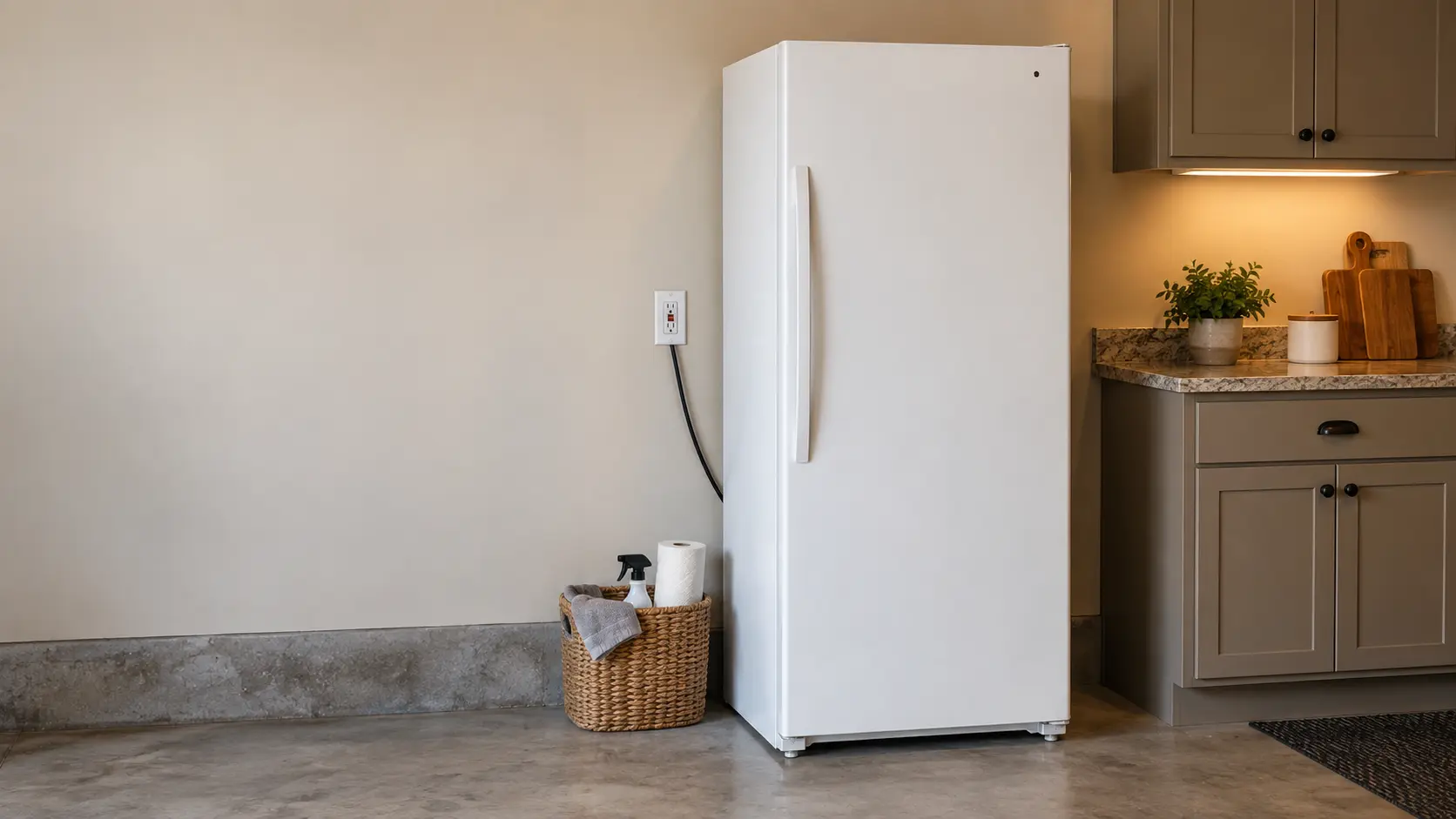
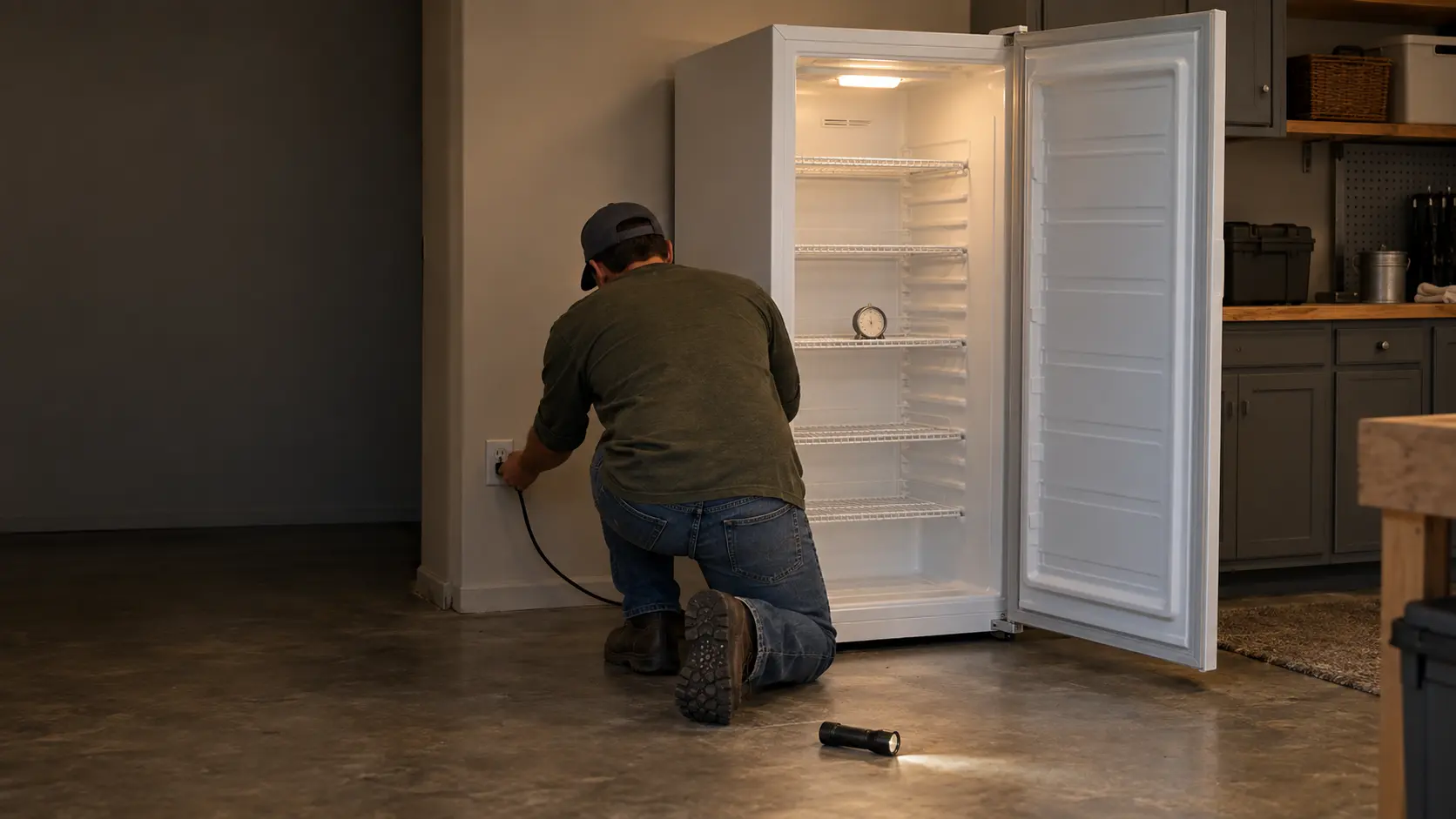
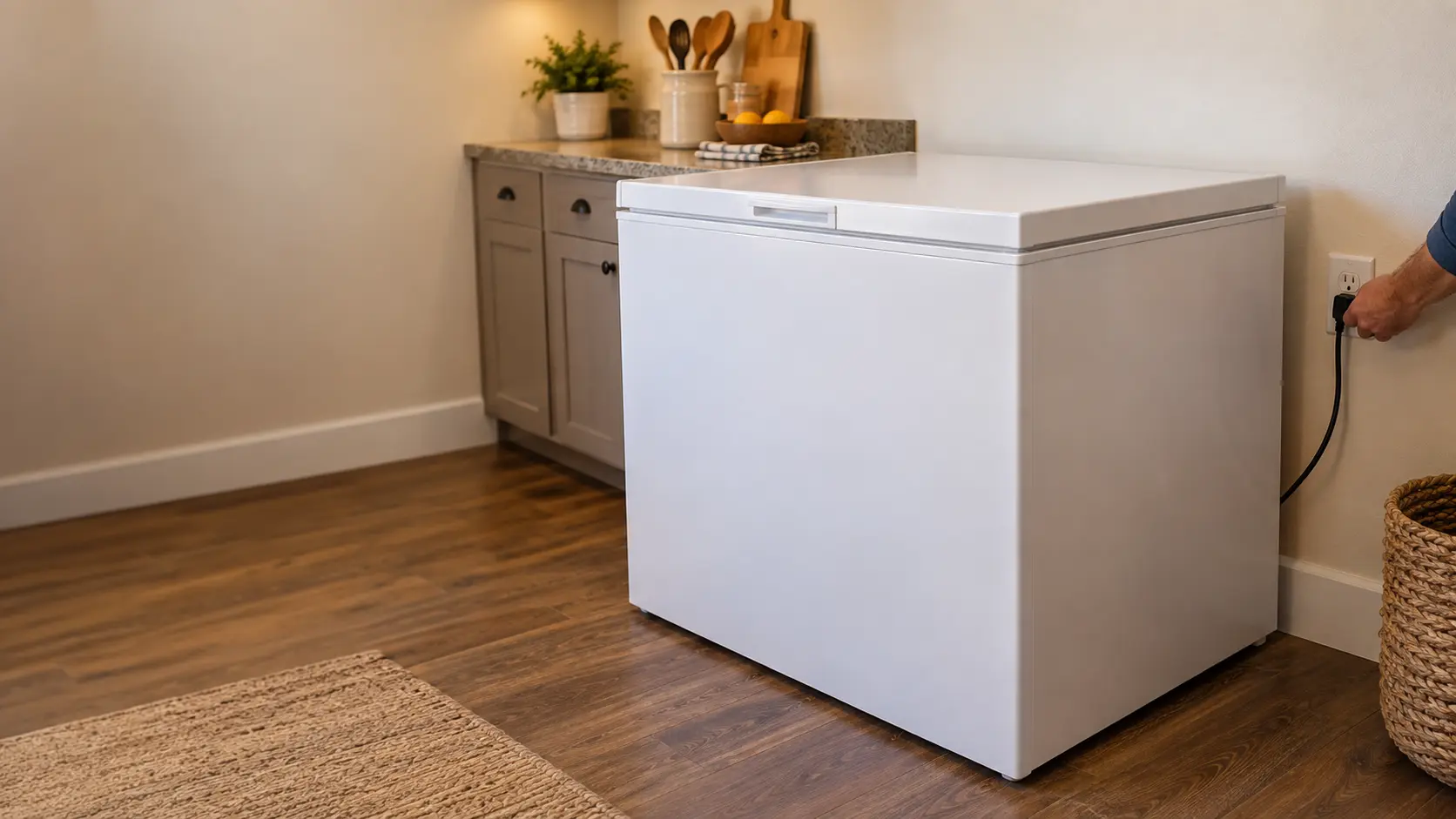
Push the plug firmly home; basement and garage freezers get bumped by storage bins and vacuum cleaners. Then plug a lamp or phone charger into the same outlet. Garage and basement outlets are often the type with small test and reset buttons, and those can cut out after a storm or damp weather while every other outlet in the house keeps working. Press reset once.
The breaker, and cords that should not be there
Look for a breaker sitting in the middle position at the panel. Reset it once, from a dry floor. The GE manuals rule out adapters and extension cords and want a grounded outlet serving the freezer alone; a freezer running through a thin cord across the garage is a reason for its troubles in itself, and a breaker that trips again is a reason to stop.
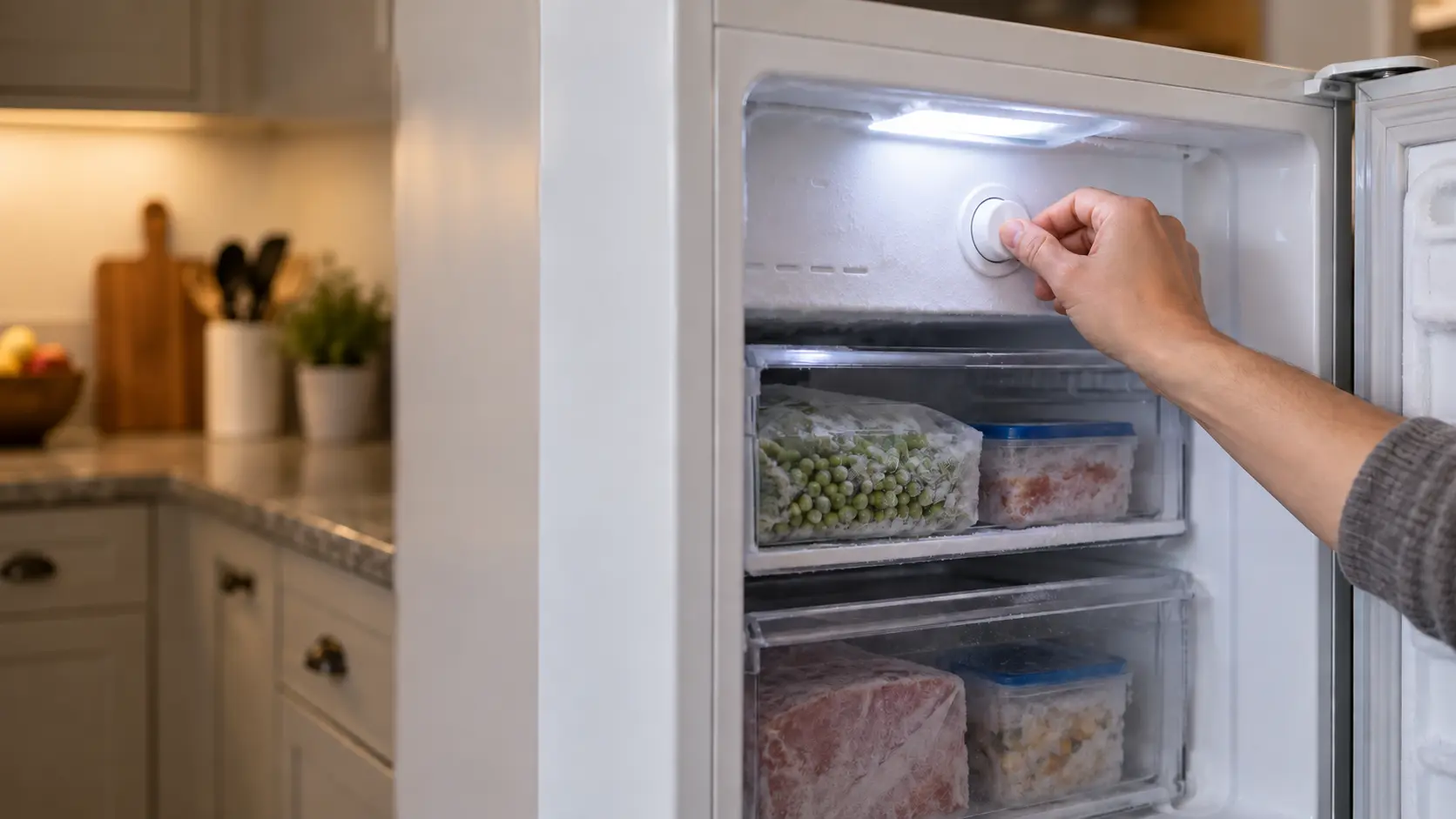
Controls, modes and locks that look like a failure
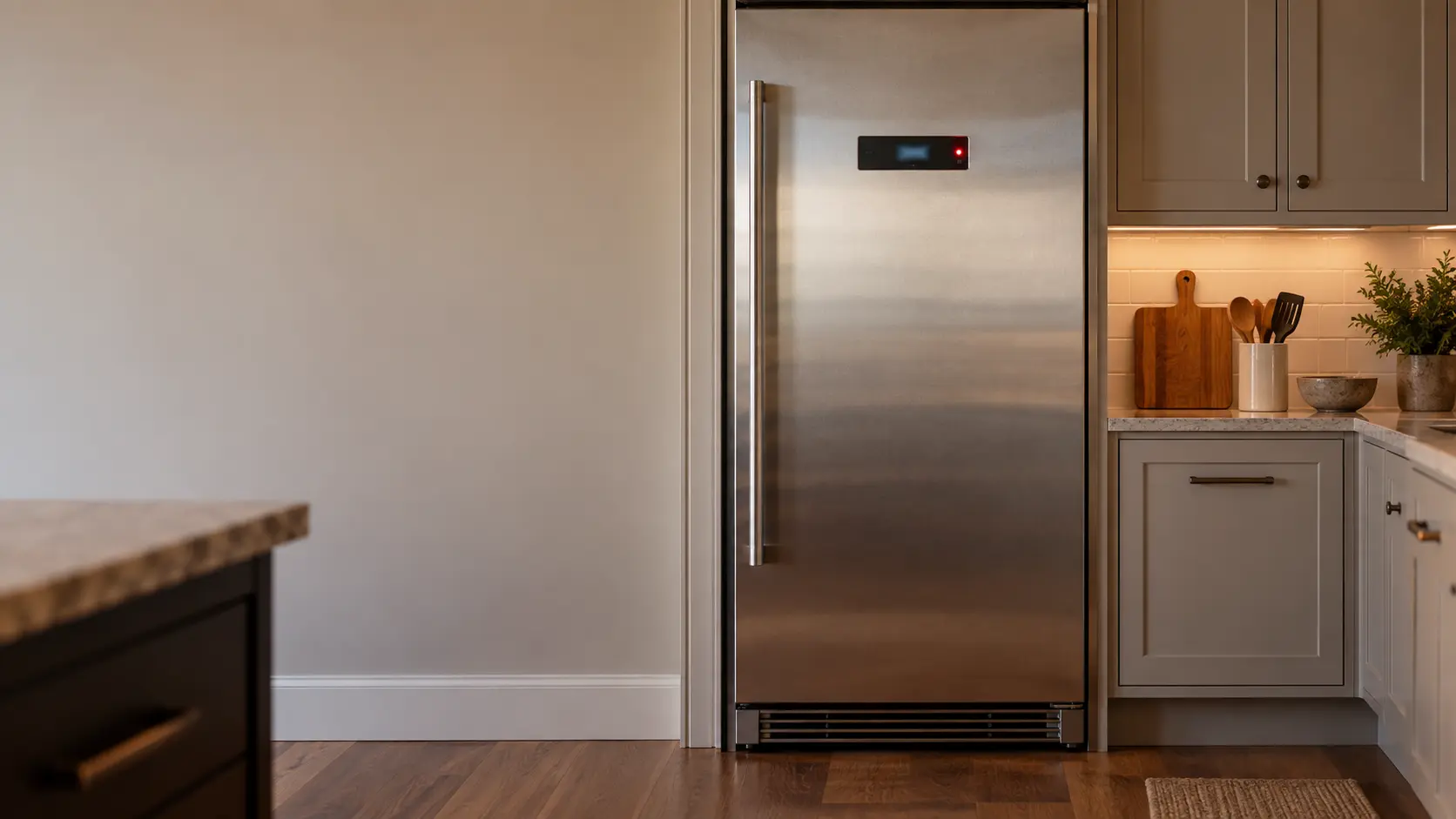
A dial knocked to Off is common on chests, and GE's manual explains that this setting stops the cold while the cabinet stays connected. Set the dial to its middle mark. On an electronic upright, look for a lit Demo indicator: GE's uprights have a showroom mode that runs the display without cooling, and the manual gives a button sequence to leave it.
A control lock does not stop cooling, but it can make the panel seem dead to presses. GE's lock is held for 3 seconds to set and 3 seconds to clear. If a freezer shows a code rather than a temperature, write it down exactly as displayed and look it up on the error codes page before pressing anything.
- Dial set to Off, or turned to the warmest mark during cleaning.
- Demo or showroom mode lit on the panel.
- Control lock on, so the buttons seem not to respond.
- A high-temperature or door alarm that has been silenced but is still lit.
Source: GE Appliances — Upright no-frost freezers owner's manual, FUF14, FUF17 and FUF21 (49-60763) — Own grounded outlet, no adapter or extension cord; Demo mode and how to leave it; control lock held 3 seconds; packages holding the door open; normal sounds, a warm cabinet up to 30°F above room temperature, slow start from overload protection, outside moisture in humid weather; GE Appliances — Chest freezers owner's manual, FCM5 and FCM7 (49-1000422) — No extension cord or adapter; Off stops cooling without cutting power; 3 inches of clearance at top, back and sides
The seal, the load and the space around the cabinet
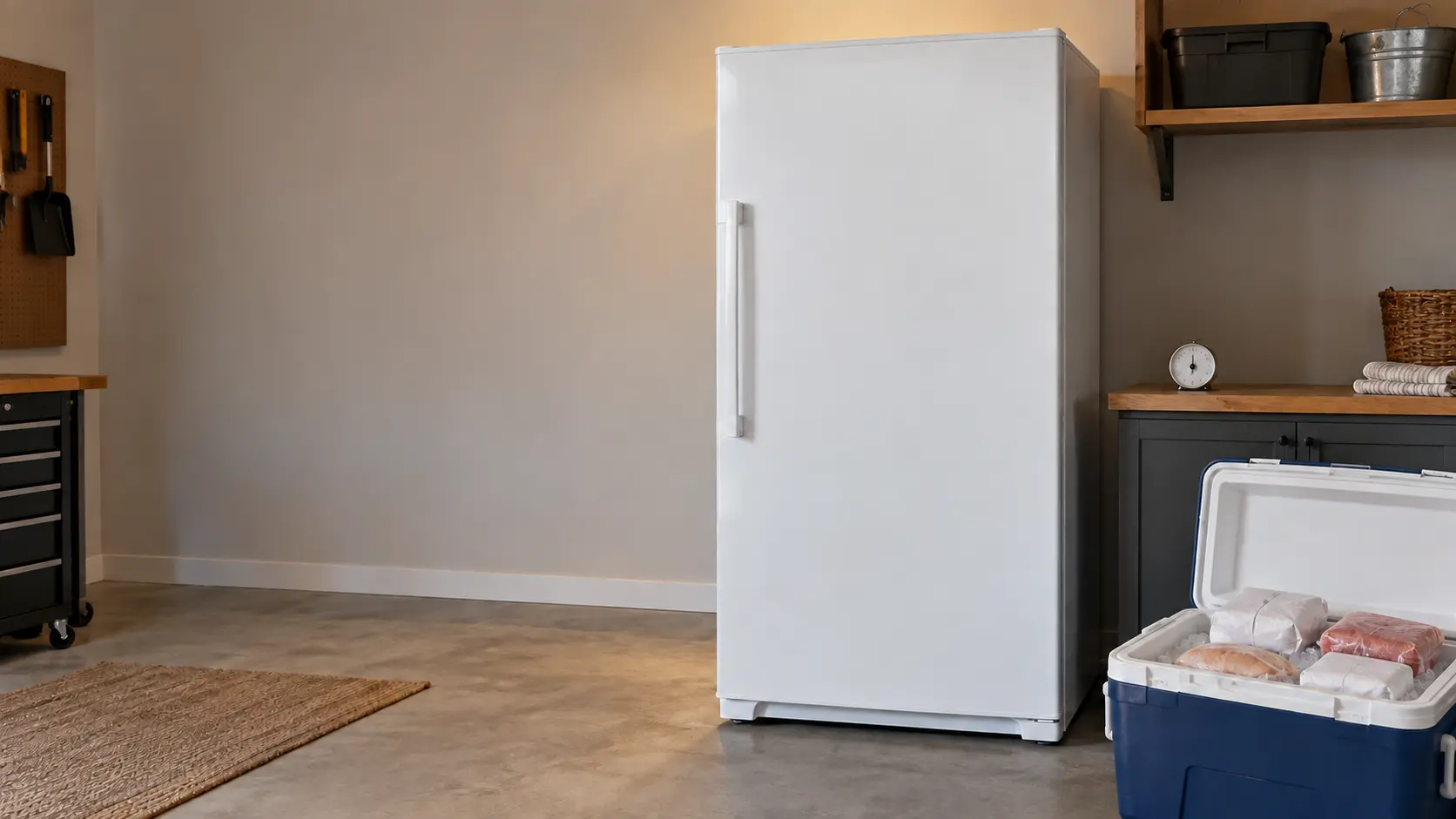
Most of the remaining owner-level causes are about warm air getting in or hot air not getting out. After dark, place a lit flashlight inside, close the door or lid on it and walk around the edge in a dark room. Light escaping along the gasket shows a gap. Then look inside for a package stopping the door, which GE lists first among its causes of both warm and long-running freezers.
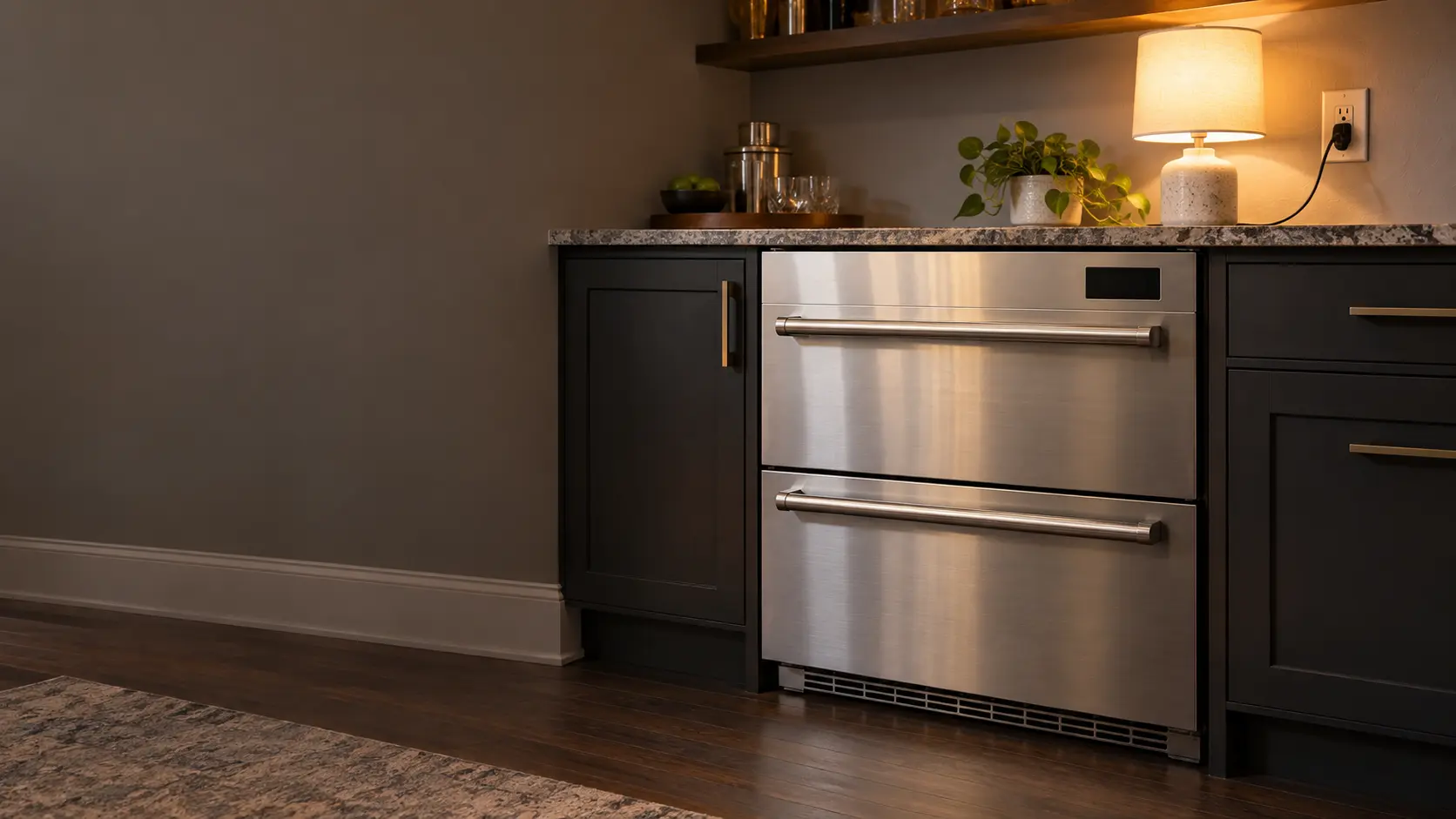
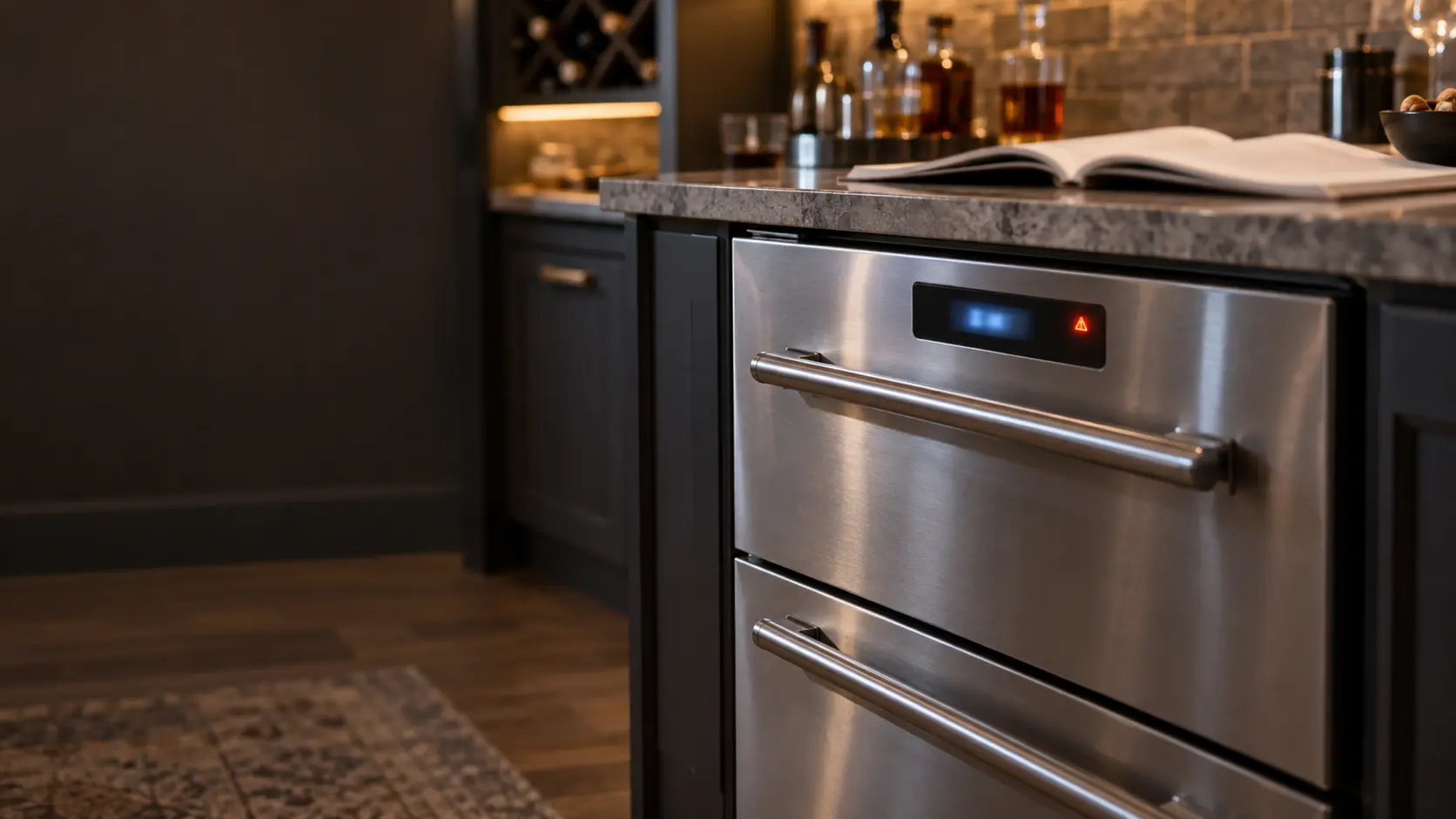
Outside, measure the gaps with a tape: three inches behind, beside and above the cabinet is GE's number. Clear boxes off the lid of a chest, move shelving away from the back of an upright, and on a built-in freezer column or an undercounter drawer, make sure the front grille at floor level is not blocked by a rug, a kick panel or lint.
Source: GE Appliances — Upright no-frost freezers owner's manual, FUF14, FUF17 and FUF21 (49-60763) — Own grounded outlet, no adapter or extension cord; Demo mode and how to leave it; control lock held 3 seconds; packages holding the door open; normal sounds, a warm cabinet up to 30°F above room temperature, slow start from overload protection, outside moisture in humid weather; GE Appliances — Chest freezers owner's manual, FCM5 and FCM7 (49-1000422) — No extension cord or adapter; Off stops cooling without cutting power; 3 inches of clearance at top, back and sides
Sounds and sensations that are not a problem
Several things that worry owners appear in GE's list of normal behavior. Knowing them saves a visit that would end with a technician telling you the freezer is fine.
Noises the manual calls normal
A louder hum when the compressor starts, which levels off as it keeps running. Popping or cracking as metal parts expand and contract. Bubbling or gurgling like boiling water, which is refrigerant moving through the tubing. On a frost-free upright, dripping during a defrost cycle and the sound of the fan circulating air.
- A warm outer cabinet: GE says the walls of an upright can sit up to 30°F above room temperature.
- A delayed start after the power has been off, from built-in overload protection.
- Moisture on the outside during very humid weather, which GE says to wipe dry.