How warm and how cold the room may get
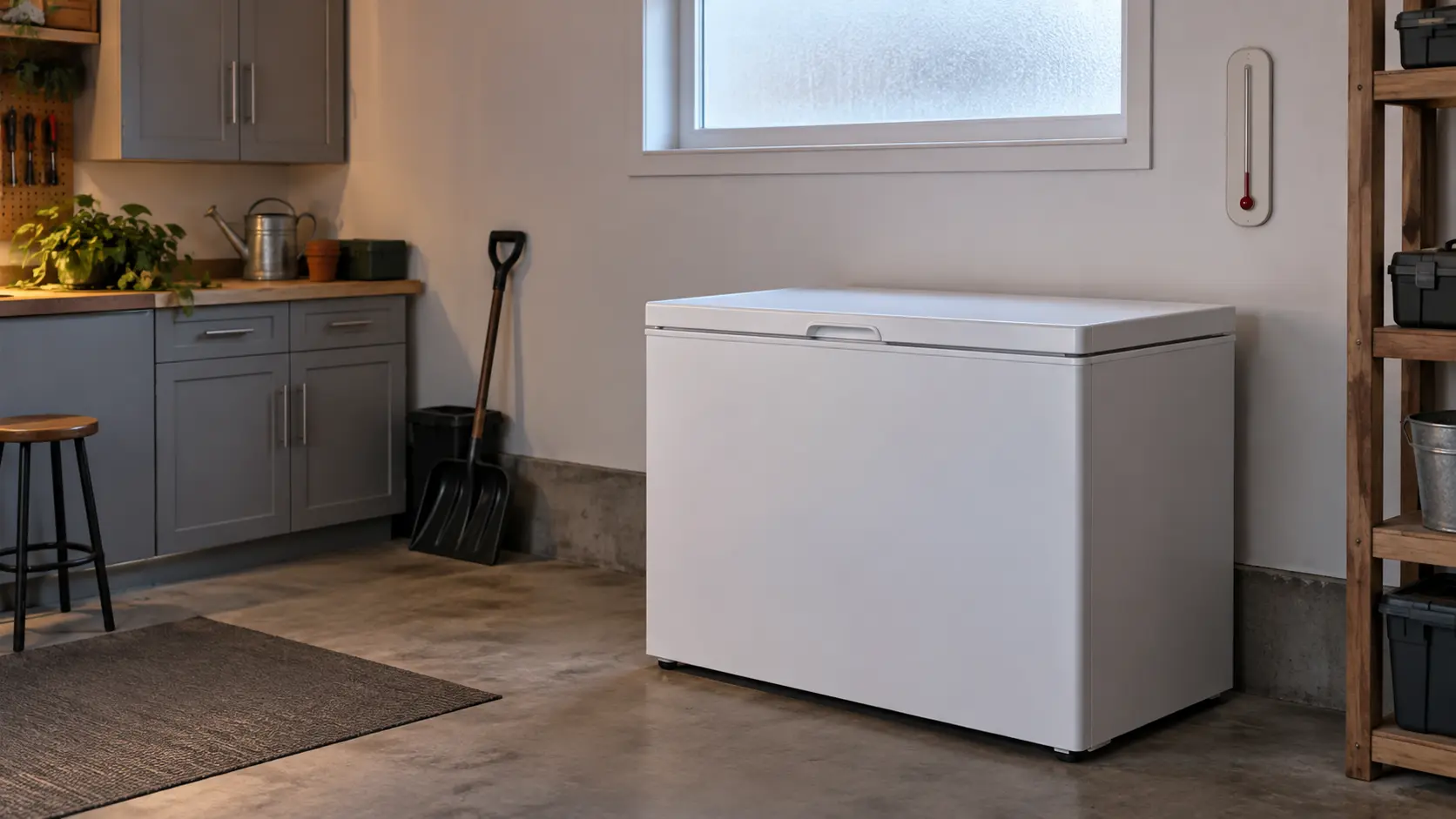
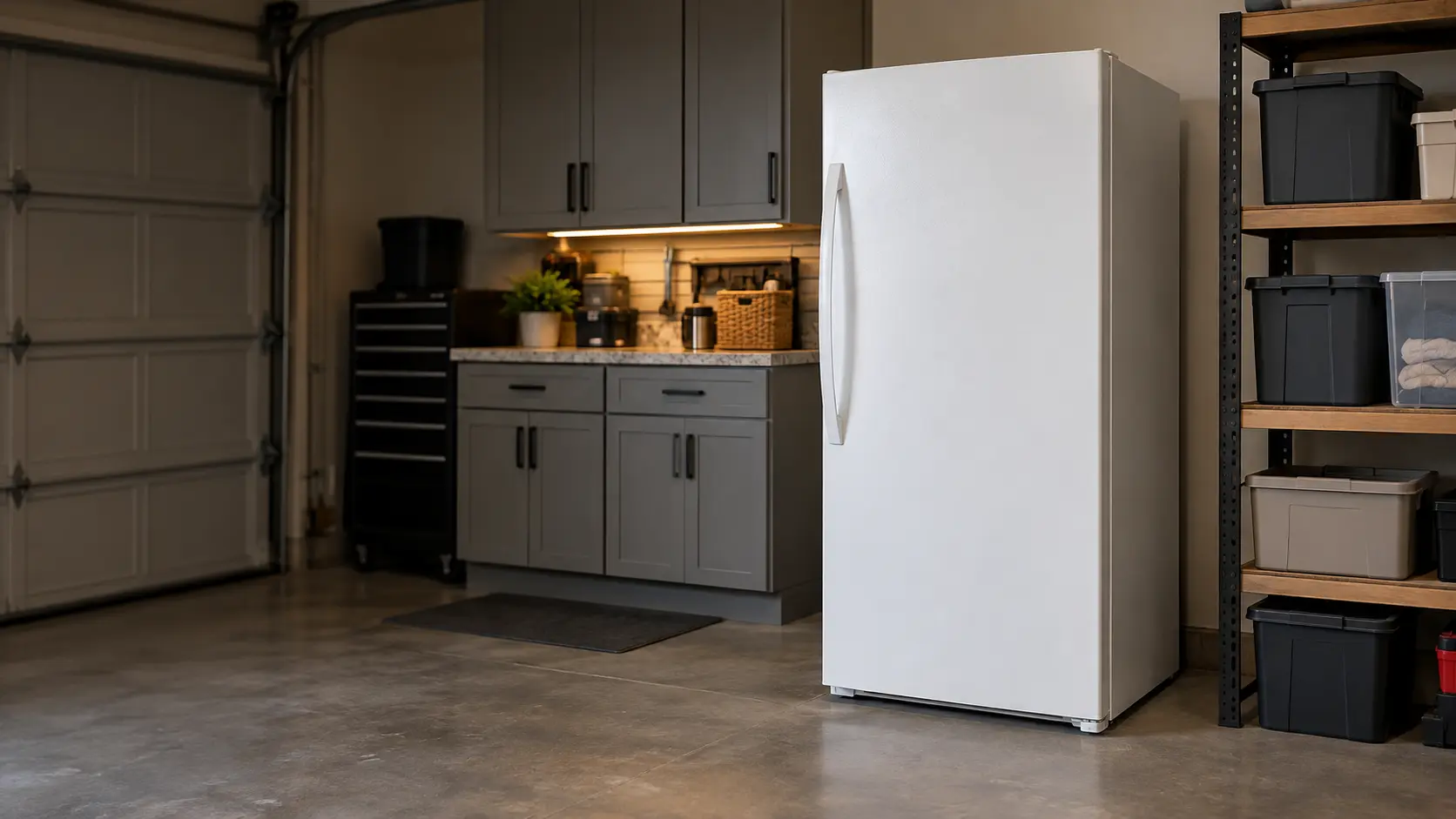
A freezer's control senses the cabinet, and its compressor sheds heat into the room. Both stop working well when the room goes too far in either direction. GE's installation guidance for its upright and chest freezers is to place them where the surrounding temperature will not exceed 110°F or fall below 0°F.
Not every freezer shares that range. A Frigidaire convertible chest that can run as a freezer or a cold drinks box says not to install it where the temperature drops below 0°F in freezer mode, and its refrigerator mode needs 38°F. The phrase "garage ready" on a tag means the maker tested it for a wider band, and the manual tells you what that band is.
A garage in a northern winter
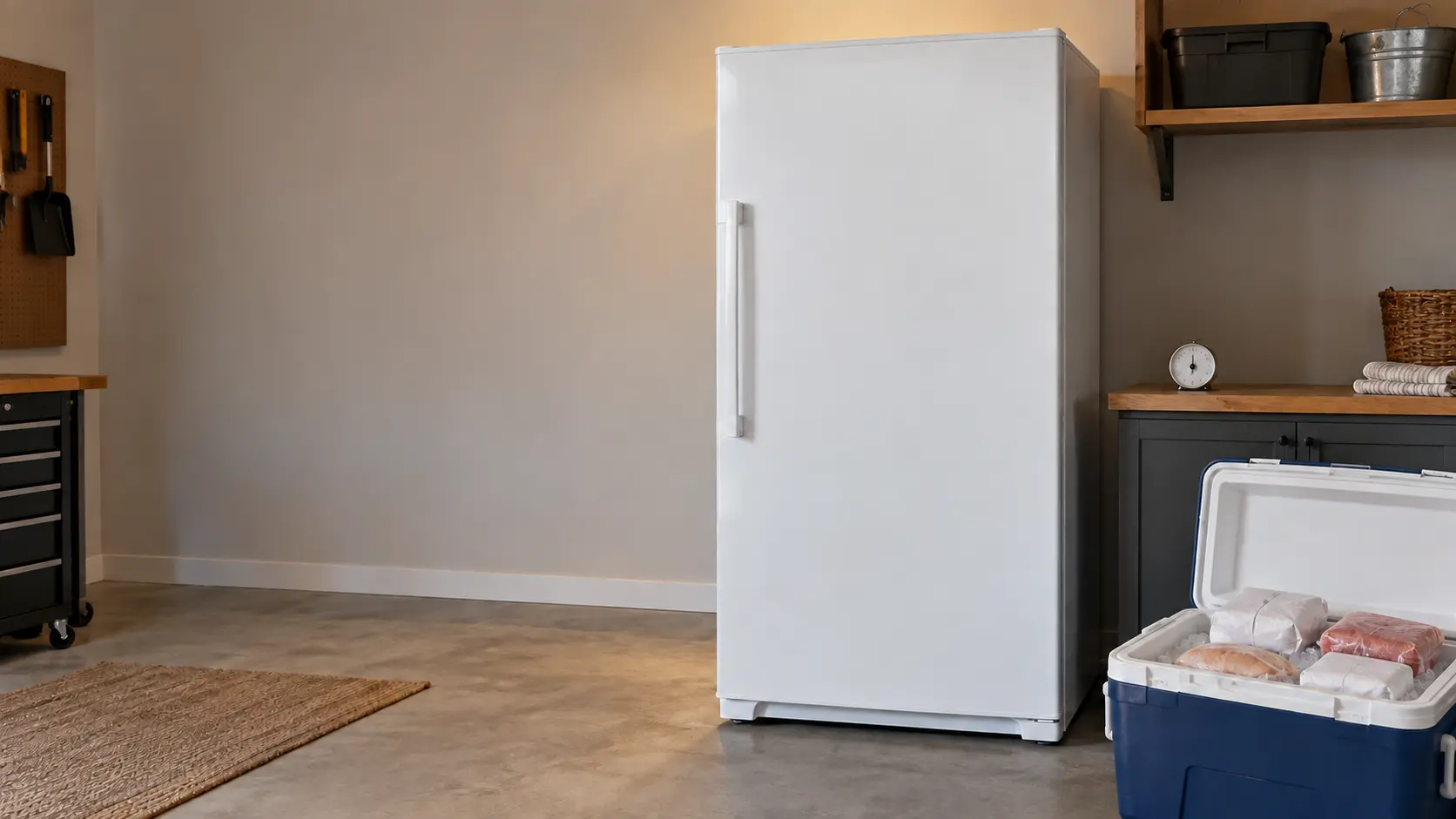
In a cold room the cabinet barely warms, so the thermostat rarely calls for cooling, and a unit outside its rating can sit idle while its contents soften. Frost-free uprights with the defrost heater and sensors in the back are where this shows up first. Unheated garages in Minnesota, Maine or the mountain West can go below 0°F on a clear night.
A garage in a southern summer
Frigidaire points out that the cabinet's outer skin may sit up to 30°F above the room while the compressor pushes heat out, and asks for space around it in hot climates. A west-facing garage in Phoenix or Houston can pass 110°F in the afternoon, which leaves the compressor running for hours with little margin.
Source: GE Appliances — Upright & Chest Freezer: Installation and Location — Place the freezer where the room will not exceed 110°F or fall below 0°F; a dry, well-ventilated room, not a closet; a floor strong enough fully loaded; shims on an uneven floor; Frigidaire — Chest Freezer User Manual (A31283301) — Do not install below 0°F in freezer mode or 38°F in refrigerator mode; exterior walls can run 30°F above room temperature and hot climates need airflow; no extension cord or two-prong adapter; intended for kitchen, pantry, basement and enclosed garage
The outlet and the circuit
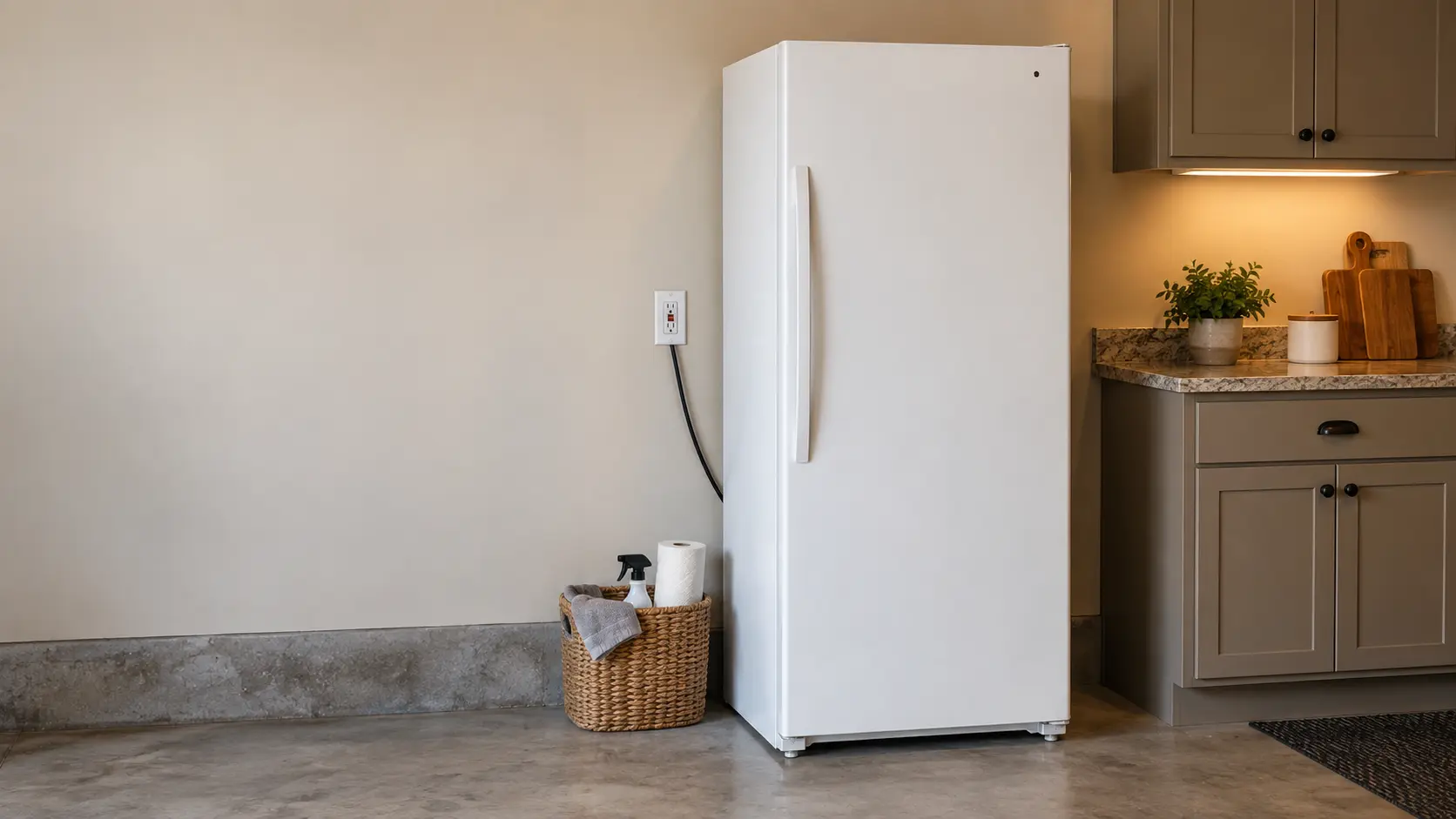
Freezer manuals are firm that the plug goes straight into a grounded three-prong outlet: Frigidaire's says no extension cord and no two-prong adapter. A garage or basement freezer that shares a circuit with a shop vacuum, a space heater or a compressor for the tires can be cut off every time the breaker trips, and nobody notices for days.
Garage and basement outlets are often protected by a GFCI, either in the outlet itself or at another outlet upstream on the same run. When it trips, everything downstream goes silent with no warning sound, so the freezer can warm for a week behind a reset button in another corner.
- Plug directly into the wall, never through a power strip or a cord.
- Find which breaker and which GFCI feed that outlet, and label them.
- Press the GFCI's test and reset buttons monthly and confirm the freezer restarts.
- Keep the freezer's circuit free of heaters and shop tools.
Source: Frigidaire — Chest Freezer User Manual (A31283301) — Do not install below 0°F in freezer mode or 38°F in refrigerator mode; exterior walls can run 30°F above room temperature and hot climates need airflow; no extension cord or two-prong adapter; intended for kitchen, pantry, basement and enclosed garage
The floor, the damp and the space around it
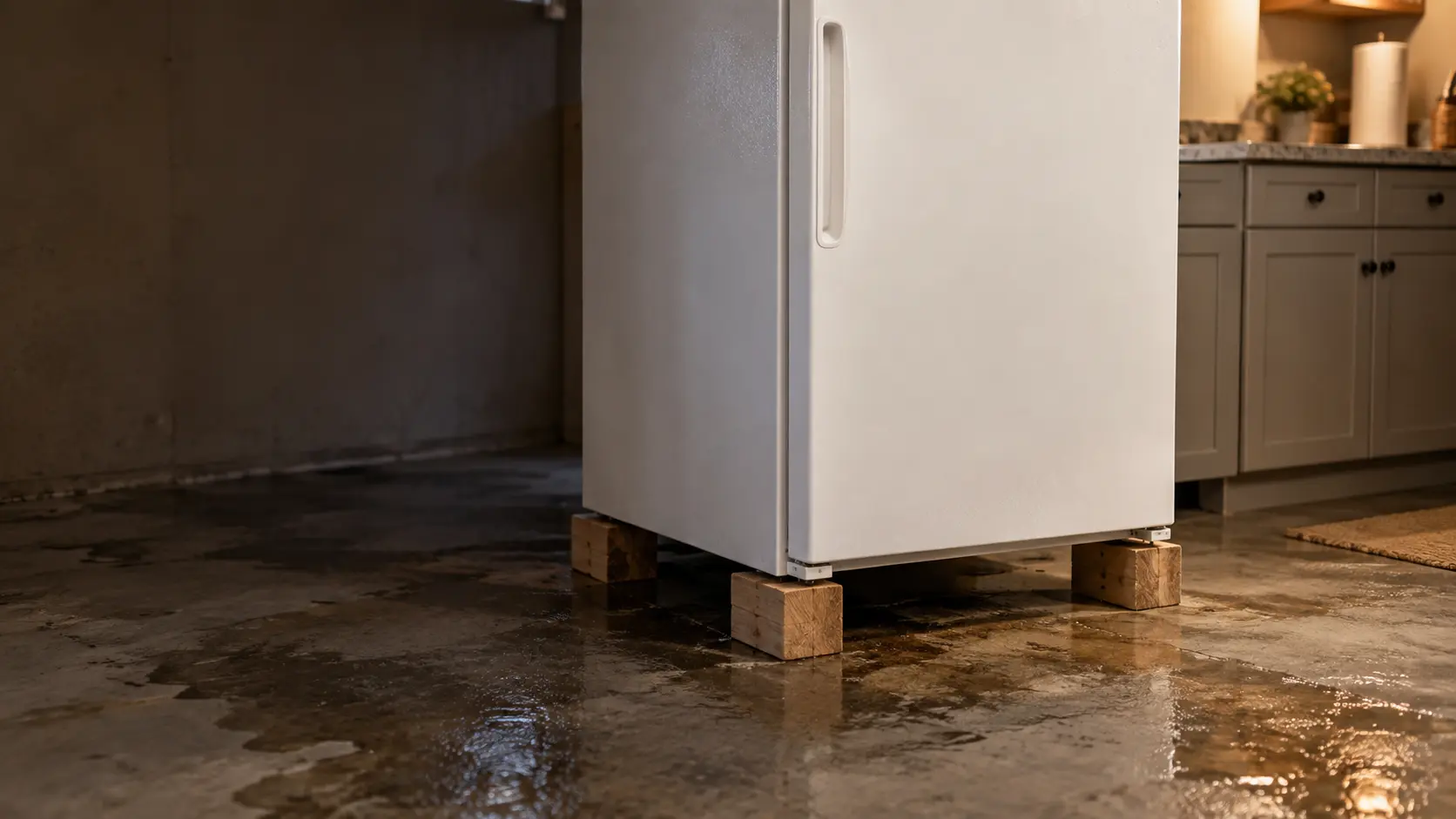
GE asks for a floor strong enough to hold the freezer fully loaded, a dry and well-ventilated room, and shims where the floor is uneven. Garage slabs slope toward the door for drainage and basement floors dip toward a drain, so almost every freezer in those rooms needs its legs or shims set rather than dropped in place.
A damp basement adds its own trouble. Condensation forms on a cold cabinet in humid air, water collects under a chest, and a unit in a low corner is the first thing to stand in water when the sump fails. A few inches of height on a sturdy platform and a spot away from the water heater help.
Enclosed rooms, not porches or carports
Frigidaire's chest freezer manual lists a kitchen, a pantry, a basement and an enclosed garage as the intended places for its freezer. A carport, a screened porch or a shed without walls on all sides is outside that list, exposed to rain, sun on the cabinet and animals nesting in the warm machine compartment.
Source: GE Appliances — Upright & Chest Freezer: Installation and Location — Place the freezer where the room will not exceed 110°F or fall below 0°F; a dry, well-ventilated room, not a closet; a floor strong enough fully loaded; shims on an uneven floor; Frigidaire — Chest Freezer User Manual (A31283301) — Do not install below 0°F in freezer mode or 38°F in refrigerator mode; exterior walls can run 30°F above room temperature and hot climates need airflow; no extension cord or two-prong adapter; intended for kitchen, pantry, basement and enclosed garage
Which kind copes better in a garage
ENERGY STAR notes that a chest freezer usually uses less energy than an upright, since it opens from the top and loses less cold air, and that manual-defrost models use about half the energy of automatic-defrost ones. In an unconditioned room that simplicity is useful: fewer parts depend on a sensor reading the room correctly.
An upright is easier to organize and reach, and many frost-free uprights are sold as garage-rated. Built-in columns and undercounter drawer units are made for conditioned kitchens and bars, so they are rarely the right choice for a garage at all.
Source: ENERGY STAR — Freezers — A chest freezer is usually more energy efficient because less cold air escapes; manual defrost models use half the energy of automatic defrost models
Keeping watch on a freezer you rarely open
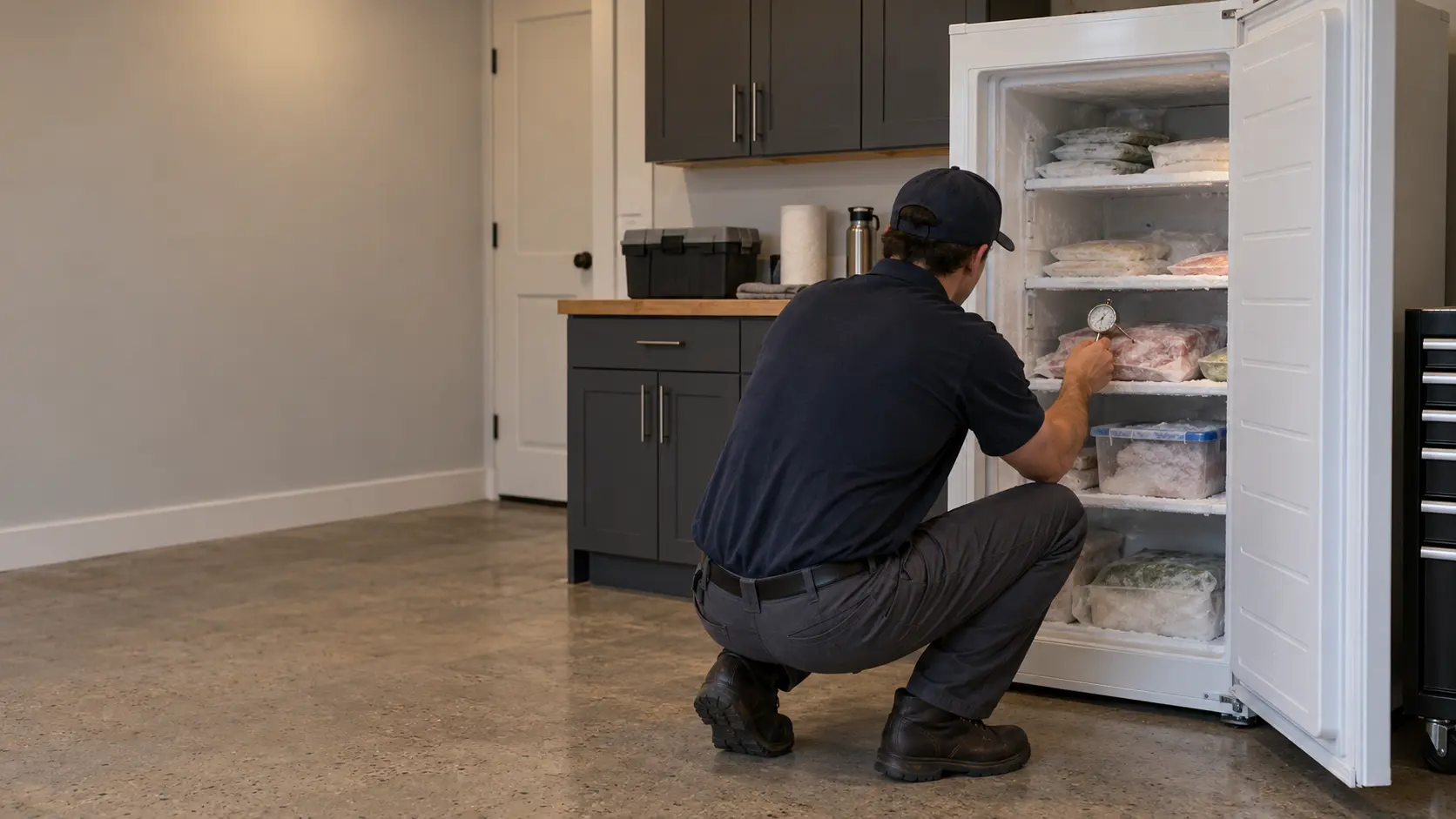
A kitchen freezer gets noticed several times a day. One in the garage may go a week without a glance, which is why most of the garage freezer calls we get begin with food already soft. A cheap appliance thermometer in the front basket, read whenever you pass, is the minimum.
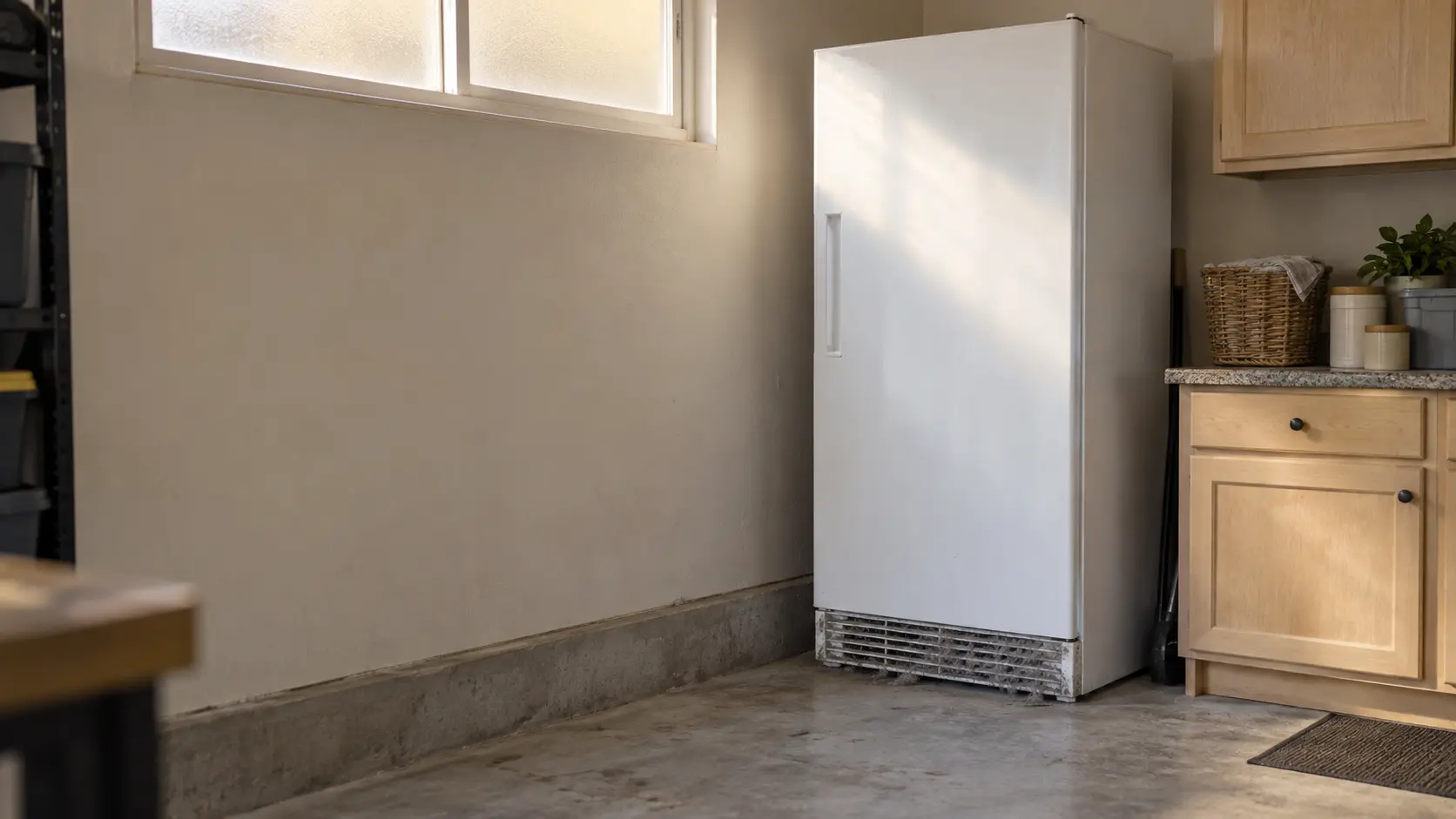
A wireless thermometer that sends an alert to a phone closes the gap, especially for a vacation or a stretch of extreme weather. Pair it with a monthly look behind the unit for dust on the condenser, a kinked cord or storage boxes crowding the back.
- An appliance thermometer in the front basket, read whenever you pass.
- A wireless thermometer with phone alerts for trips and heat waves.
- A monthly look at the condenser, the cord and the space behind the cabinet.
- A note on the lid with the breaker and GFCI that feed the outlet.