Where the generator stands
CDC puts it without qualification: never use a generator inside your home or garage, even if doors and windows are open, and only use one outside, more than 20 feet from any windows, doors and vents. Ready.gov adds attached garages to that list. Exhaust carbon monoxide has no smell, and it drifts through an open door, a dryer vent or a gap under the eaves.
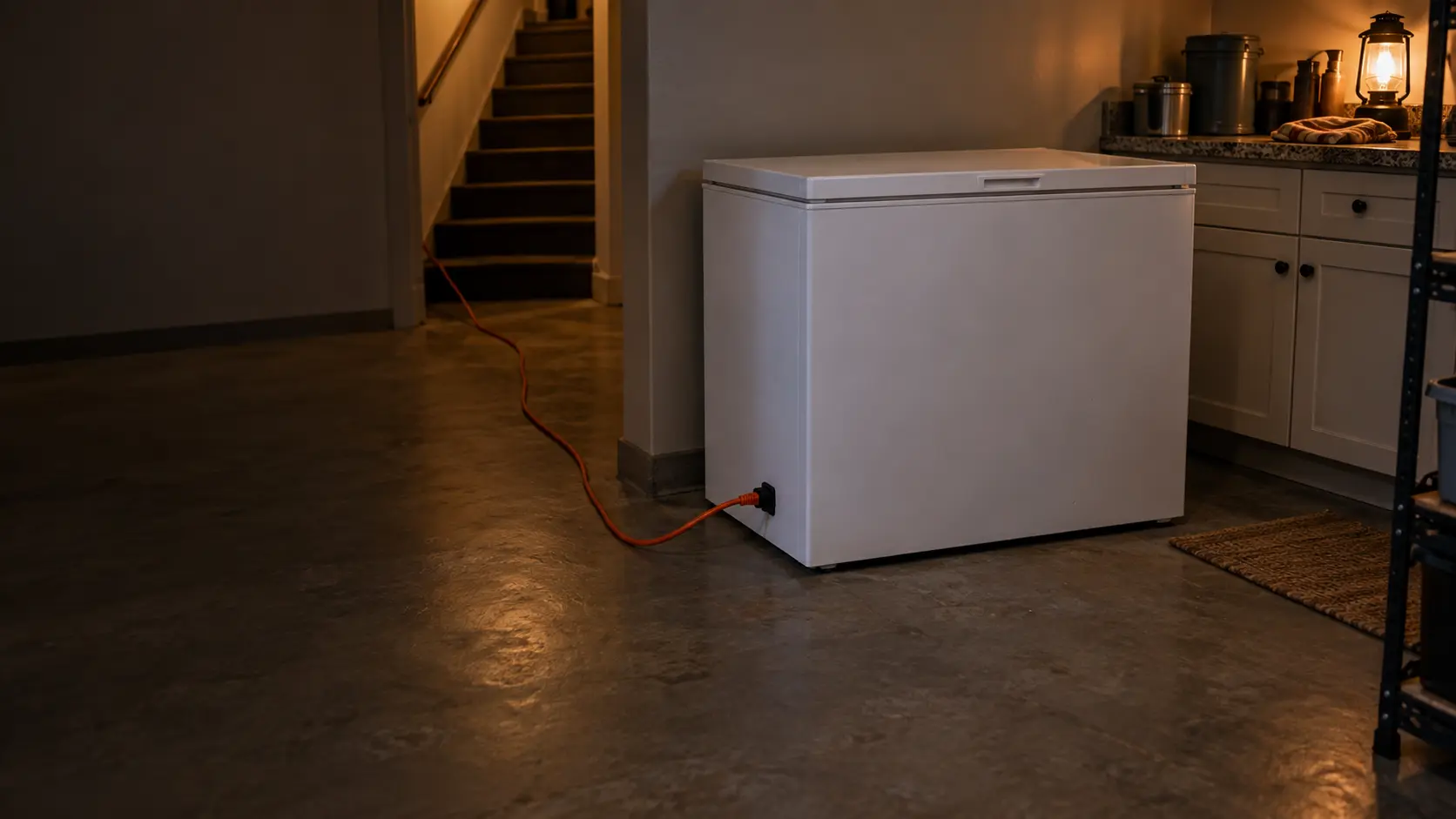
That rule shapes the whole plan when you run a freezer on a generator and the freezer lives in a basement or a garage. The freezer stays where it is; the generator goes out into the yard, and a long cord comes to the freezer rather than the other way around.
- Outdoors only, never in a garage, basement, shed or crawl space.
- More than 20 feet from windows, doors, vents and attached garages.
- Exhaust pointed away from the house.
- Battery CO alarms working on every level inside.
Carbon monoxide alarms inside
Ready.gov asks for carbon monoxide detectors with battery backup in central locations on every level of the home, and CDC asks for a battery-powered or battery-backup detector whenever a generator is running. The warning signs CDC names most often are a headache, dizziness and weakness, nausea or vomiting, chest pain and confusion. If anyone has them, get everyone outside into fresh air and call 911.
Rain, wet hands and refueling
Ready.gov warns that touching a wet generator, or devices connected to one, can cause electrical shock, and asks for the generator to be kept dry and protected from rain or flooding. It also says to let the generator cool before refueling, so plan fuel stops around the freezer's schedule, not in the middle of a run.
Source: CDC — About Carbon Monoxide Poisoning — Never use a generator inside a home or garage, even with doors and windows open; only outside, more than 20 feet from windows, doors and vents; use a battery-powered or battery-backup CO detector; the common symptoms of CO poisoning; Ready.gov — Power Outages — Generators outdoors at least 20 feet from windows, doors and attached garages; keep it dry, a wet generator can shock; connect appliances with heavy-duty extension cords; let it cool before refueling; CO detectors with battery backup on every level
Connecting the freezer
Ready.gov says to connect appliances to a generator with heavy-duty extension cords. That is the one time a freezer should run through a cord: Frigidaire's manual rules out an extension cord in everyday use, and the cord comes out again once utility power returns. Use one outdoor-rated, three-prong cord that reaches the whole distance, with no coils left bunched up and no splices.
The cord route matters too. Run it through a gap that does not hold a door open for exhaust to follow, keep it off paths where it will be driven over, and keep the plug connection off wet ground.
Never through a wall outlet
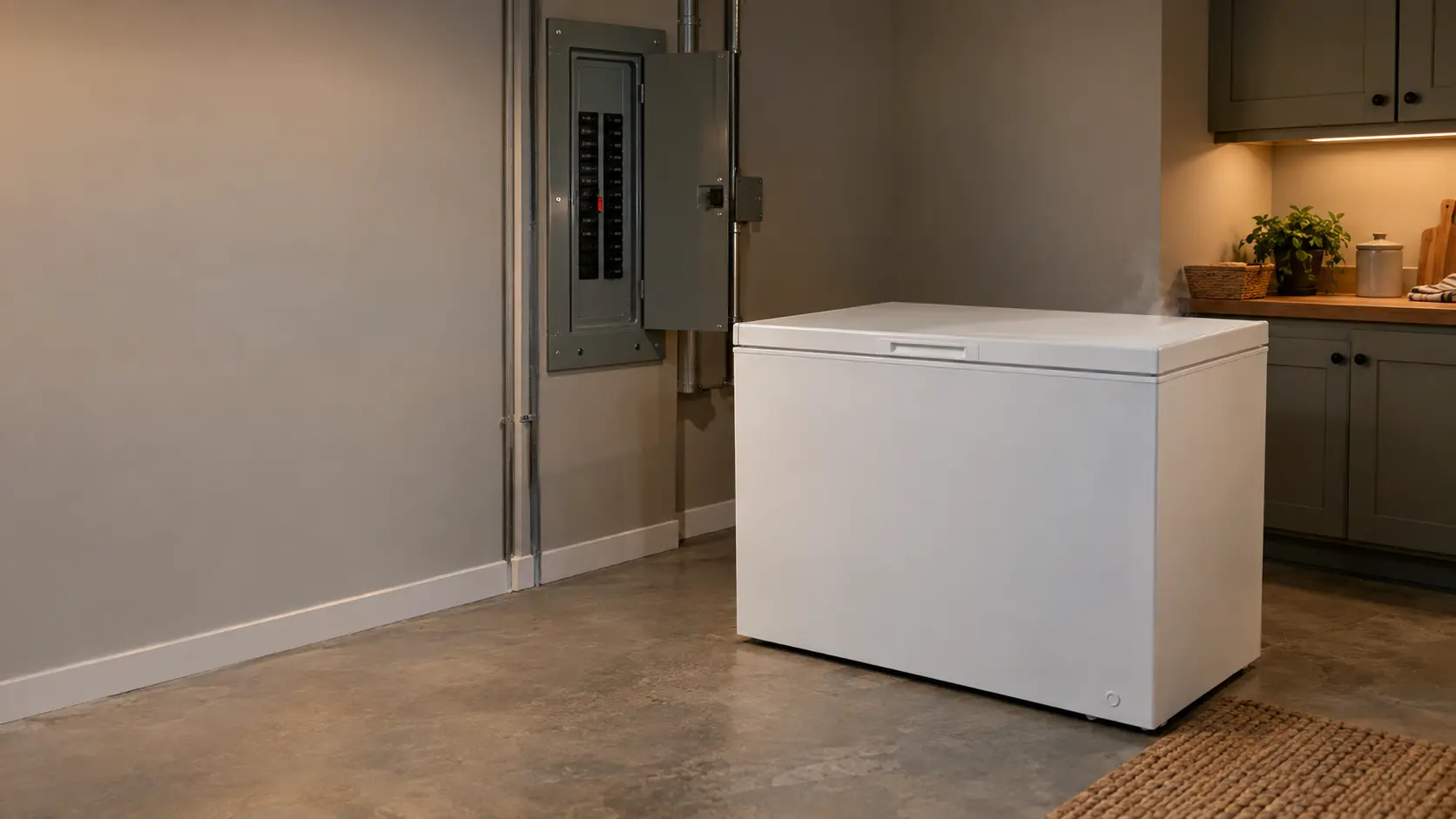
Plugging a generator into a wall or dryer outlet with a double-ended cord sends power backward into the house wiring and out to the utility lines. Generac calls this backfeeding and warns that it can seriously injure or kill line workers who expect the line to be dead. A generator that feeds house circuits does so through a transfer switch installed by an electrician, which keeps the house on utility or generator power, never both.
Source: Ready.gov — Power Outages — Generators outdoors at least 20 feet from windows, doors and attached garages; keep it dry, a wet generator can shock; connect appliances with heavy-duty extension cords; let it cool before refueling; CO detectors with battery backup on every level; Generac — Why you should never back-feed your electric panel with a generator — Backfeeding sends power into utility lines and can injure or kill line workers; a transfer switch connects the home to utility or generator power, never both; Frigidaire — Chest Freezer User Manual (A31283301) — Do not use an extension cord or two-prong adapter in normal installation

Sizing the generator for a freezer
A freezer compressor draws a short surge each time it starts, well above what it draws while running. The rating plate inside the lid or on the back of the cabinet lists volts and amps, and the generator's manual lists what it can supply running and at startup. Match the starting figure first, then add anything else that will share the generator.
Start the generator and let it settle before plugging in the freezer, then add other loads one at a time. If the compressor hums and clicks off repeatedly on generator power but runs normally on utility power, the generator is too small for that startup surge, or too much else is plugged in with it.
How long to run it
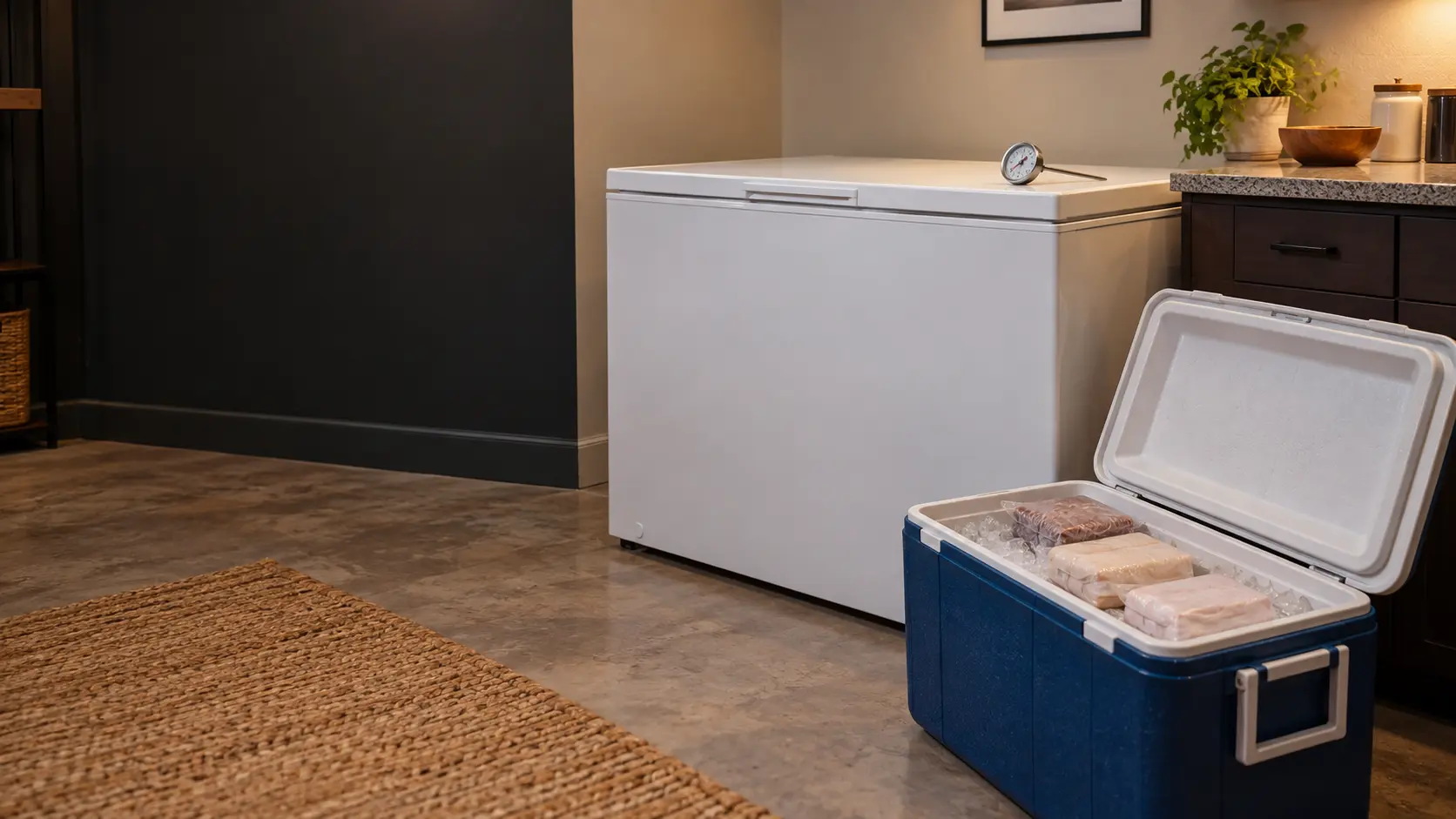
A closed freezer holds its food for a long time without power: FDA's figures are about 48 hours full and about 24 hours half full. That means a freezer does not need the generator around the clock. Running it for a stretch that brings the cabinet back to 0°F, then switching it off and keeping the lid shut, spreads a tank of fuel much further.
Let the thermometer set the schedule, not a fixed timetable. A chest in a cool basement may hold near 0°F for many hours after a run, while a half-empty upright in a hot garage warms faster. Read an appliance thermometer before each run and after it.
- Before a run: note the thermometer reading.
- During: keep the lid or door shut and other loads off the cord.
- After: confirm it reached 0°F before switching off.
- Between runs: keep the freezer shut and check again before the next.
Source: FDA — Food and Water Safety During Power Outages and Floods — A full freezer holds its temperature about 48 hours, a half-full one about 24, with the door closed
After utility power returns
Shut the generator down, let it cool, and move the freezer's plug back to its own grounded wall outlet. Watch the first start on utility power: a compressor that hums and trips the breaker now, after running fine on the generator, has a problem of its own.
Electronic controls sometimes show an alert or lose their setting after days of starts and stops. Read what the display says, compare it with the manual or our error codes pages, and set the temperature again before deciding anything is wrong.