Name the failed part before weighing anything
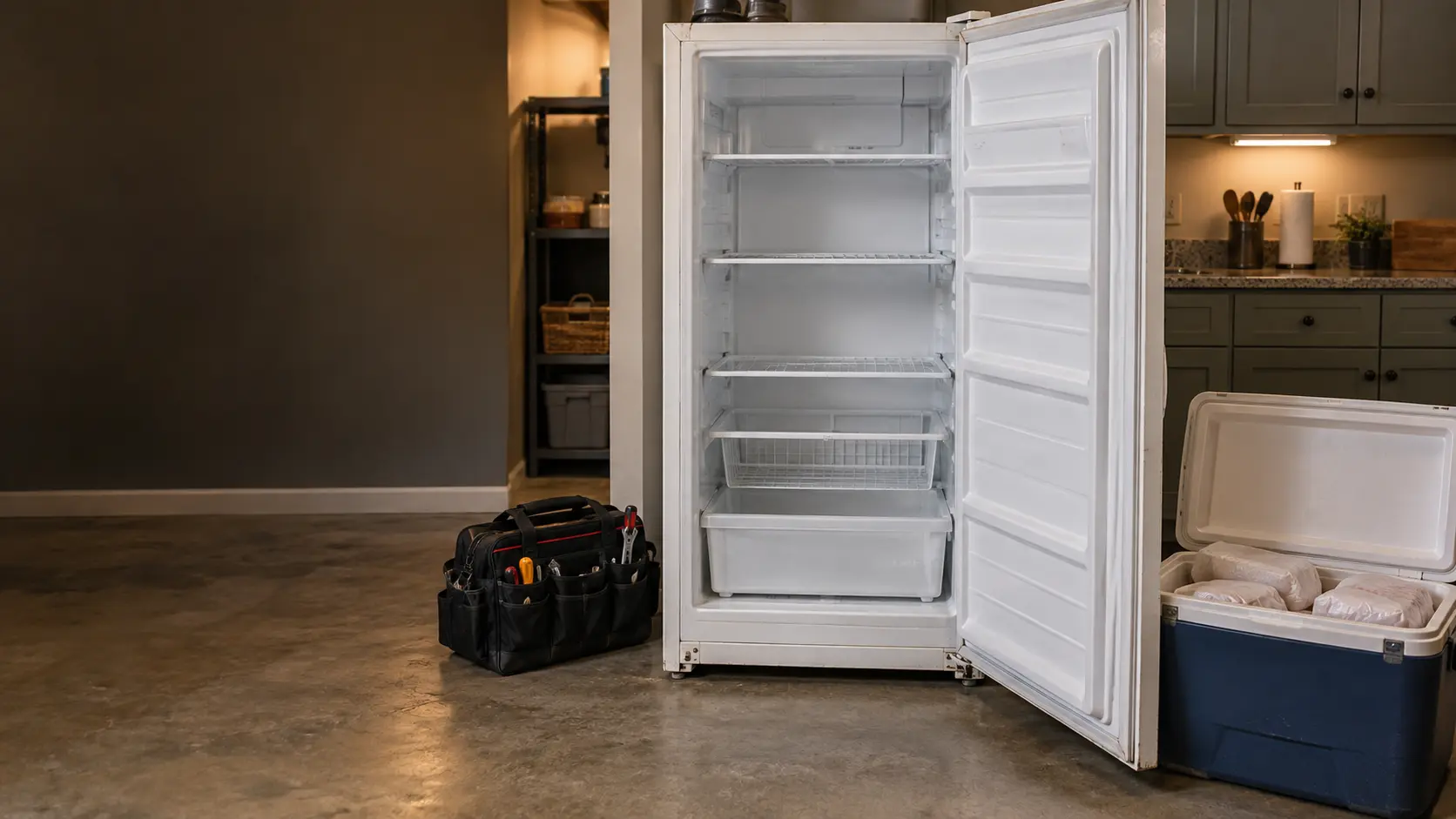
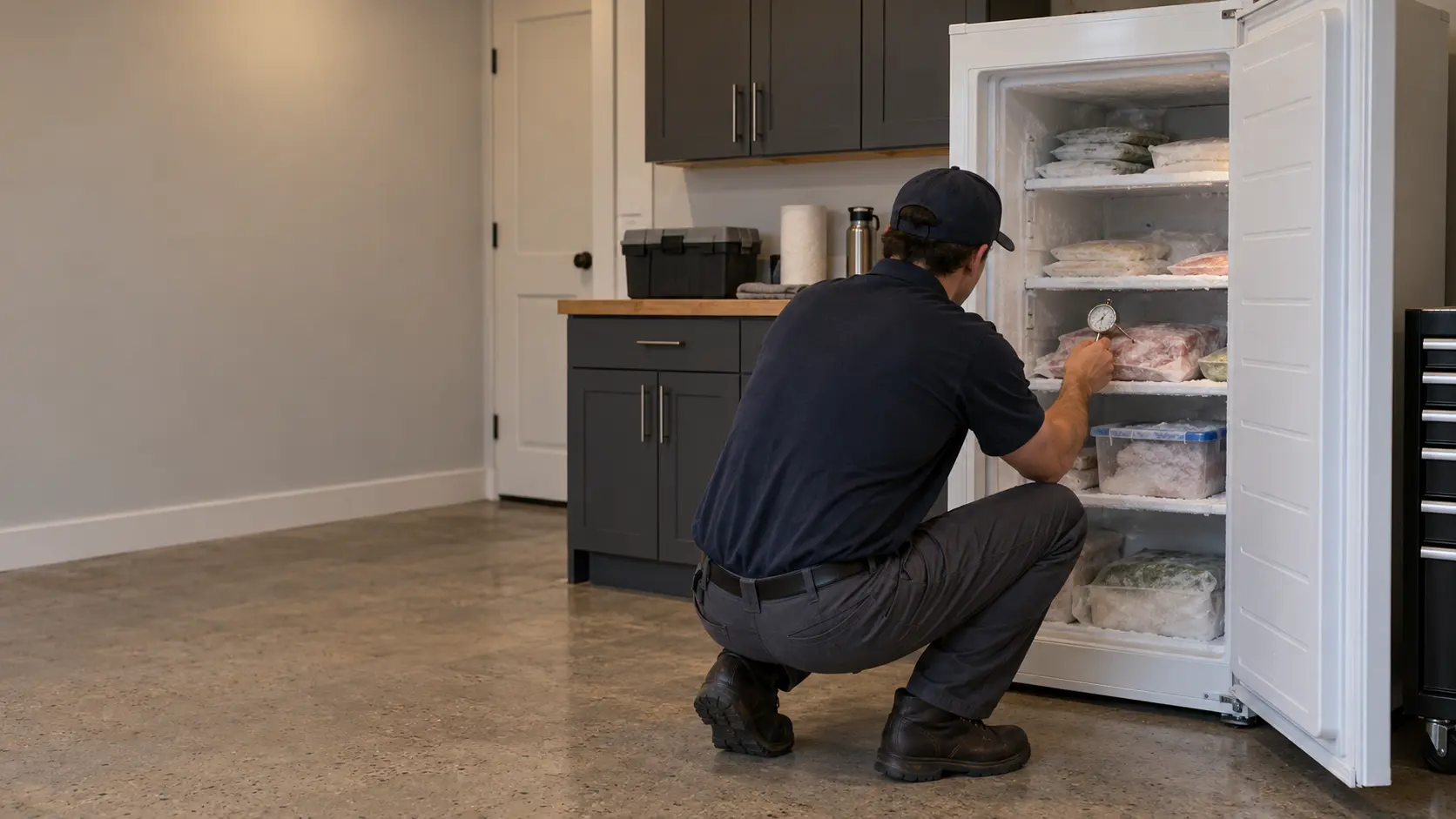
The same symptom, a freezer that has warmed to 20°F with the light still on, can come from a start relay clipped onto the side of the compressor or from a compressor that will never run again. One is a small part and a short visit; the other is a sealed-system job. Nobody can say whether to repair or replace a freezer until a diagnostic visit has told those two apart.
Rank the likely answers from least to most costly, and most freezer failures land in the first half of the list. That is why a new cabinet bought on a guess so often replaces a machine that needed a relay.
- Least costly: a lid or door seal, a thermostat, a start relay or overload, a light or door switch.
- Middle: a condenser or evaporator fan motor, a defrost heater, sensor or timer on a frost-free upright, a control board.
- Most costly: a compressor replacement, or finding and repairing a refrigerant leak and recharging the system.
How age changes the answer for each type
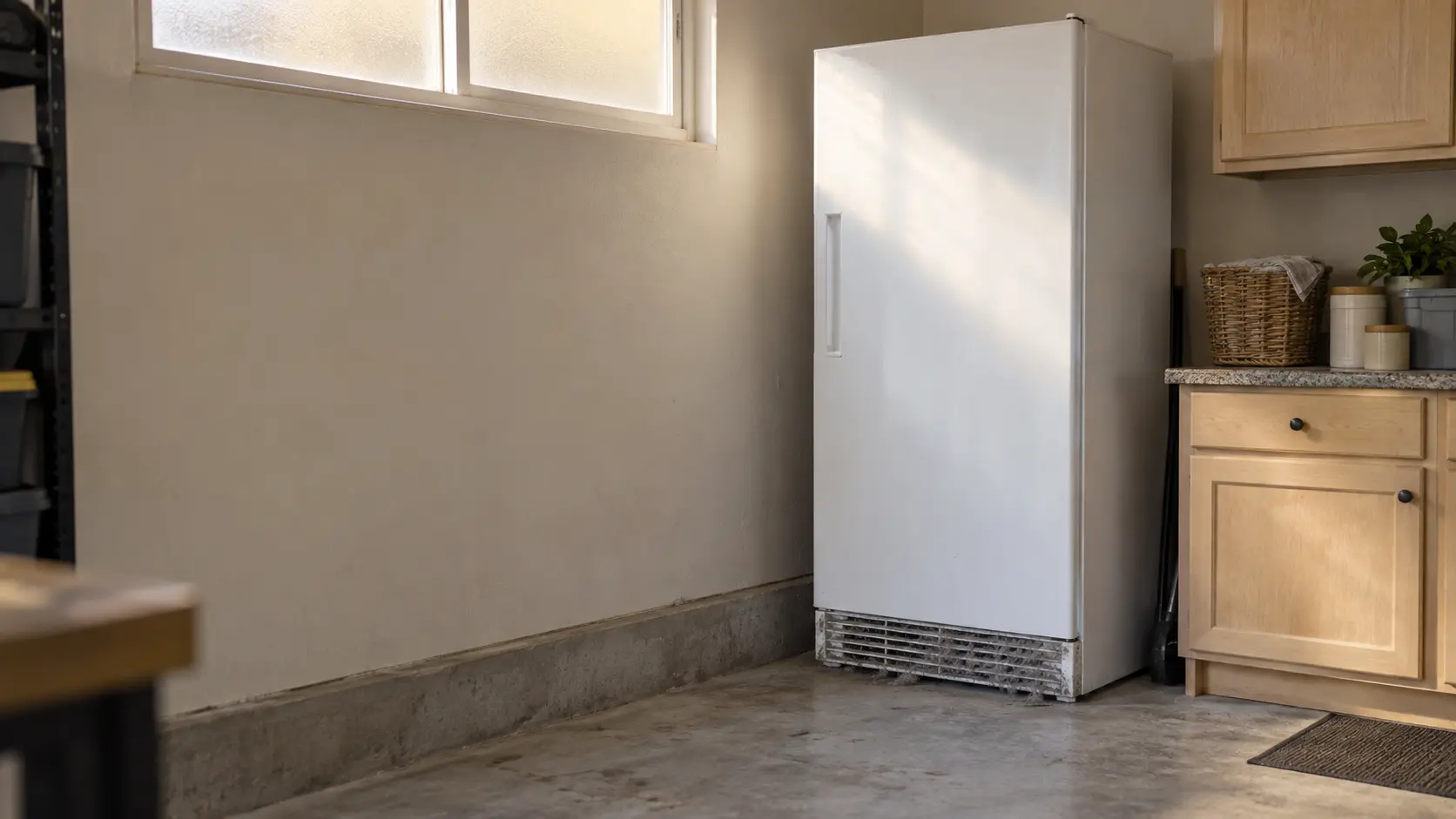
ENERGY STAR works from a lifetime of about 12 years when it adds up what an efficient replacement saves, and it says certified freezers use at least 10 percent less energy than the federal minimum. A freezer older than that is running on borrowed time and probably on more electricity than a new one. A younger one with a cheap part gone is a clear repair.
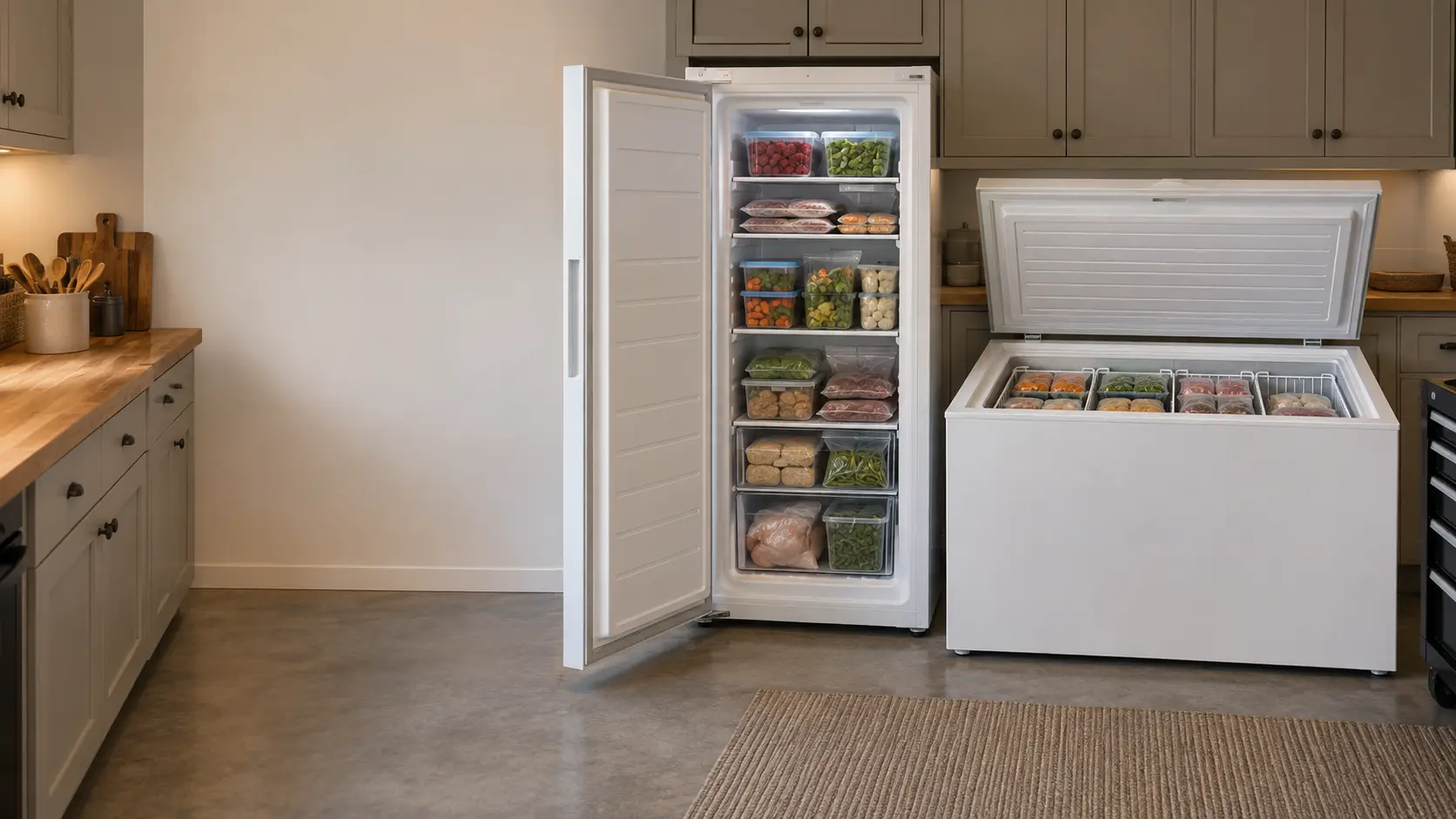
Chest freezers
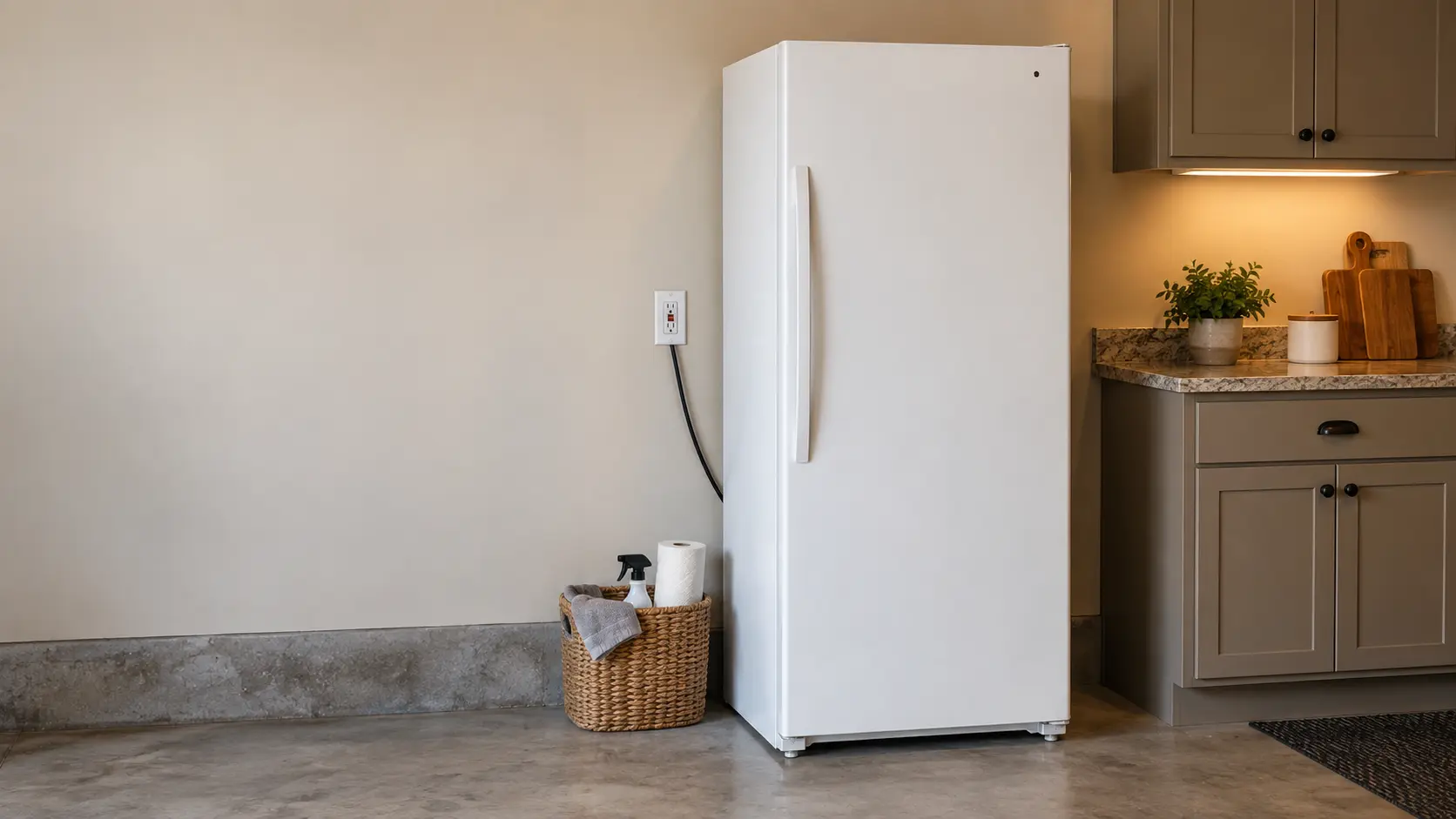
A chest is a simple, long-lived machine. At eight or ten years old a relay or thermostat is still an easy yes. What changes the answer is a leak in the tubing inside the walls, covered in the next section.
Upright freezers
A frost-free upright carries a defrost system, a fan and often an electronic control. Replacing any one of them makes sense well into its second decade, but if two of them fail in the same year on an older cabinet, the next repair is worth questioning.
Freezer columns and undercounter drawers
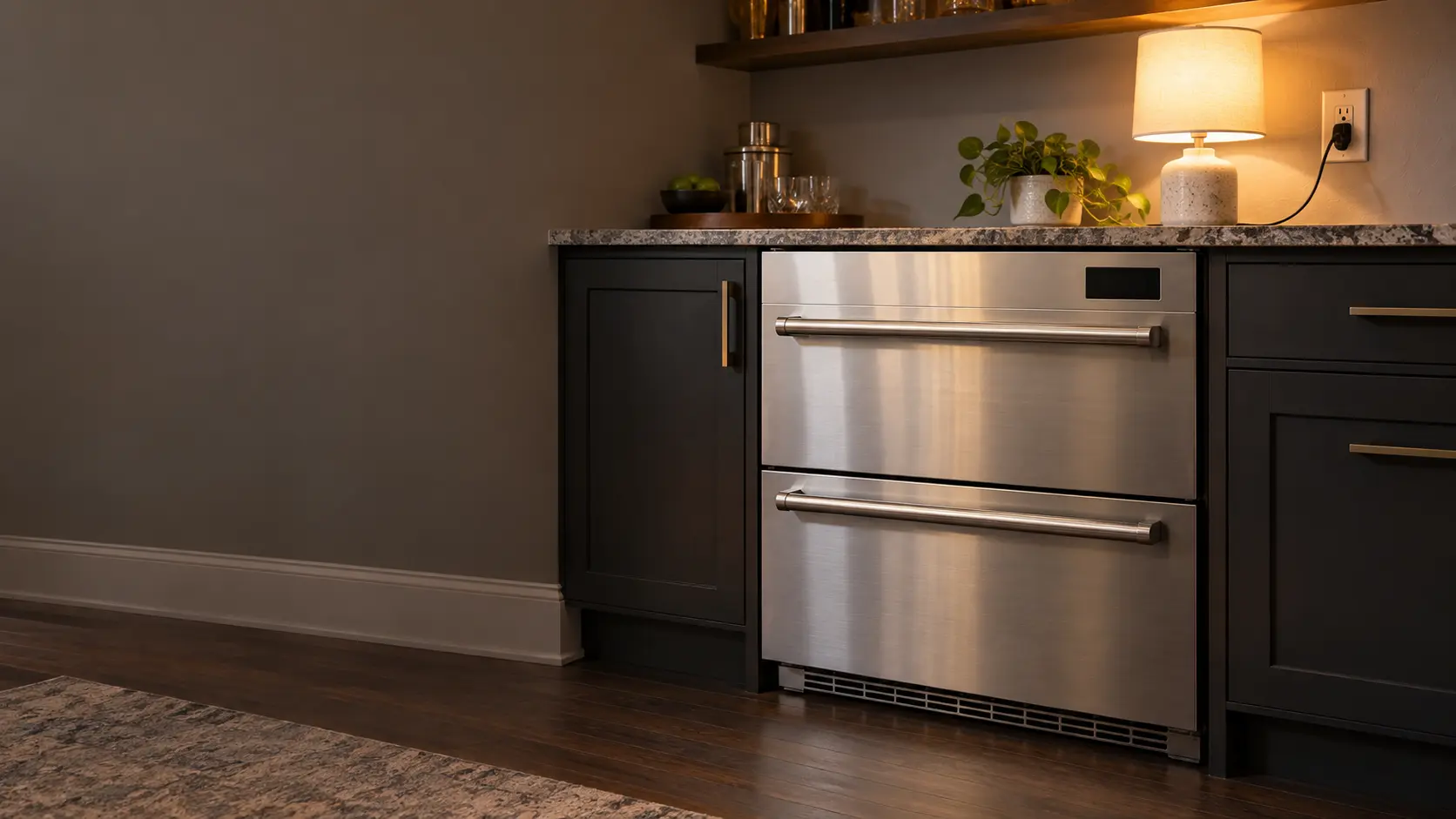
Built-in units change the math. A new column or drawer has to match an opening, the panels and often a paired column beside it, so replacing it can mean carpentry as well as an appliance. Compressor and sealed-system repairs on these models are routine work, and they are usually the better value even on an older unit.
Source: ENERGY STAR — Freezers — Certified freezers are at least 10 percent more efficient than the federal minimum; savings counted over a 12-year freezer lifetime; check the yellow EnergyGuide label

When the sealed system is the problem
GE describes how the condenser tubing on both chest and upright freezers runs between the inner and outer walls, and on a chest the evaporator is attached inside the walls as well. Foam insulation fills the space around it. A leak somewhere in that tubing is sealed in with it, and there is no panel to remove.
On most chest freezers, and on many budget uprights, that makes a refrigerant leak the one repair we often advise against. A compressor that has simply worn out is a different matter: it sits in the open machine compartment, and replacing it can make sense on a newer cabinet that is otherwise sound.
Source: GE Appliances — Upright and chest freezer: wrap-around condenser and evaporator — Condenser tubing runs between the inner and outer walls of chest and upright freezers; a chest's evaporator is attached inside its walls
Costs that do not show on the sticker
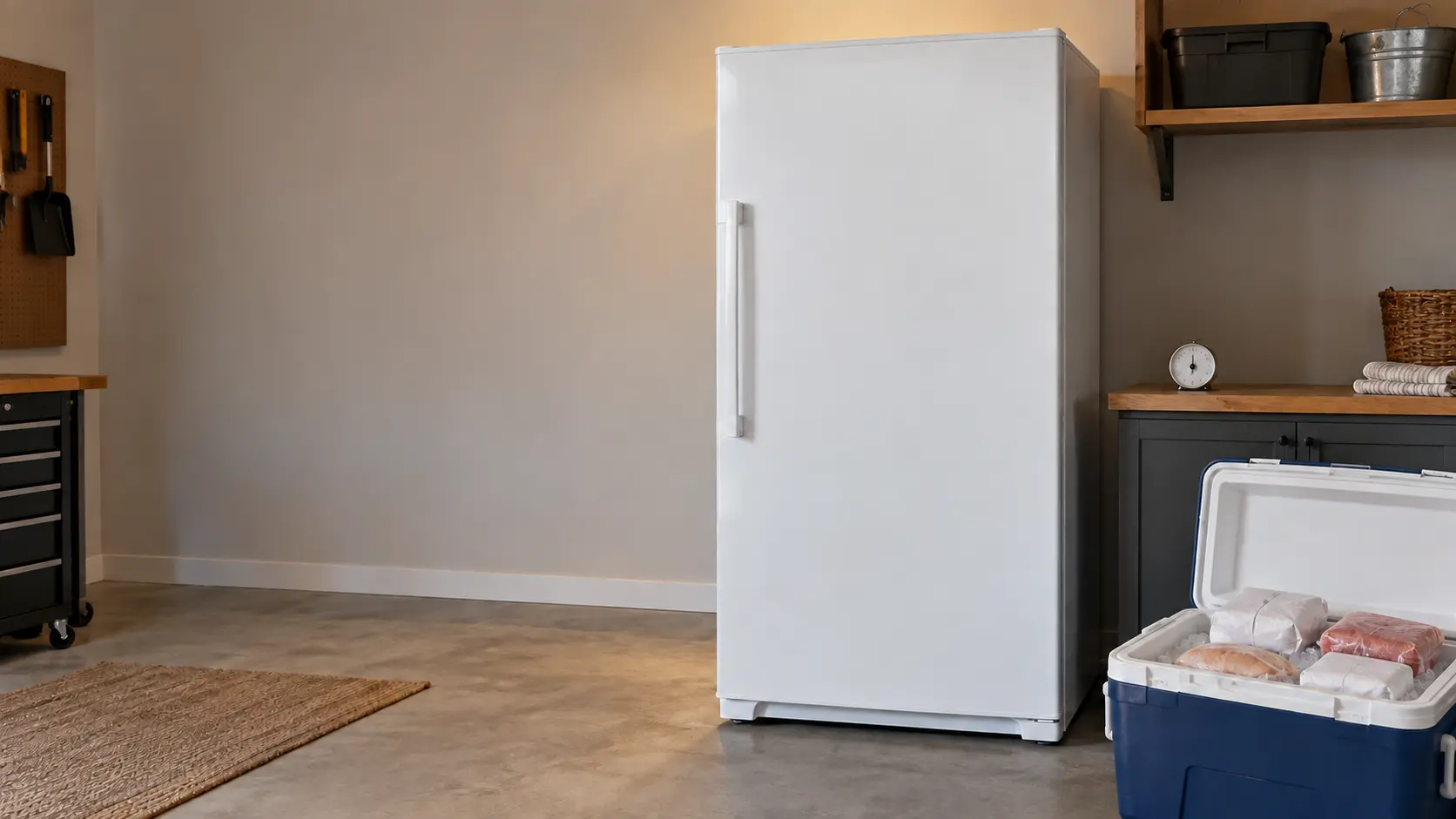
A new freezer is not only the purchase. There is the food that has to go somewhere while the old one leaves and the new one pulls down to temperature, the trip up basement stairs, and the old cabinet itself, which contains refrigerant and cannot simply go out with the trash.
EPA rules for household freezers make the last person in the disposal chain, typically a scrap recycler or landfill, responsible for making sure the refrigerant is recovered first. In practice that means arranging a utility pickup, a retailer haul-away or a recycler rather than leaving it on the curb, and never cutting the tubing yourself to make it lighter.
- Food storage for a day or more while the new freezer reaches 0°F.
- Delivery and haul-away, especially from a basement or a tight garage.
- Recycling of the old cabinet with its refrigerant recovered.
- For a built-in unit, panels, trim and possibly cabinetry to fit the new one.
Source: US EPA — Stationary refrigeration safe disposal requirements — Household freezers enter the waste stream with refrigerant intact; the final person in the disposal chain must ensure the refrigerant is recovered
Making the call in five questions
Once the part has a name, these questions settle nearly every case we see. If most answers lean one way, go with them; if they split, the type of freezer is usually the tiebreaker.
Is the failed part in the cheap half of the list? Is the cabinet under about ten years old? Is the leak, if there is one, somewhere that can be reached? Would a replacement need new cabinetry or panels? And is the old freezer the reason your electricity use is high, which a look at its yellow EnergyGuide label, if it is still attached, can help answer?
When a second look is worth it
If you have been told a compressor has failed, ask how that was confirmed. A compressor that hums and clicks off can be stopped by a failed start relay, which costs a fraction of the compressor and is replaced in minutes.
Source: ENERGY STAR — Freezers — Certified freezers are at least 10 percent more efficient than the federal minimum; savings counted over a 12-year freezer lifetime; check the yellow EnergyGuide label