How each design holds the cold
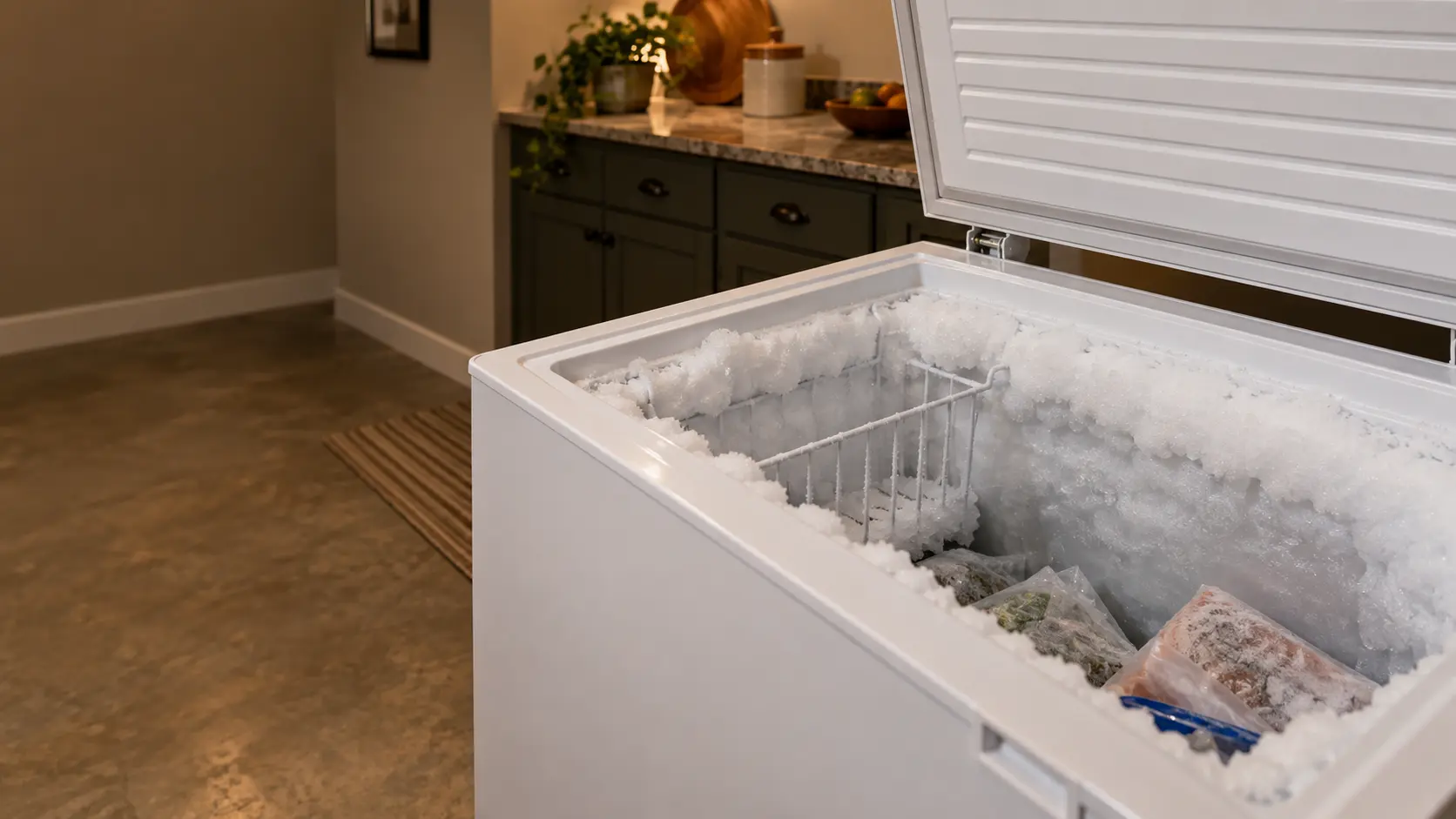
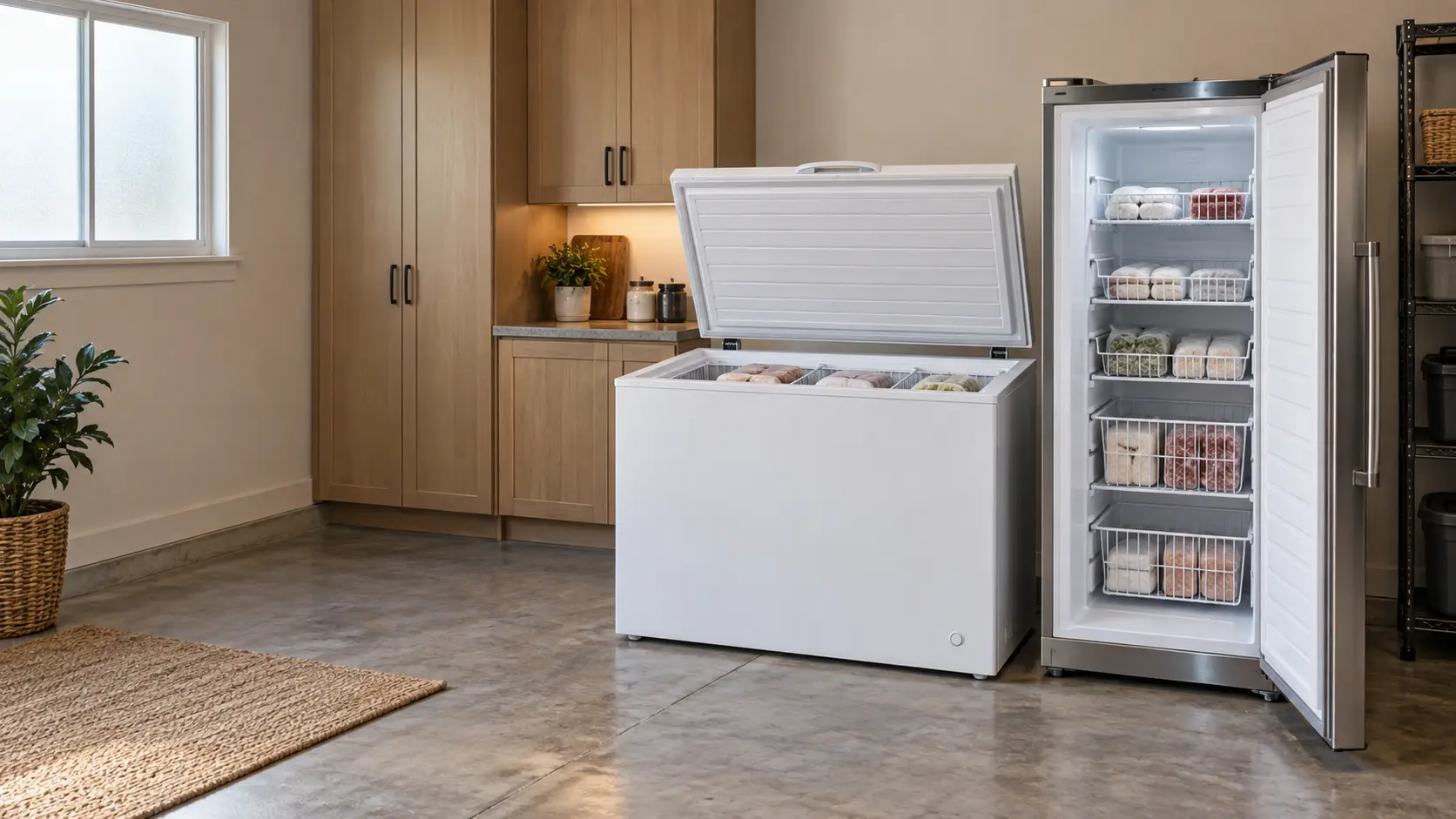
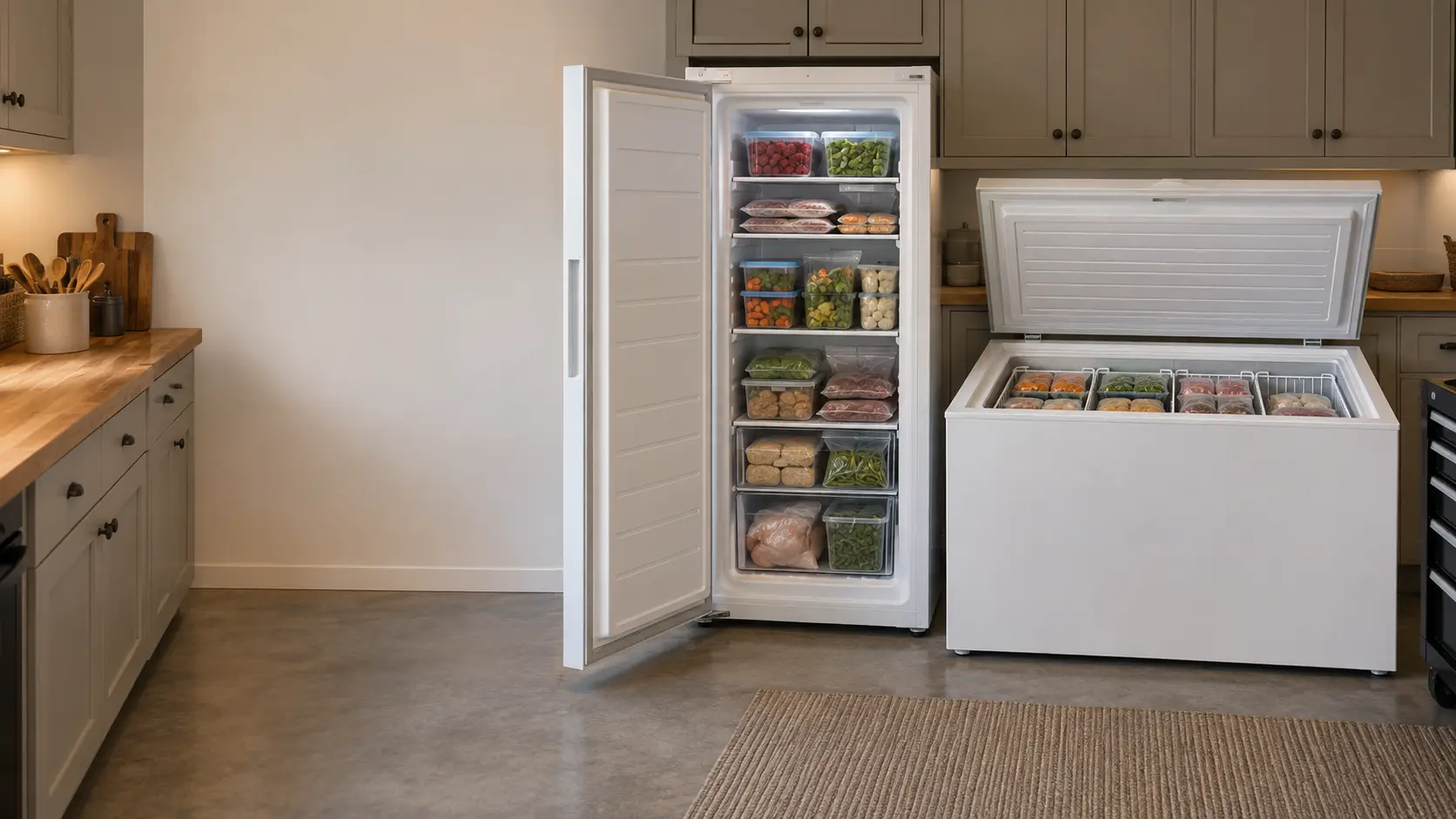
Cold air is heavier than warm air, and it behaves like water poured into a box. Lift a chest lid and most of that cold stays where it is, sitting below the rim. Swing open an upright door and the cold slides out across the floor while room air takes its place at the top. ENERGY STAR makes the same point about why a chest is usually the more efficient of the two.
The gap shows up on the meter. ENERGY STAR puts a certified chest at roughly 215 kWh a year and a certified upright at roughly 395 kWh. Real households vary with the size, the room and how often the freezer is opened, but in the chest vs upright freezer comparison the chest starts well ahead.
Why a lid loses less
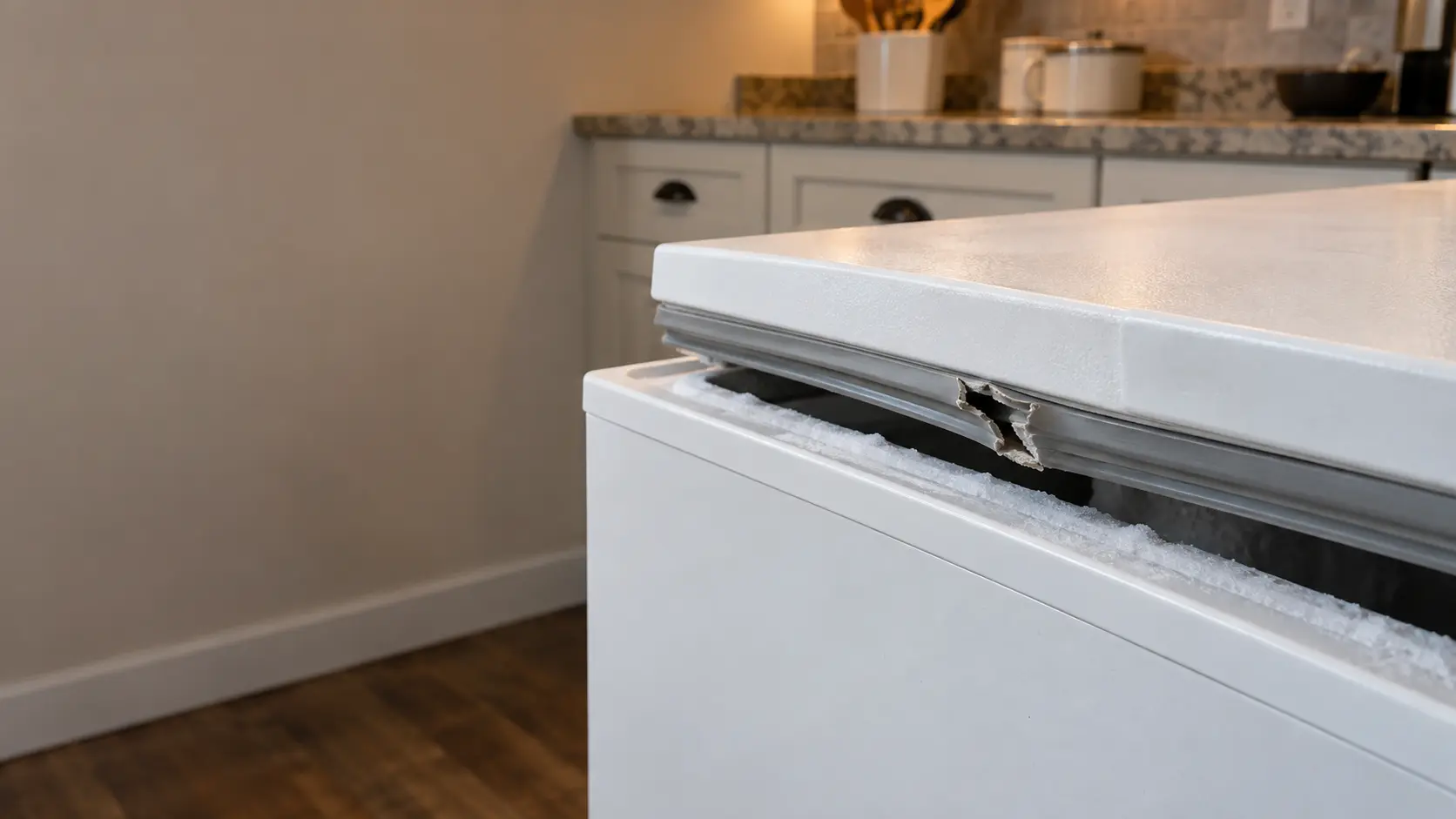
A lid also seals under its own weight, and the gasket sits on a flat rim rather than hanging vertically on a hinge. That helps a chest ride out an outage: the cold is trapped below the opening and nothing pulls it out when the lid stays shut.
What a front door trades for convenience
An upright gives you eye-level shelves and door bins, so you see most of what you own at a glance and the door is open for seconds instead of the minute it takes to dig through a chest. For a household that goes into the freezer many times a day, that shorter opening claws back part of the energy gap.
Source: ENERGY STAR — Freezers — Certified chest about 215 kWh a year, upright about 395 kWh; a chest is usually more efficient because less cold air escapes; manual defrost uses half the energy, frost no more than 1/4 inch; keep a freezer indoors unless the climate is mild; USDA FSIS — Freezing and food safety — A full freezer keeps food about 2 days with the door shut, a half-full one about a day
Frost and defrost, the choice most buyers overlook
Almost every chest freezer is manual defrost. Its cooling tubing is bonded to the inner walls, frost gathers there and you melt it off by hand every so often. ENERGY STAR says a manual defrost model uses about half the energy of an automatic one, as long as frost is not allowed past a quarter of an inch.
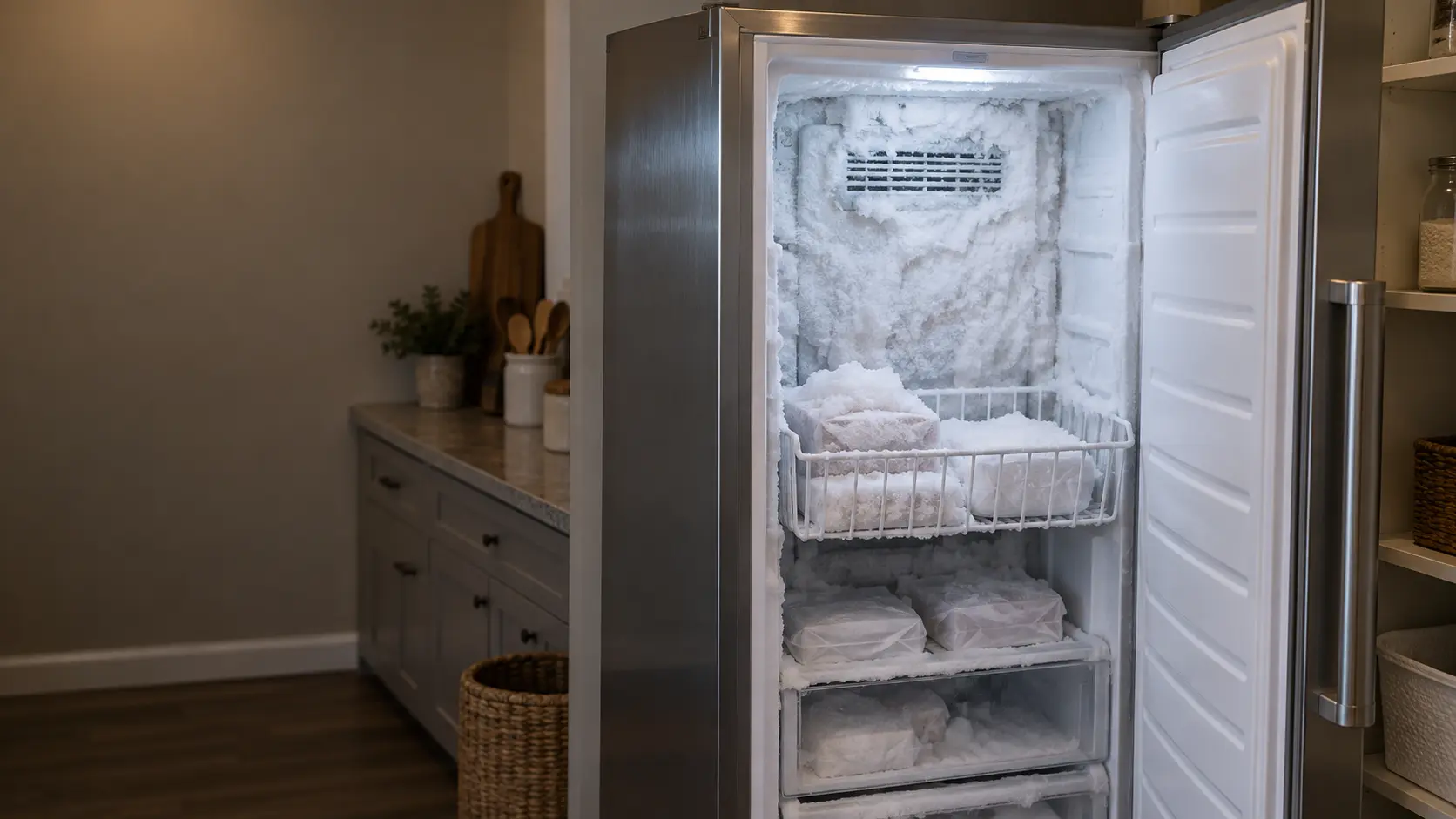
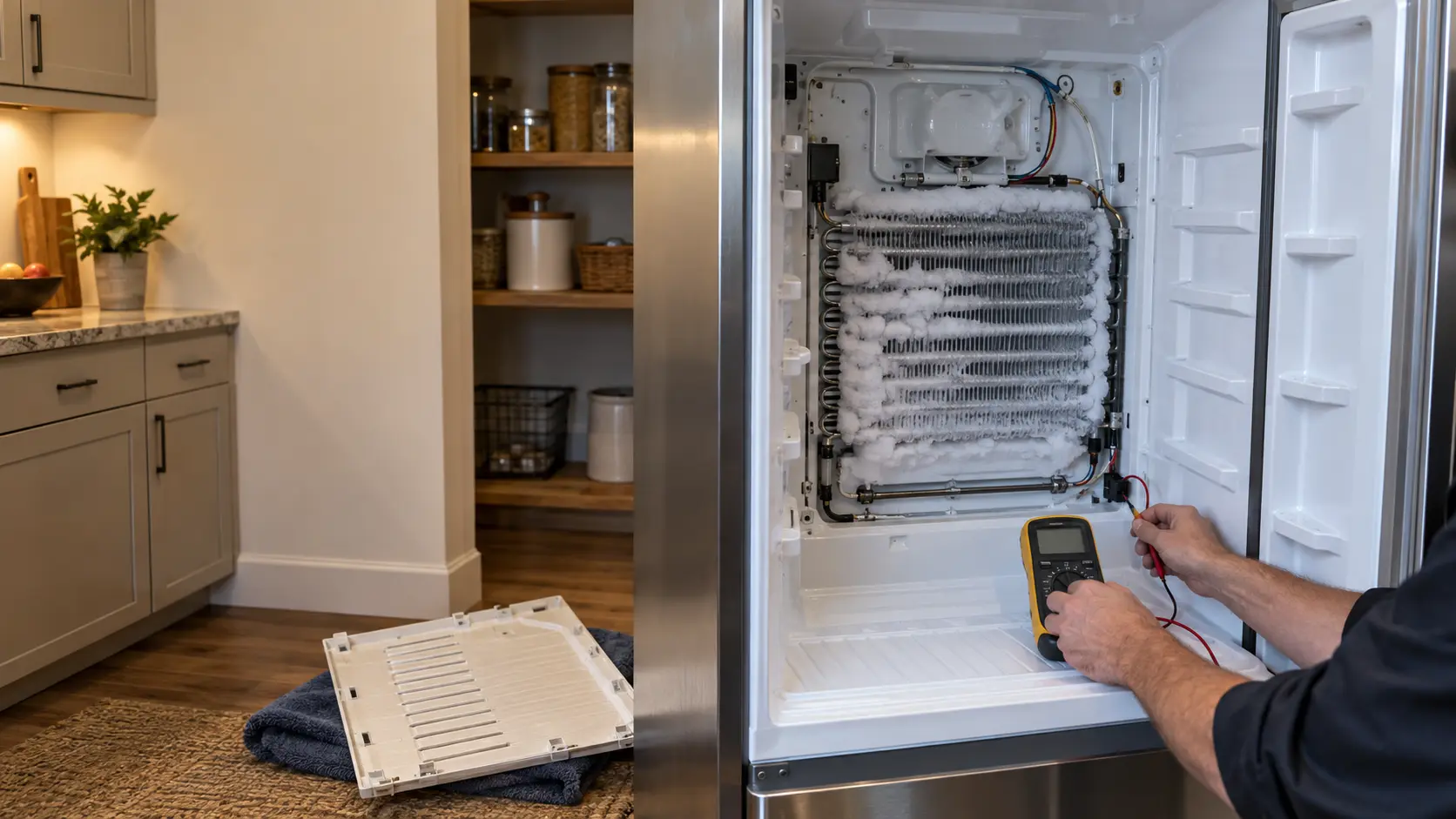
Uprights come both ways. On a manual defrost upright, GE explains, the shelves themselves are the evaporator coils, so frost forms on the shelves and the defrost job is the same as for a chest. A frost-free upright hides its evaporator in the lower back of the cabinet and runs a timed heater to clear it, with a fan moving the cold air around the shelves.
- A frost-free upright adds an evaporator fan, a defrost heater, a sensor or timer and a drain path.
- Each of those is a part that can wear out, and each has its own symptom: frost on the back wall, water under the baskets, a fan that clicks.
- A manual defrost chest has none of them, so most of its repairs come down to the compressor, its start components, the thermostat and the lid seal.
- The trade is your time: a chest asks for a defrost session once or twice a year, a frost-free upright asks for nothing.
Source: ENERGY STAR — Freezers — Certified chest about 215 kWh a year, upright about 395 kWh; a chest is usually more efficient because less cold air escapes; manual defrost uses half the energy, frost no more than 1/4 inch; keep a freezer indoors unless the climate is mild; GE Appliances — Upright and chest freezer: wrap-around condenser and evaporator — Condenser tubing runs between the inner and outer walls; on manual defrost uprights the shelves are the evaporator; frost-free uprights have the evaporator at the lower back
Floor space, reach and the bottom layer
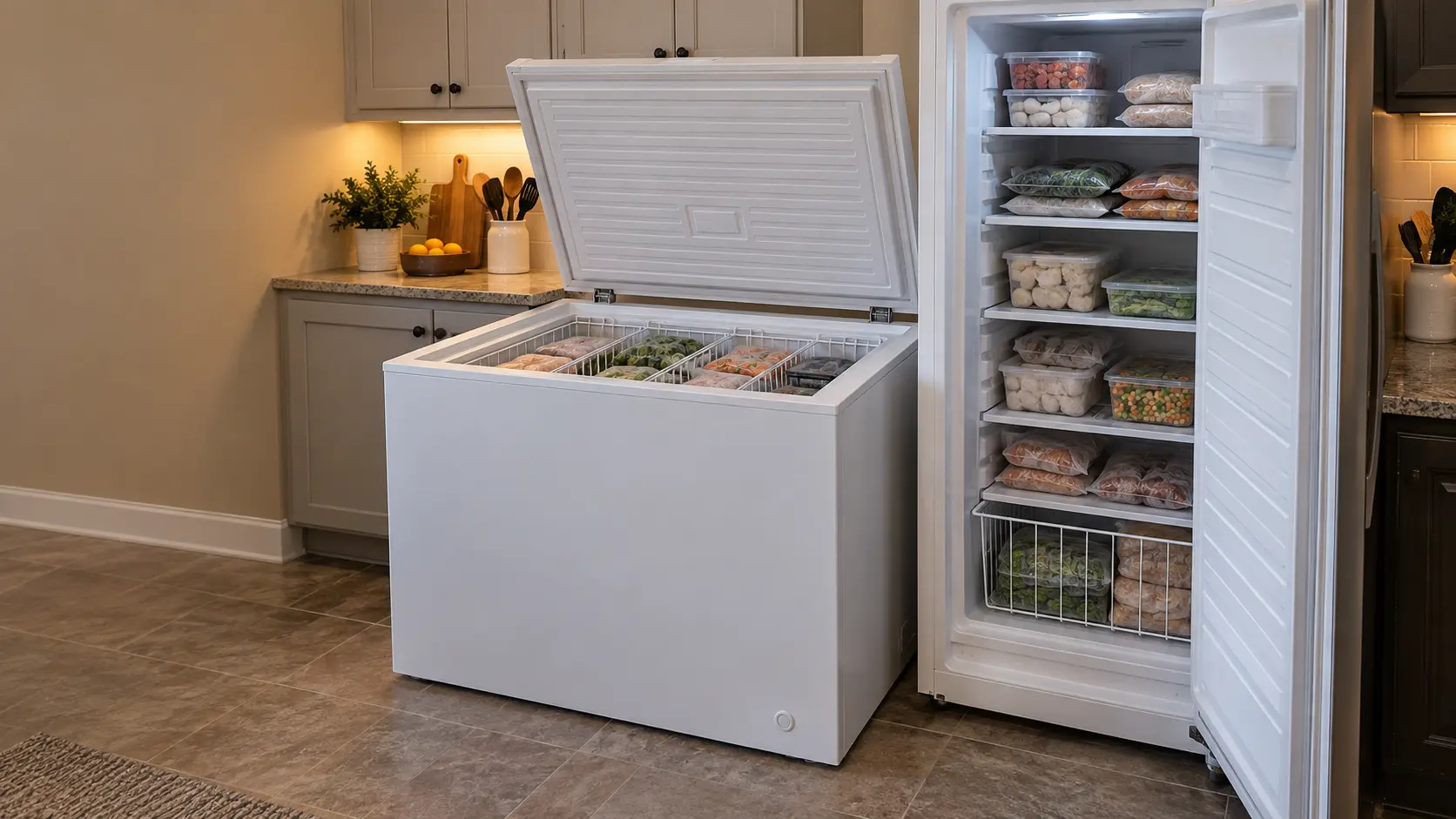
A chest needs floor, and it needs clear space above it for the lid to swing, so it rarely fits under a garage shelf or a basement staircase. An upright of similar capacity stands on less floor and fits into a corner or an alcove, which is why it is the usual pick for a pantry or a laundry room.
Capacity figures on the spec sheet do not tell the whole story. A chest lets you stack large, awkward items such as a whole turkey or a case of frozen fish, and it holds more of them than an upright's shelves allow. What it does not do well is give back the item at the bottom.
Who finds a deep chest hard to use
Anyone shorter than average, or with a bad back, ends up leaning over a cold rim and lifting everything above the one item they came for. Hanging baskets and dividers help, and a smaller chest is often easier to live with than a large one that is half empty.
Where an upright's door bins fall short
The door is the warmest part of an upright. It swings through room air every time it opens, so bins on the door suit bread, nuts and butter better than raw meat meant to last several months.
Where the freezer will live
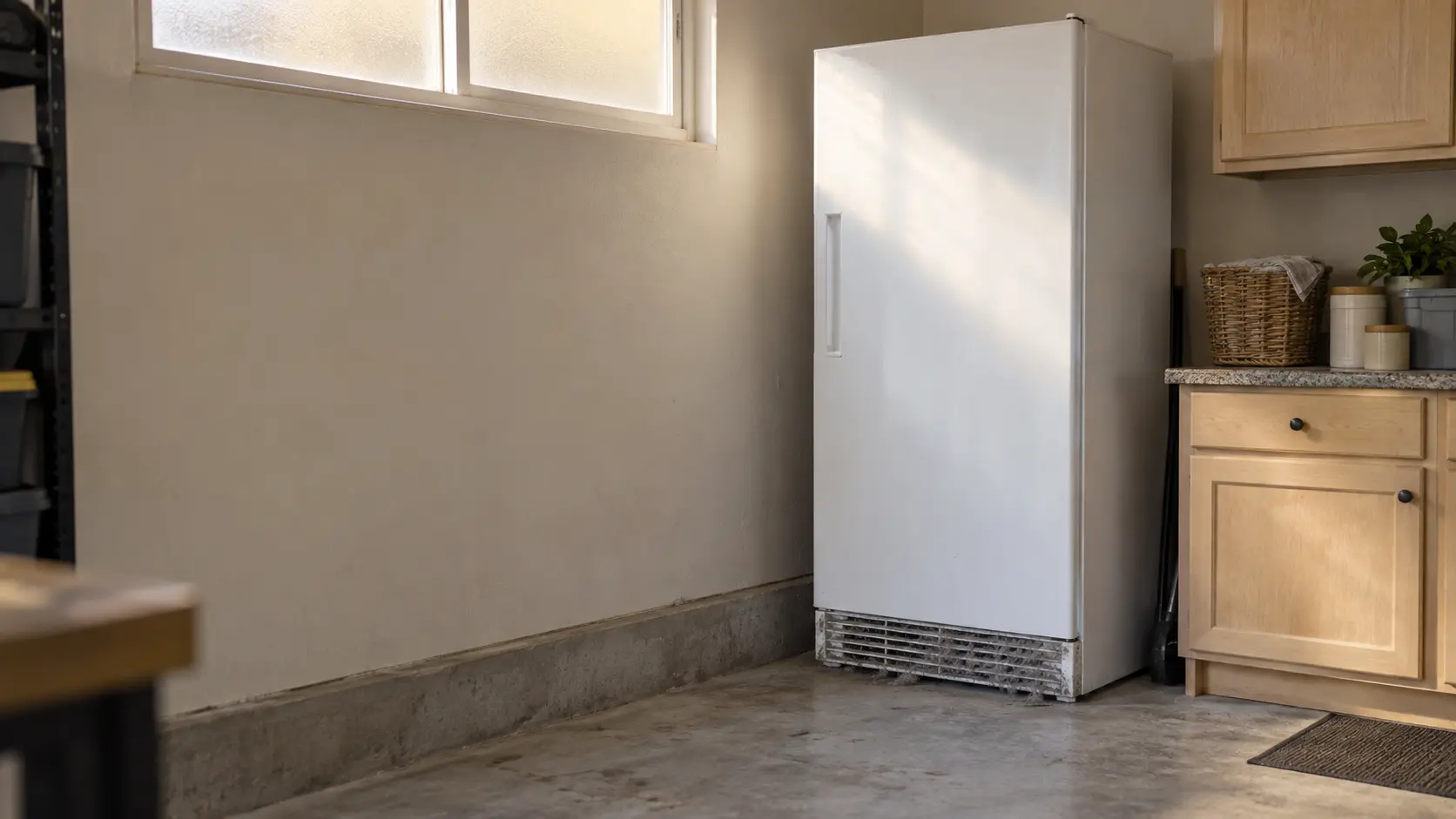
ENERGY STAR advises keeping a freezer indoors, such as in a basement, unless you live in a mild climate, because very hot or very cold rooms strain the compressor. Both designs are sold in garage ready versions, and our guide on garage ready freezers explains what that label covers.
Either way, leave air around the cabinet. GE's figure for most upright and chest freezers is about 3 inches on the top and every side, since the outer walls of both designs give off heat. A chest pushed hard against a wall, or an upright squeezed between cabinets, runs longer than it has to.
Source: ENERGY STAR — Freezers — Certified chest about 215 kWh a year, upright about 395 kWh; a chest is usually more efficient because less cold air escapes; manual defrost uses half the energy, frost no more than 1/4 inch; keep a freezer indoors unless the climate is mild; GE Appliances — Upright and chest freezer: exterior case warm — Most upright and chest freezers need about 3 inches of air clearance on the top and all sides
What each design means for a repair visit
A chest is the simpler machine, but its condenser and evaporator tubing run inside the insulated walls, as GE describes it. A leak there cannot be reached without cutting into the cabinet, so a sealed-system leak on a chest is often the end of that freezer. Its compressor, start relay and thermostat, on the other hand, sit in an open compartment at one end and are quick to test.
A frost-free upright gives a technician more to check, but most of it lives behind a panel at the back of the freezer section and comes out with a screwdriver. Built-in freezer columns and undercounter freezer drawers are the other two options people weigh. They cost more to buy, fit flush with cabinetry and are built to be repaired in place for many years, which changes the arithmetic when something does stop working.
- Chest: few parts, easy access to the compressor end, but walls that cannot be opened for a leak.
- Frost-free upright: more parts to wear, most of them reachable behind the rear panel inside.
- Freezer column: the most expensive to replace and the most sensible to repair, since a new one has to match the cabinet opening.
- Undercounter freezer drawers: compact, with the condenser behind the toe grille, which needs cleaning more often than people expect.
Source: GE Appliances — Upright and chest freezer: wrap-around condenser and evaporator — Condenser tubing runs between the inner and outer walls; on manual defrost uprights the shelves are the evaporator; frost-free uprights have the evaporator at the lower back