What the label actually promises
Whirlpool says its garage ready freezers can sit in a garage at any temperature from 0°F to 110°F without malfunctioning, and Maytag gives the same span as the common one across the industry. That is the whole promise: the freezer will hold its setting while the room around it moves through those extremes.
It does not promise anything outside that window. A garage in northern Minnesota can drop well below zero in January, and a west-facing garage in Phoenix can pass 110°F on a July afternoon. If yours does either, a garage ready freezer is still being asked to work outside its rating.
Reading the specification sheet
Look for the words garage ready in the product name or the listed features, as Maytag suggests, and then for the actual ambient temperature figures in the specifications or the installation instructions. A retailer's filter tag alone is not proof.
Convertible models
Some chests switch between freezer and refrigerated storage. Whirlpool notes its convertible chest freezers are garage ready only when set to freezer mode, so the same cabinet may carry a narrower rating once it is used as a cooler.
Source: Whirlpool — What is a garage ready freezer? — Garage ready freezers work in a garage from 0°F to 110°F; in heat the compressor works very hard, in extreme cold it may not start; some use specialized compressors, thick insulation and a triple sealed gasket; convertible chests are garage ready in freezer mode; Maytag — What is a garage ready freezer? — 0–110°F is the common industry span for garage ready freezers; look for garage ready in the name or listed features
How garage weather affects an ordinary freezer
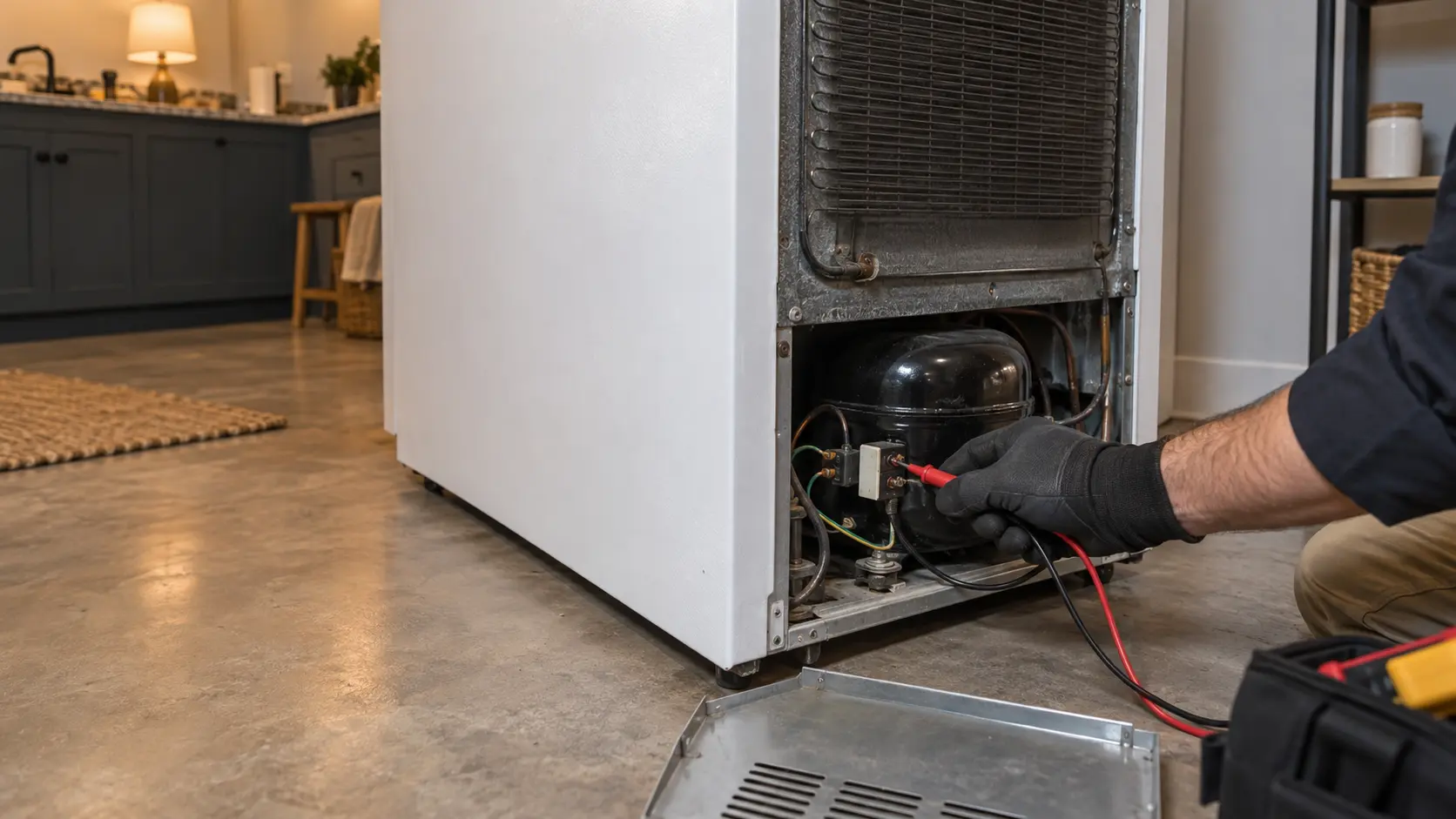
Heat is the easier problem to picture. Whirlpool explains that in a hot garage the compressor has to work very hard to keep up, which raises electricity use and can wear it out early. ENERGY STAR makes the same point more plainly: extreme temperatures are hard on the compressor and can shorten a freezer's life.
Cold is less intuitive. Whirlpool says that in extreme cold the compressor may not start until the air outside the cabinet is warmer than the temperature the freezer is set to. In a very cold garage, a standard model can sit idle for long stretches, and its controls and lubricant were not designed for that.
Humid weather and sweating
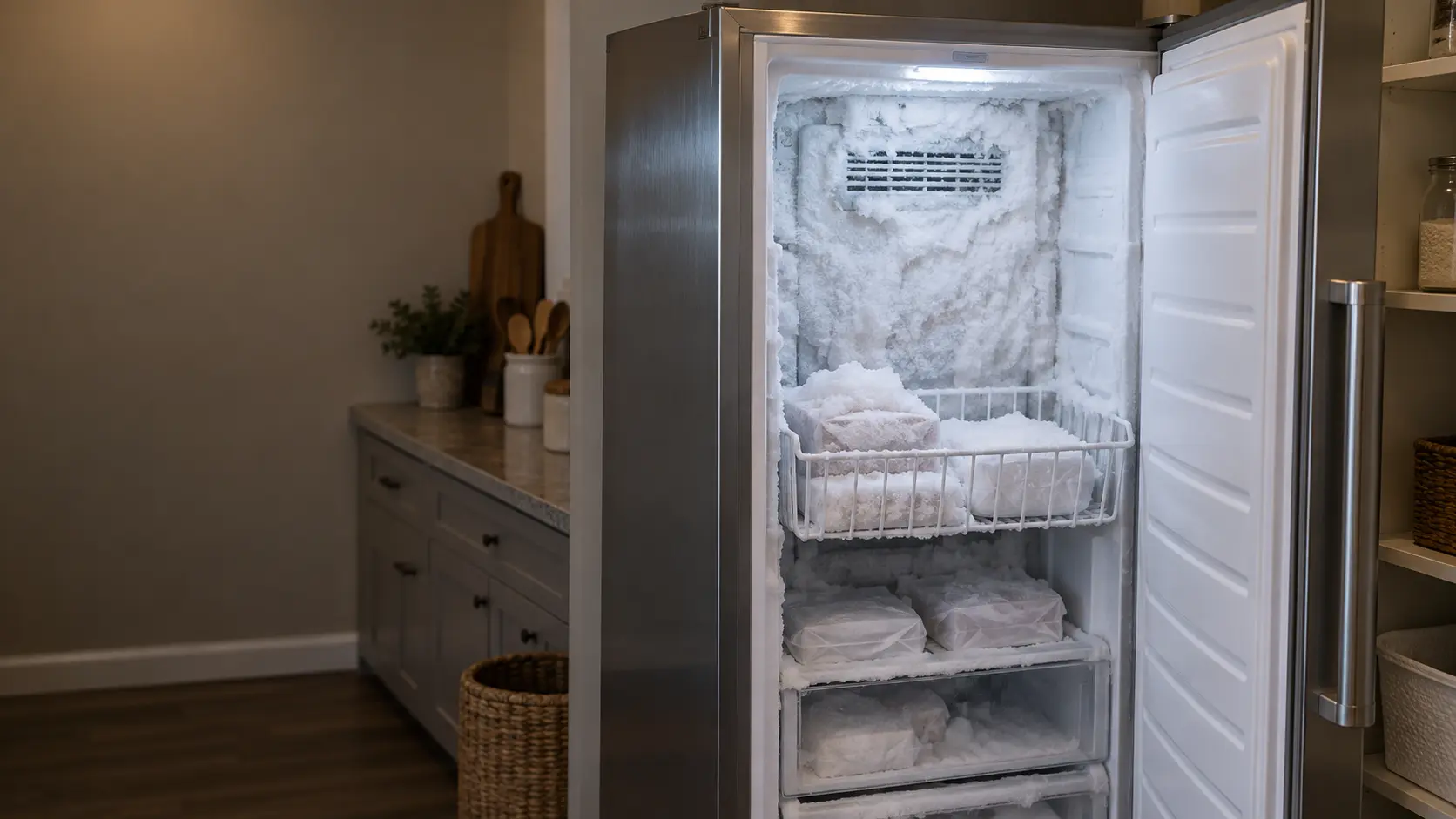
GE notes that moisture on the outside of the cabinet, and heavier frost inside, are common during long hot and humid spells. In a garage with the door open all afternoon, both show up sooner, and a chest's lid gasket frosts faster than it would in a basement.
Source: Whirlpool — What is a garage ready freezer? — Garage ready freezers work in a garage from 0°F to 110°F; in heat the compressor works very hard, in extreme cold it may not start; some use specialized compressors, thick insulation and a triple sealed gasket; convertible chests are garage ready in freezer mode; ENERGY STAR — Freezers — Extreme temperatures are hard on the compressor and can reduce freezer life; keep a freezer indoors unless the climate is mild

What makers change to earn the label
The changes are mostly out of sight. Whirlpool lists specialized compressors, thicker insulation and a triple sealed gasket among the features some garage ready freezers use to hold their temperature. Better insulation also slows the warm-up when the power goes out, which matters in a garage that bakes in the afternoon.
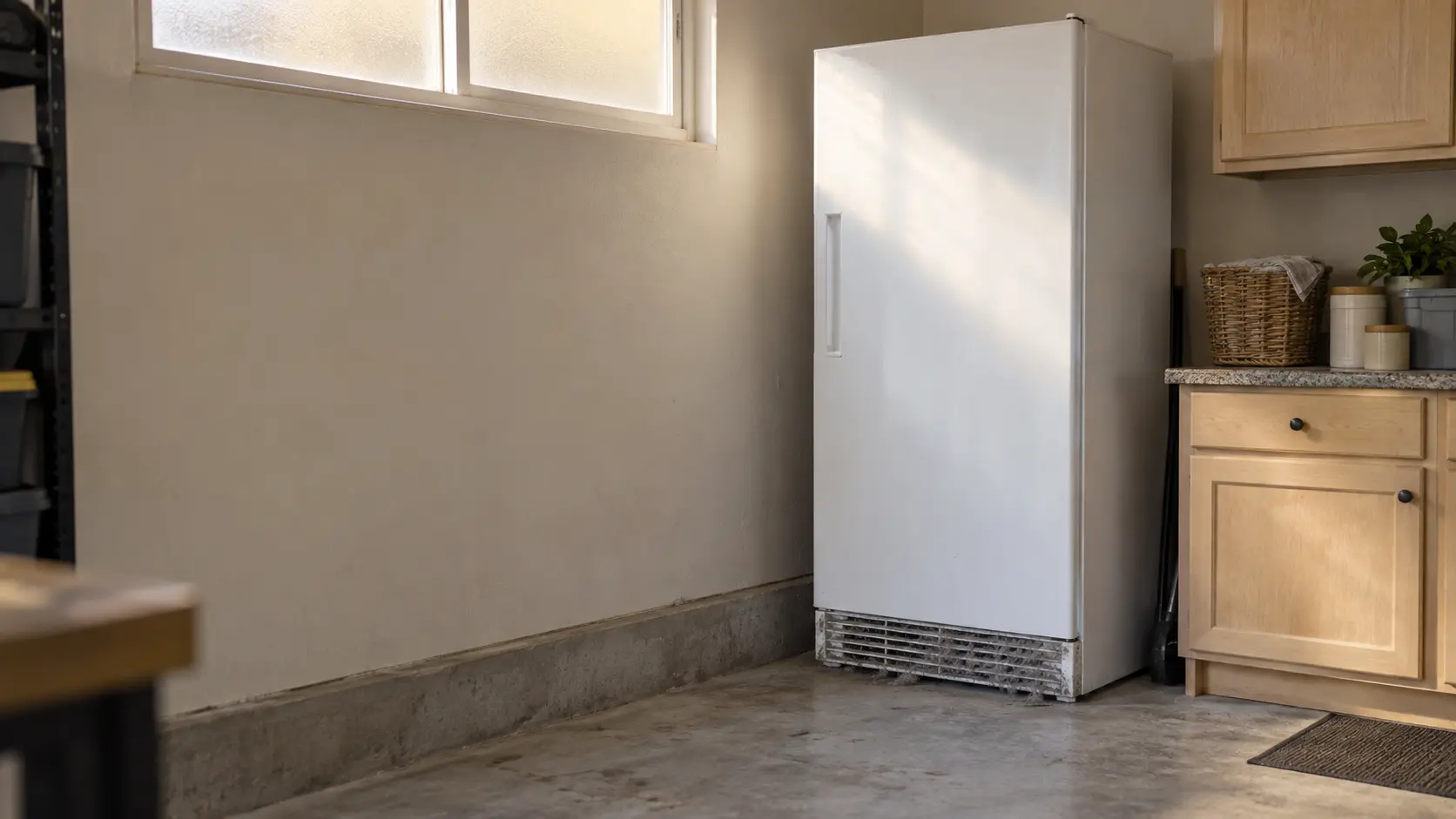
What the label does not change is the upkeep. A garage ready freezer still needs clear air around the cabinet, a seal that closes, and a manual defrost when frost builds. The dust, leaves and lint that drift across a garage floor land on its condenser area just the same.
- Compressor chosen for a wider band of room temperatures.
- More insulation in the cabinet walls and the lid or door.
- A gasket with several sealing ridges to keep humid air out.
Source: Whirlpool — What is a garage ready freezer? — Garage ready freezers work in a garage from 0°F to 110°F; in heat the compressor works very hard, in extreme cold it may not start; some use specialized compressors, thick insulation and a triple sealed gasket; convertible chests are garage ready in freezer mode
Chest or upright in a garage
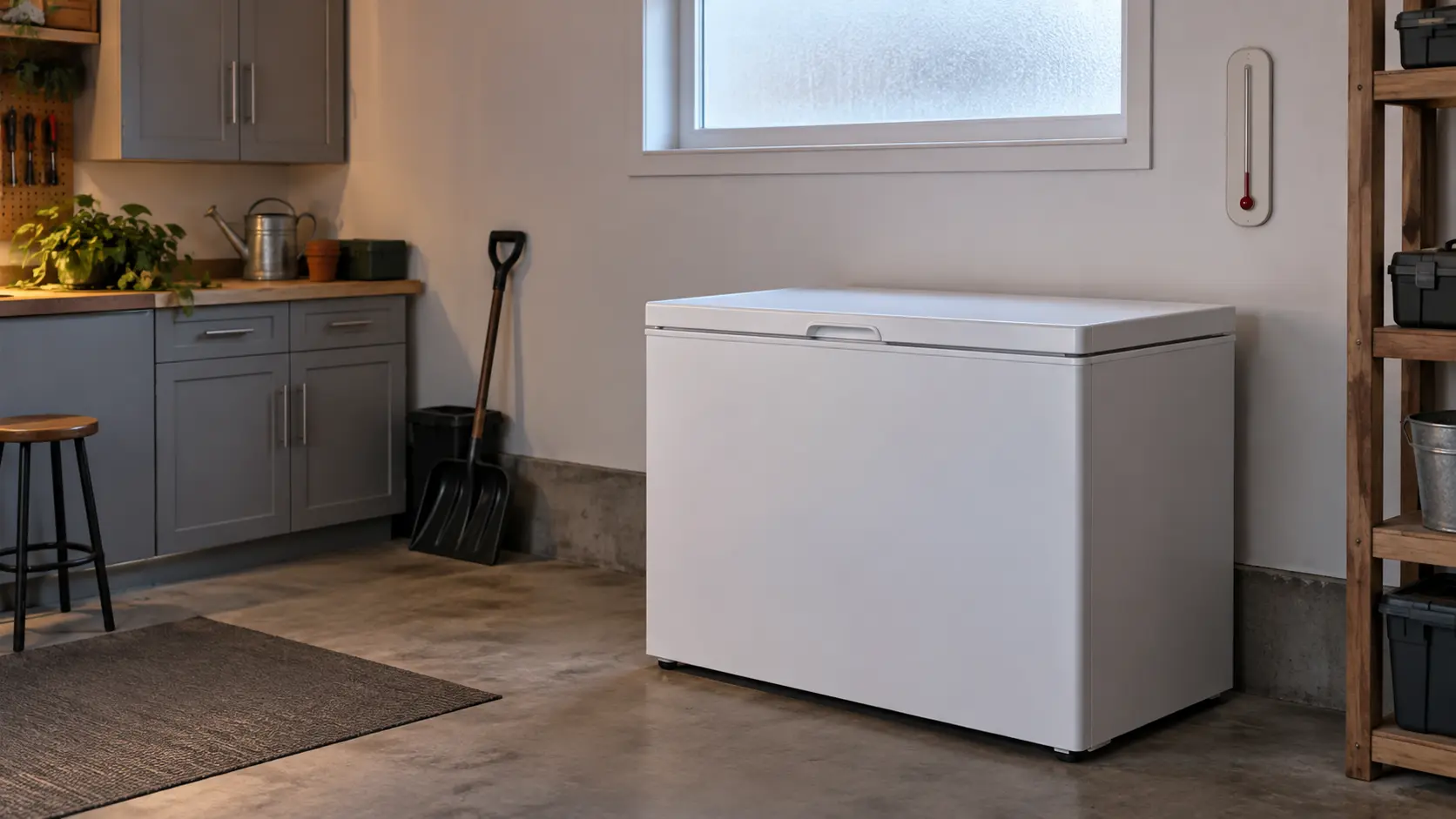
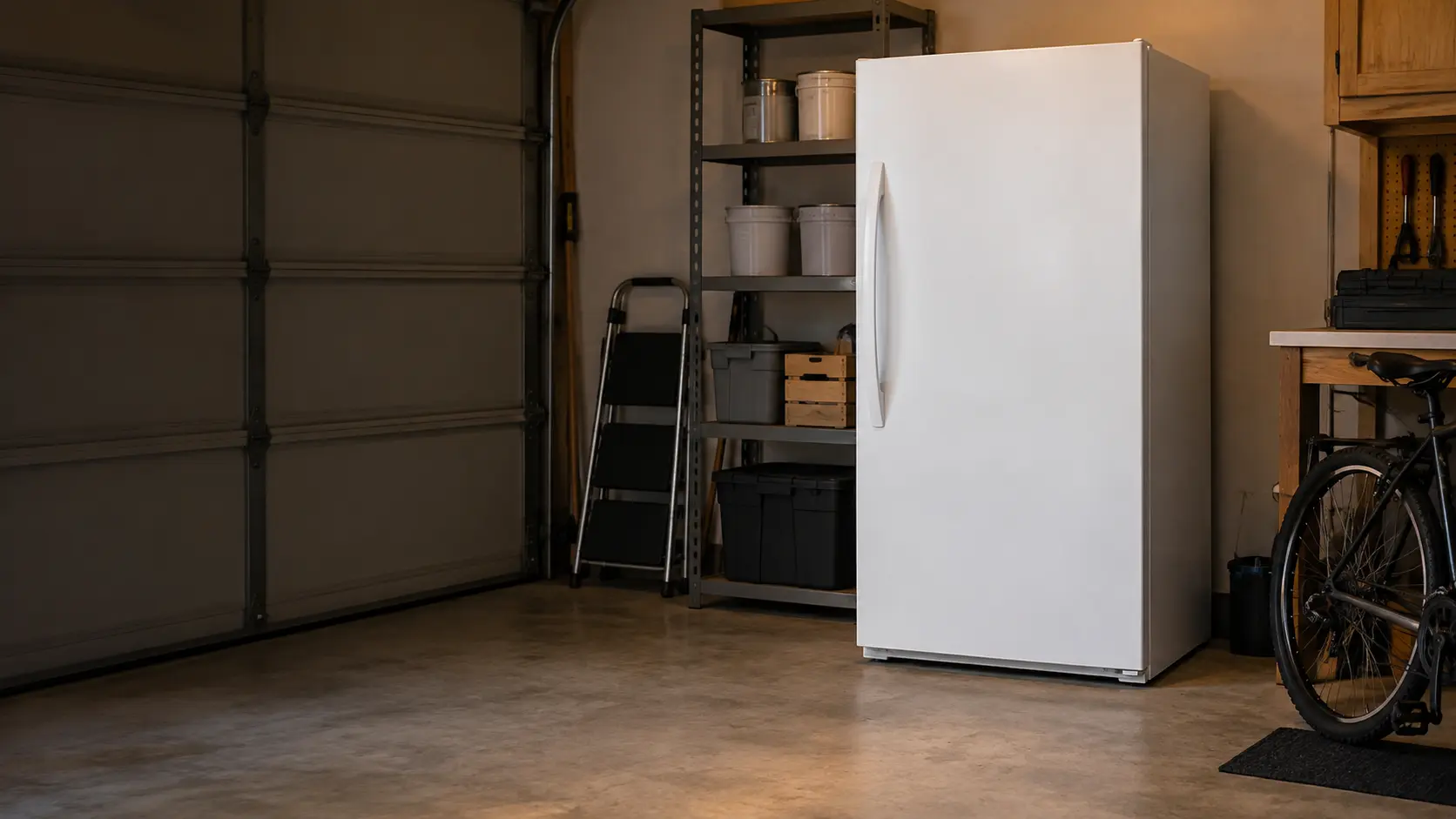
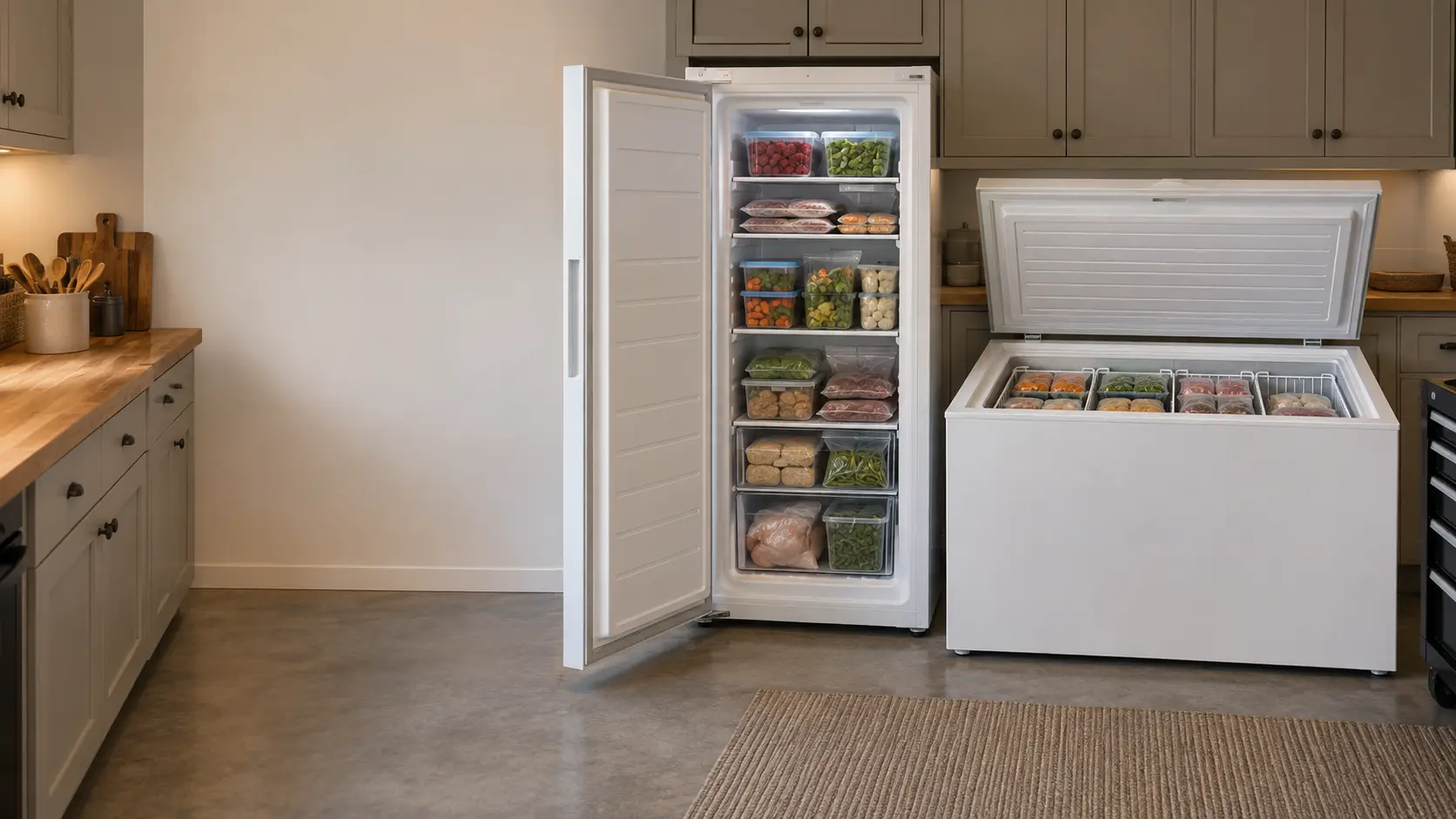
Both designs are sold garage ready. A chest suits a garage well: its cold stays below the lid, most are manual defrost and it has little to go wrong. It does take floor space that a car or a workbench might need, and it needs clear headroom for the lid.
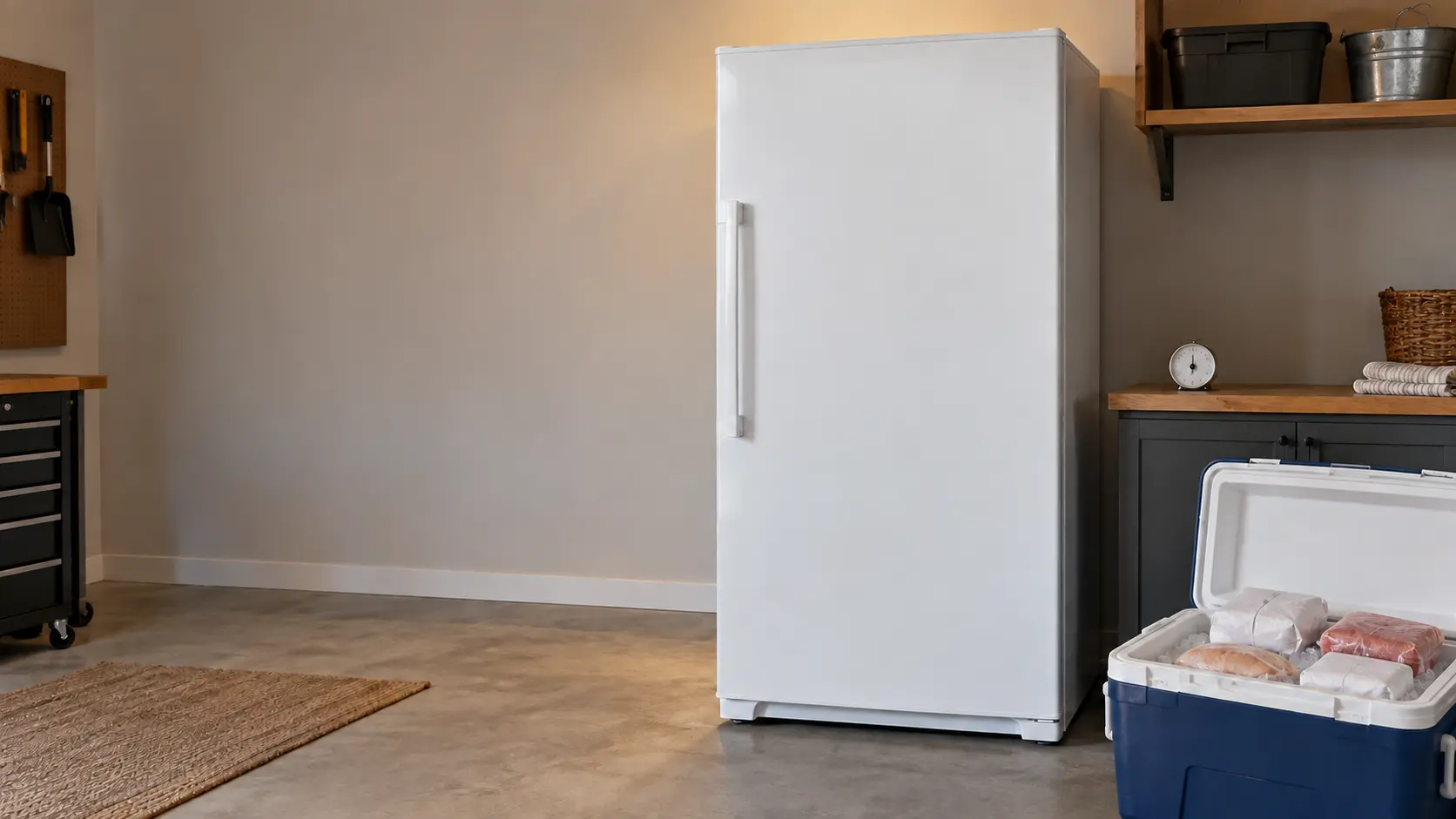
An upright takes less floor and is easier to reach into, and a frost-free one saves the twice-yearly defrost. In a humid garage its defrost system has more moisture to deal with, so a door left slightly ajar shows up as frost on the back panel within days.
Placing a freezer in the garage
Where it stands matters almost as much as what it is. These points apply to any freezer in a garage, rated or not.
Garage outlets are often protected by a GFCI, the kind with test and reset buttons. When one trips, the freezer simply goes quiet with nothing to warn you, so after a storm or a day of heavy tool use, glance at the thermometer and the freezer's power light before assuming all is well.
- Set it on a level spot on the slab, away from where water runs in under the garage door.
- Keep it out of direct afternoon sun through a window or an open door.
- Keep roughly 3 inches of open space above and around the cabinet, as GE recommends for most of its models.
- Plug it straight into a wall outlet on a circuit that does not also run power tools.
- Keep a freezer thermometer inside, where you can read it without digging.
Source: GE Appliances — Upright and chest freezer: exterior case warm — Most upright and chest freezers need about 3 inches of air clearance on the top and all sides
If the freezer you already own is not rated
Many ordinary freezers live in garages for years without trouble, especially in mild climates. Watch it closely through the first real cold snap and the first heat wave. If the thermometer climbs above 0°F and stays there, or the compressor seems never to stop in July, the room is beyond what that freezer was built for.
The fix is usually to move the freezer rather than to repair it: a basement, a utility room or an insulated corner of the house. ENERGY STAR's own advice is to keep a freezer indoors unless you live in a mild climate.
Source: ENERGY STAR — Freezers — Extreme temperatures are hard on the compressor and can reduce freezer life; keep a freezer indoors unless the climate is mild