While the power is off
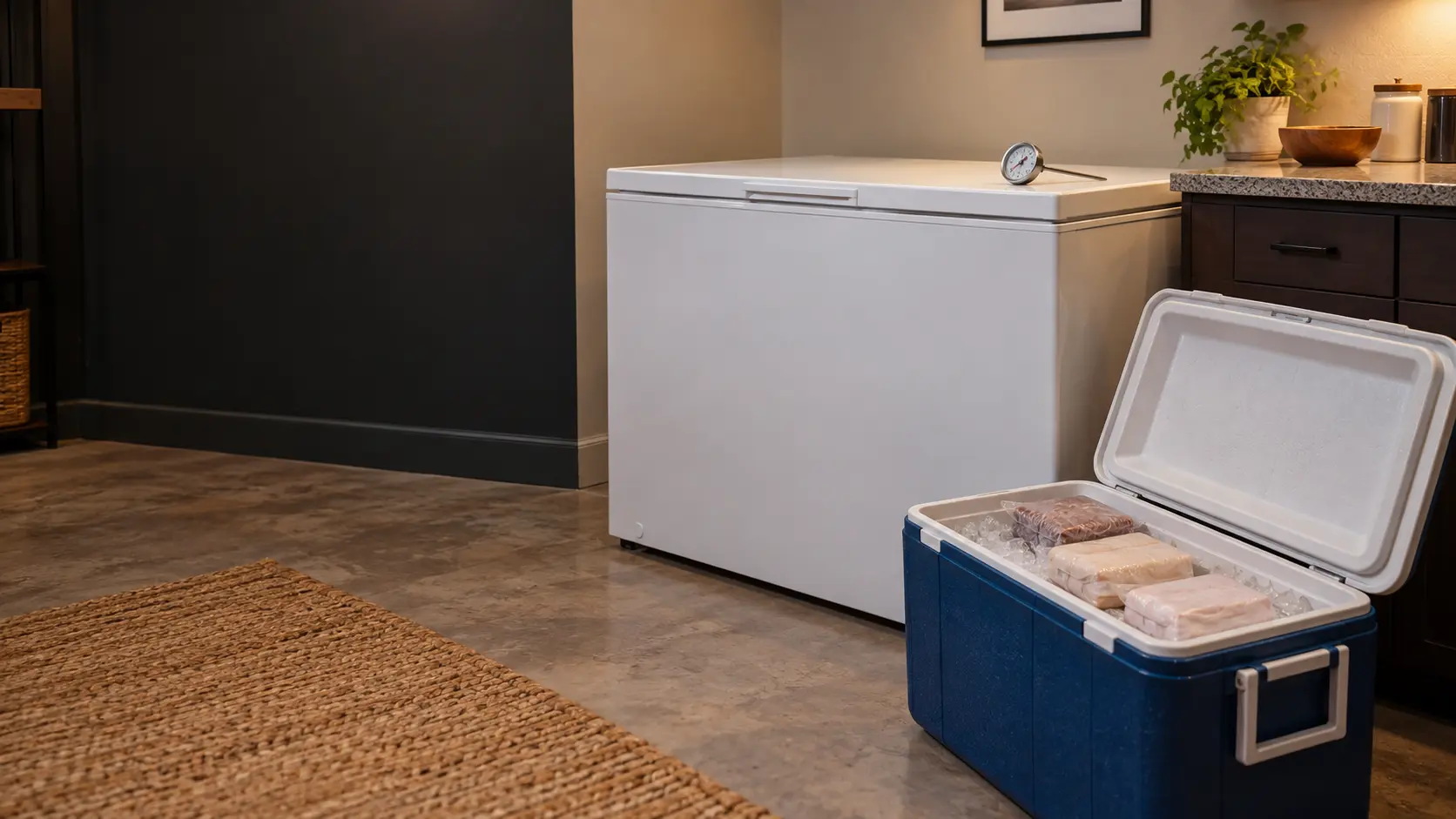
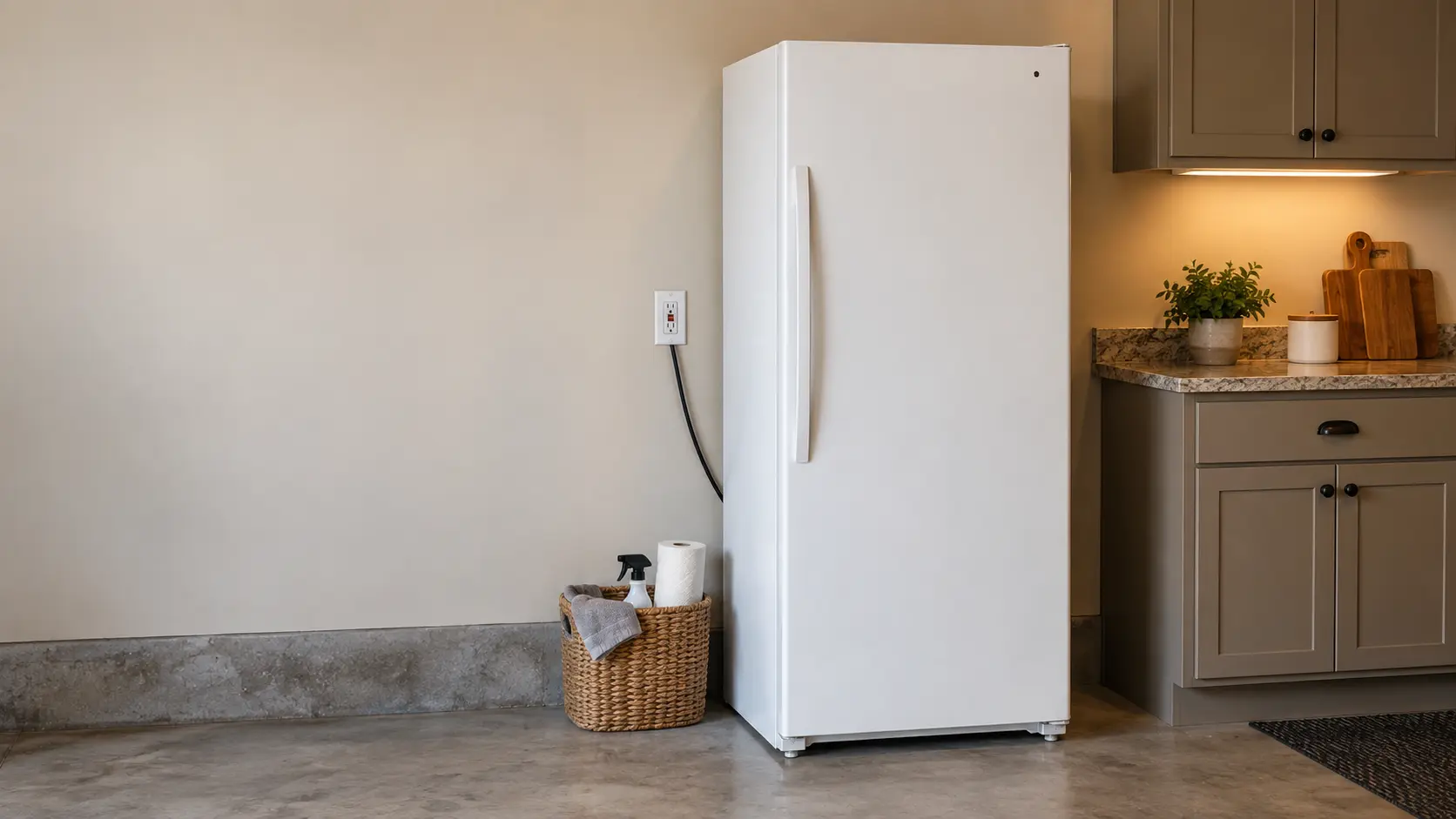
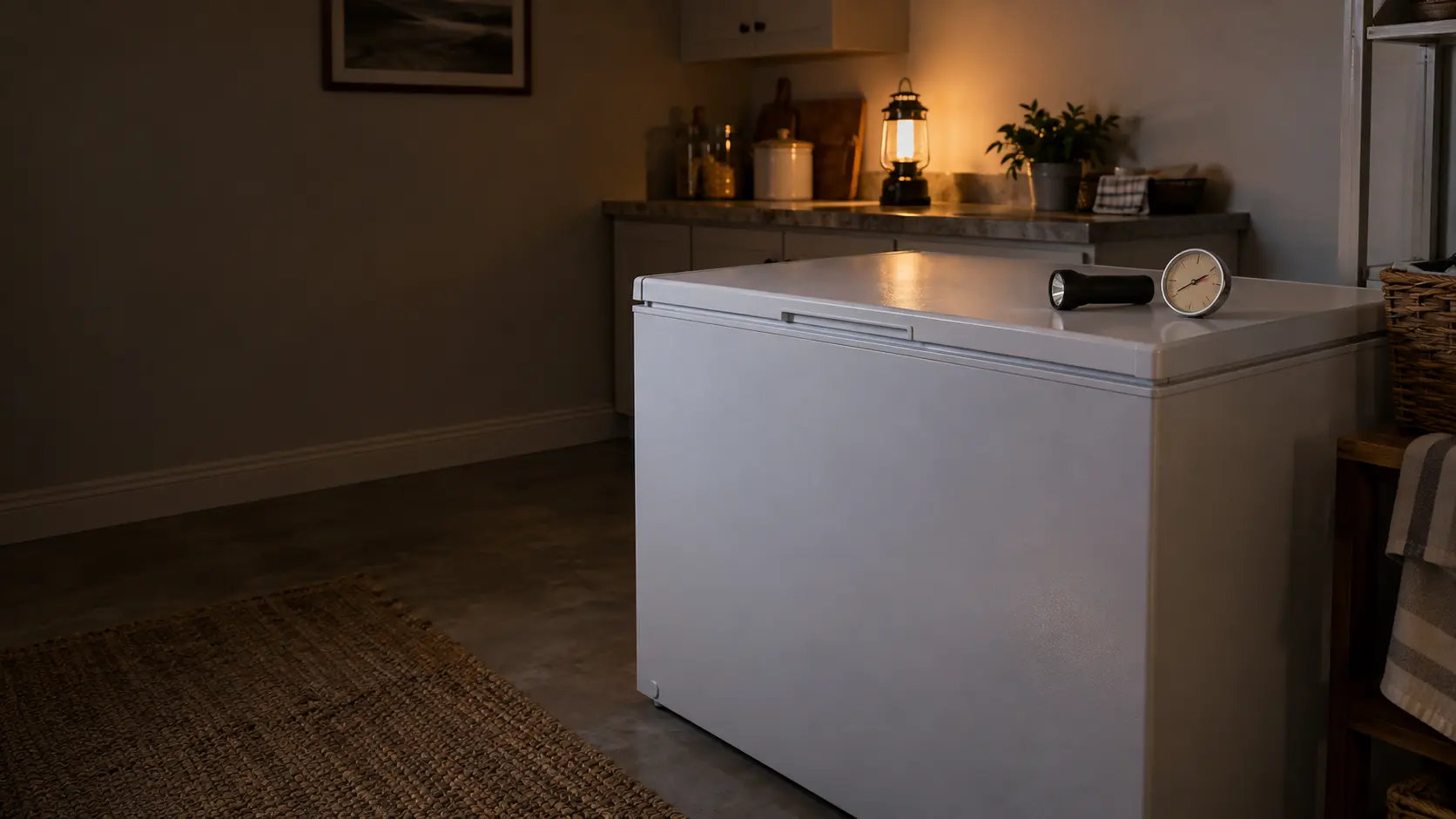
Every opening costs cold. A chest freezer loses less when its lid is lifted, because the cold air sits low in the well, but an upright spills a shelf's worth of chilled air onto the floor each time the door swings. Tape a note to the handle so nobody in the household checks it out of curiosity, and write the time the power went off on the same note.
Frozen food packed tightly holds its temperature far better than a few packages rattling around in empty space. If the freezer is half full, push everything together into one block and do not spread it out to look for things.
- Keep the lid or door shut and label it with the time.
- Consolidate a half-empty load into one tight mass.
- Add dry ice, block ice or bagged ice if the outage looks long.
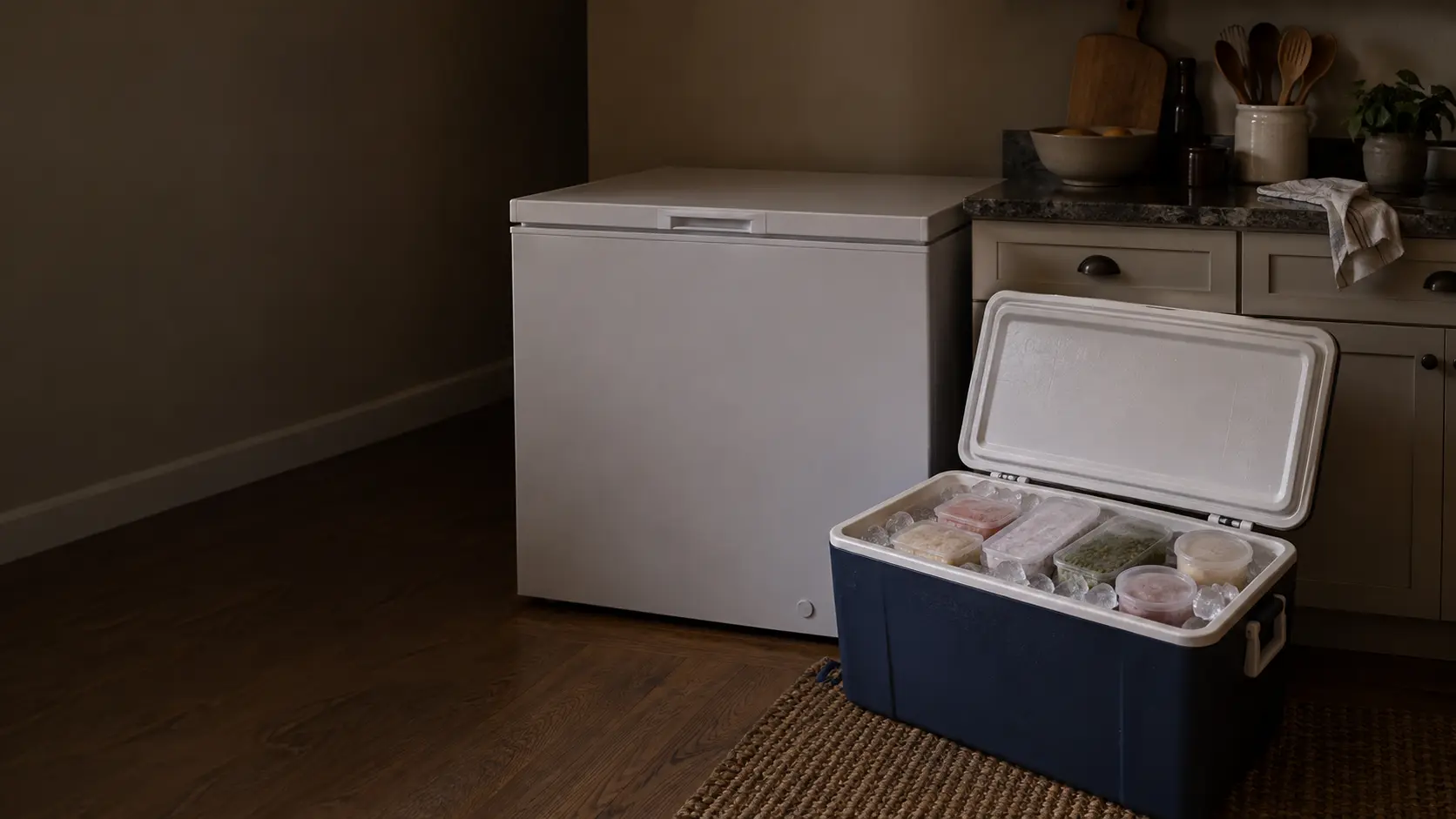
- Move food to a working freezer or iced coolers while it is still frozen hard.
Dry ice, block ice and bags of cubes
In FDA's example, an 18 cubic foot freezer packed to the top stays cold for about two days on fifty pounds of dry ice. Lay it on cardboard over the top packages, never bare on a plastic liner, and wear gloves; Frigidaire's chest freezer manual asks for the same care. Block ice and bags of cubes help too, but they melt into the load, so put them in pans or sealed bags.
Moving the food somewhere cold
USDA suggests carrying food to a friend's freezer until power returns. A neighbor on another circuit, a relative across town or a set of well-packed coolers with ice all work, and the move is worth making early, while packages are still hard. Snow outside is not a freezer: USDA warns that sun can thaw food even on a very cold day.
Source: FDA — Food and Water Safety During Power Outages and Floods — A full freezer holds about 48 hours (24 half full) with the door closed; 50 pounds of dry ice keeps an 18 cubic foot full freezer cold two days; at 40°F or below or with ice crystals food may be refrozen or cooked; this page states 4 hours above 40°F for discarding perishables; USDA FSIS — Freezing and Food Safety — A full freezer keeps about 2 days shut, half full about a day; move food to a friend's freezer or add ice; food outdoors can thaw in sunshine even in very cold weather; Frigidaire — Chest Freezer User Manual (A31283301) — Keep the lid closed and frozen food stays frozen at least 120 hours on that model; wear gloves with dry ice; the display shows HI when the temperature exceeds the set level
How long a closed freezer really holds
FDA's figures are the ones to plan by: roughly 48 hours for a full freezer and 24 hours for one that is half full, as long as nobody opens it. USDA puts the same thing as about two days and about one day. These are general numbers across freezers, not a promise for any one cabinet.
Makers sometimes publish longer times for their own models. One Frigidaire chest freezer manual says its lid kept shut holds frozen food for at least 120 hours. That is the maker's claim for one heavily insulated chest; for deciding what to eat, stay with FDA's numbers and the thermometer.
Why the type of freezer matters
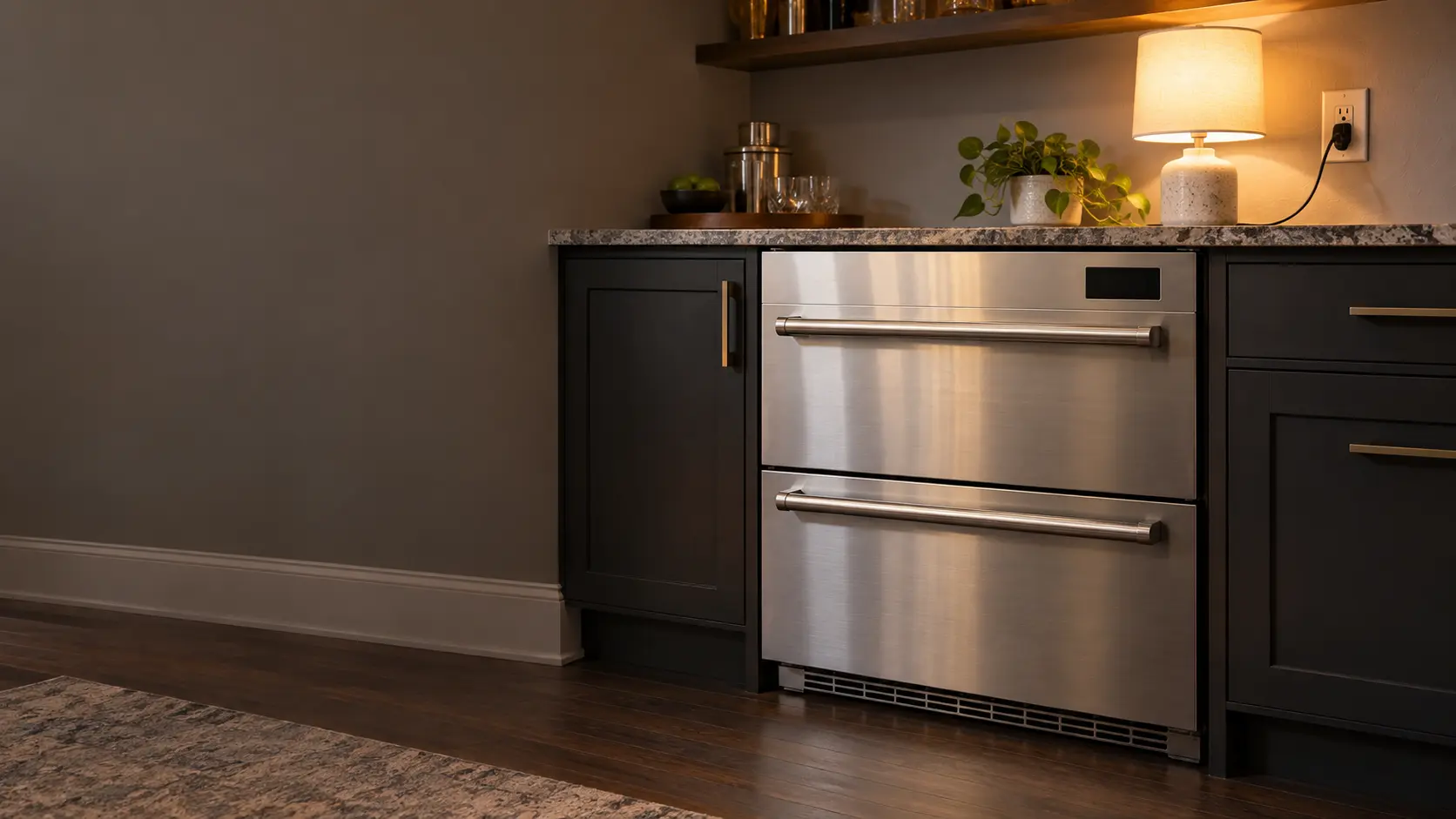
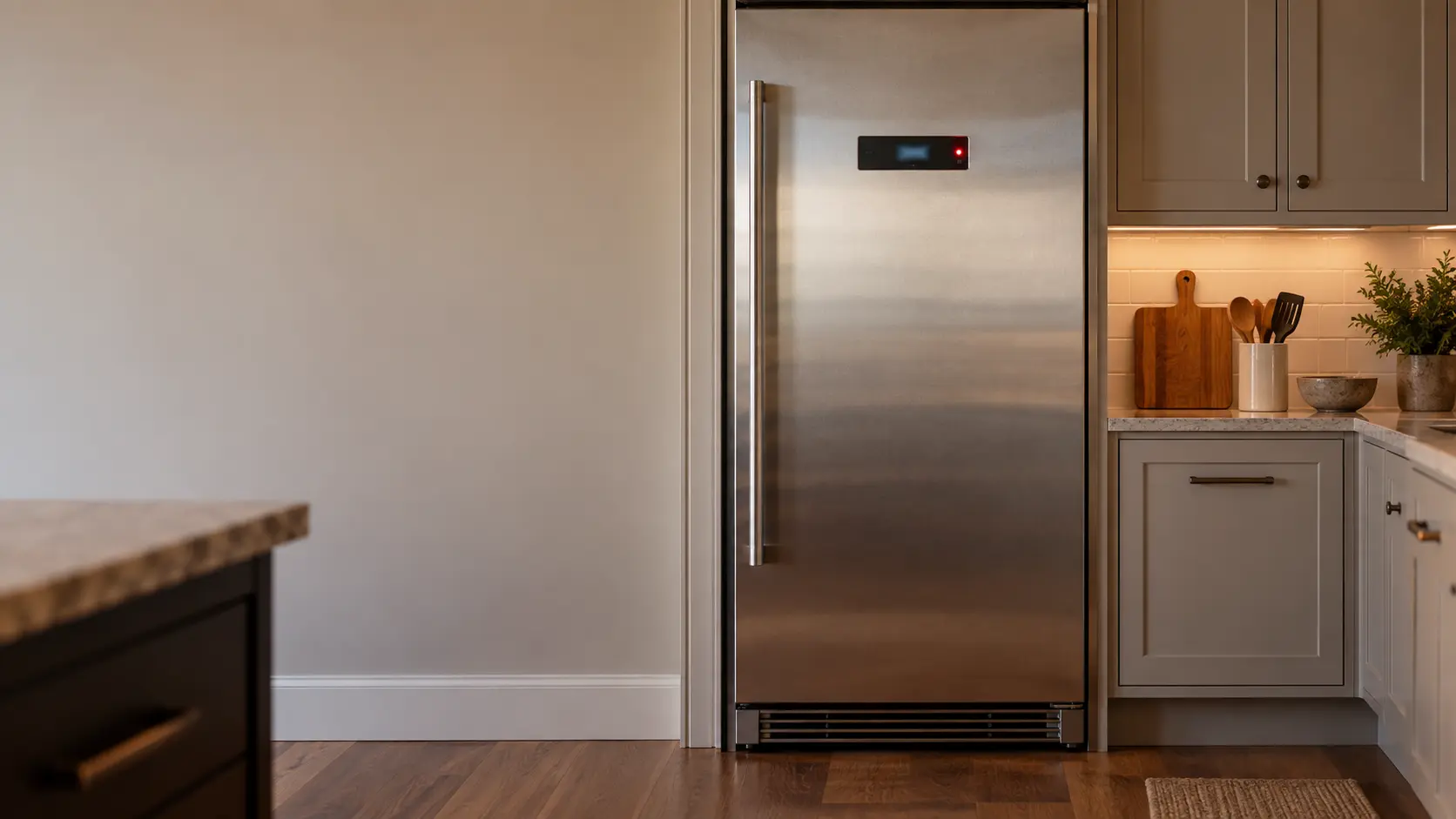
ENERGY STAR notes that a chest freezer lets less cold air escape because it opens from the top. In an outage that difference compounds. Built-in columns and undercounter drawer units are smaller and often half empty, so they tend to warm sooner than a packed chest in a cool basement.
Source: FDA — Food and Water Safety During Power Outages and Floods — A full freezer holds about 48 hours (24 half full) with the door closed; 50 pounds of dry ice keeps an 18 cubic foot full freezer cold two days; at 40°F or below or with ice crystals food may be refrozen or cooked; this page states 4 hours above 40°F for discarding perishables; USDA FSIS — Freezing and Food Safety — A full freezer keeps about 2 days shut, half full about a day; move food to a friend's freezer or add ice; food outdoors can thaw in sunshine even in very cold weather; ENERGY STAR — Freezers — A chest freezer opens from the top and allows less cold air to escape; Frigidaire — Chest Freezer User Manual (A31283301) — Keep the lid closed and frozen food stays frozen at least 120 hours on that model; wear gloves with dry ice; the display shows HI when the temperature exceeds the set level
When the power comes back: thermometer first
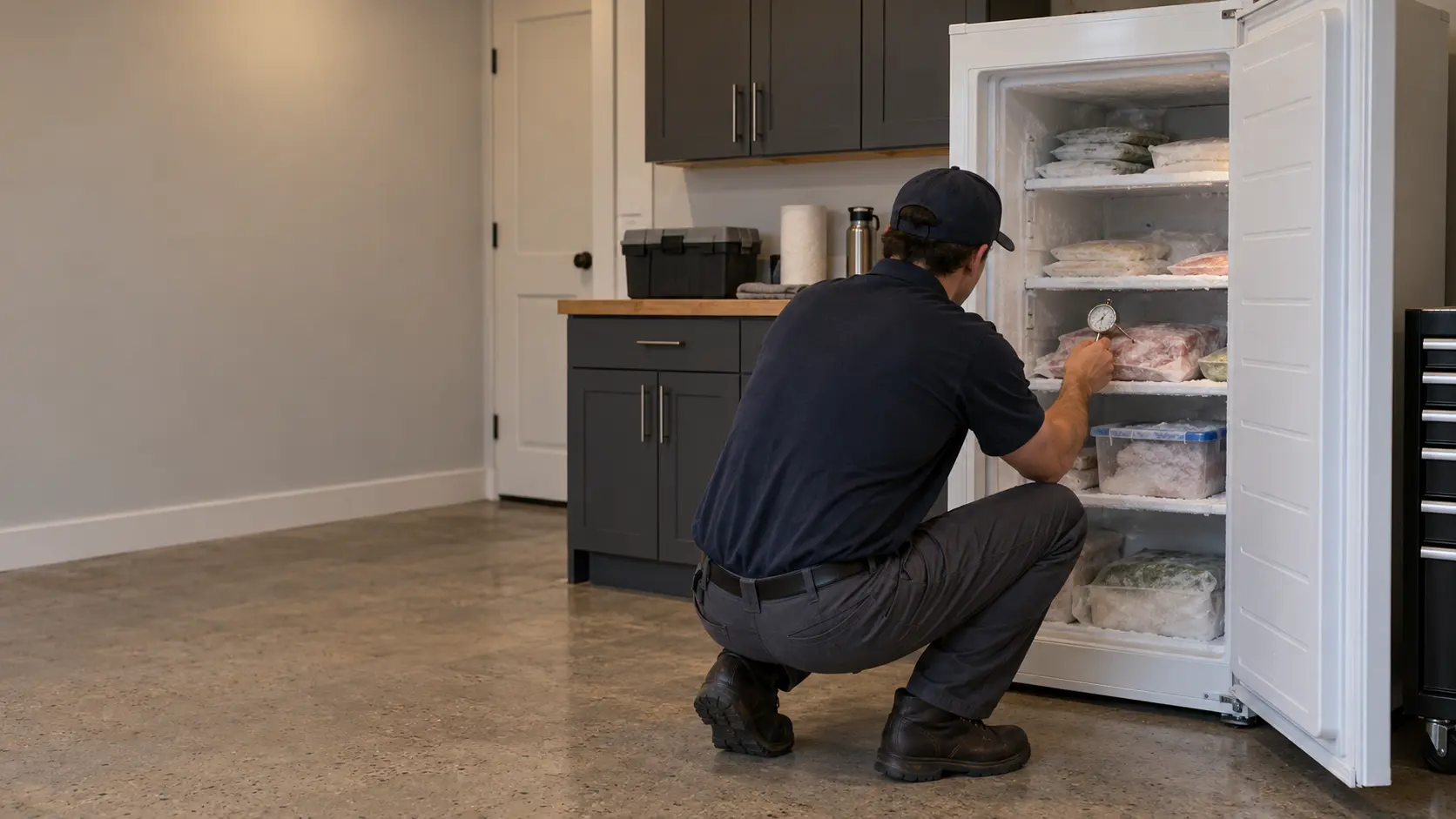
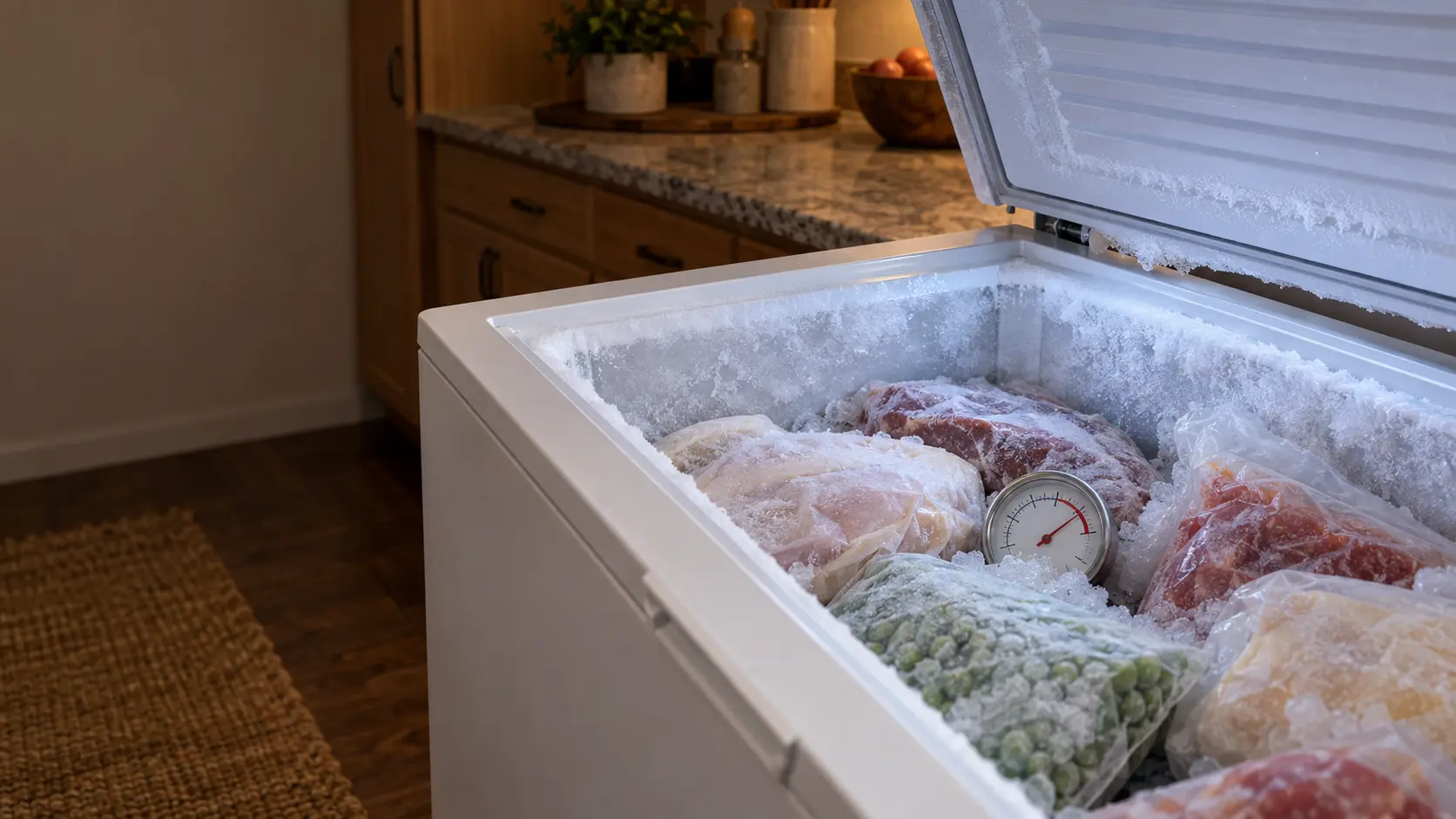
If an appliance thermometer was already in the freezer, read it before touching anything else. FDA's rule is short: at 40°F or below, the food is safe and may be refrozen. The number on a digital display is less useful at this moment, because many controls restart and show the current air temperature, not the warmest point reached while they were off.
Some freezers keep a record. A high-temperature alert that shows on the display after power returns tells you the cabinet went above its setting; the Frigidaire chest freezer mentioned above shows HI for this. Note what the alert said before pressing any button, because clearing it erases the evidence.
- Hard frozen or icy in the middle: refreeze it.
- Soft but still 40°F or colder: refreeze or cook it now.
- Perishable and above 40°F for 2 hours or more: discard it.
- Anything smelling off or leaking juice into other packages: discard it.
No thermometer in the freezer
Without a thermometer, FDA asks you to check each package. A package still carrying ice crystals, or reading 40°F or colder, goes back in the freezer or into the pan. A package that has gone soft all the way through and feels like cool tap water is the one to throw out once it has been above 40°F for 2 hours or more.
Source: FDA — Food and Water Safety During Power Outages and Floods — A full freezer holds about 48 hours (24 half full) with the door closed; 50 pounds of dry ice keeps an 18 cubic foot full freezer cold two days; at 40°F or below or with ice crystals food may be refrozen or cooked; this page states 4 hours above 40°F for discarding perishables; FDA — Power Outages: Key Tips for Consumers About Food Safety — Check each package if no thermometer was kept in the freezer; discard perishable food above 40°F for two hours or more; Frigidaire — Chest Freezer User Manual (A31283301) — Keep the lid closed and frozen food stays frozen at least 120 hours on that model; wear gloves with dry ice; the display shows HI when the temperature exceeds the set level
Why this site uses 2 hours, not 4
FDA's own pages give two figures. Its guidance on power outages and floods says to discard perishables held above 40°F for 4 hours or more, while its key tips for consumers say 2 hours or more. Both are official; we print the stricter one everywhere on this site so the advice never depends on which page someone found first.
The difference matters most for thawed meat, poultry, seafood and cooked leftovers, which are the perishables both pages name. In practice, a freezer that was shut and full rarely reaches that point within a day, which is why the closed lid does more for your food than anything else in this guide.
Source: FDA — Food and Water Safety During Power Outages and Floods — A full freezer holds about 48 hours (24 half full) with the door closed; 50 pounds of dry ice keeps an 18 cubic foot full freezer cold two days; at 40°F or below or with ice crystals food may be refrozen or cooked; this page states 4 hours above 40°F for discarding perishables; FDA — Power Outages: Key Tips for Consumers About Food Safety — Check each package if no thermometer was kept in the freezer; discard perishable food above 40°F for two hours or more
Checking the freezer itself once it is running
A freezer that comes back after an outage should hum within a few minutes and pull the cabinet back toward 0°F over the next several hours. A heavily loaded chest can take most of a day to recover fully, because it is cooling food as well as air. Leave the setting alone during that time and read the thermometer again in the evening.
Outages end with surges, and surges end some compressor relays and control boards. If the freezer stays silent, clicks every few minutes without starting, or restarts with a code on the display, note it and look it up on our error codes pages before resetting anything.