What freezing does and does not do to germs
USDA is precise about this: freezing to 0°F inactivates bacteria, yeasts and molds, but it does not kill them. Once the food thaws, they wake up and multiply at about the same rate as on fresh food. That is the whole reason refreezing has rules, because the freezer only pauses the clock that thawing restarts.
It also explains why food kept constantly at 0°F stays safe indefinitely in USDA's words, with only its quality slipping over long storage. The storage times printed on freezer charts are about taste and texture, not about safety.
Zero degrees is the number to hold
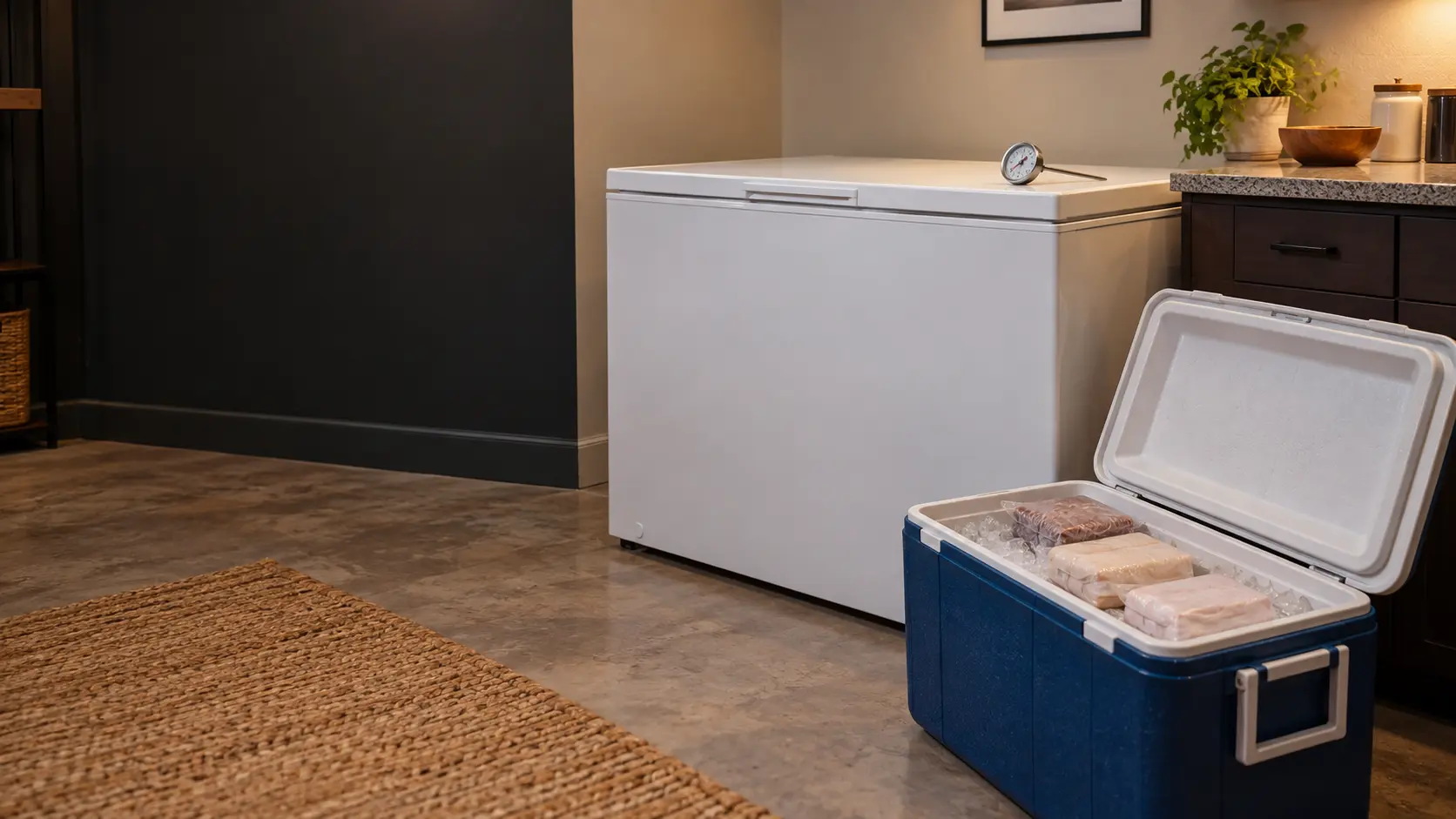
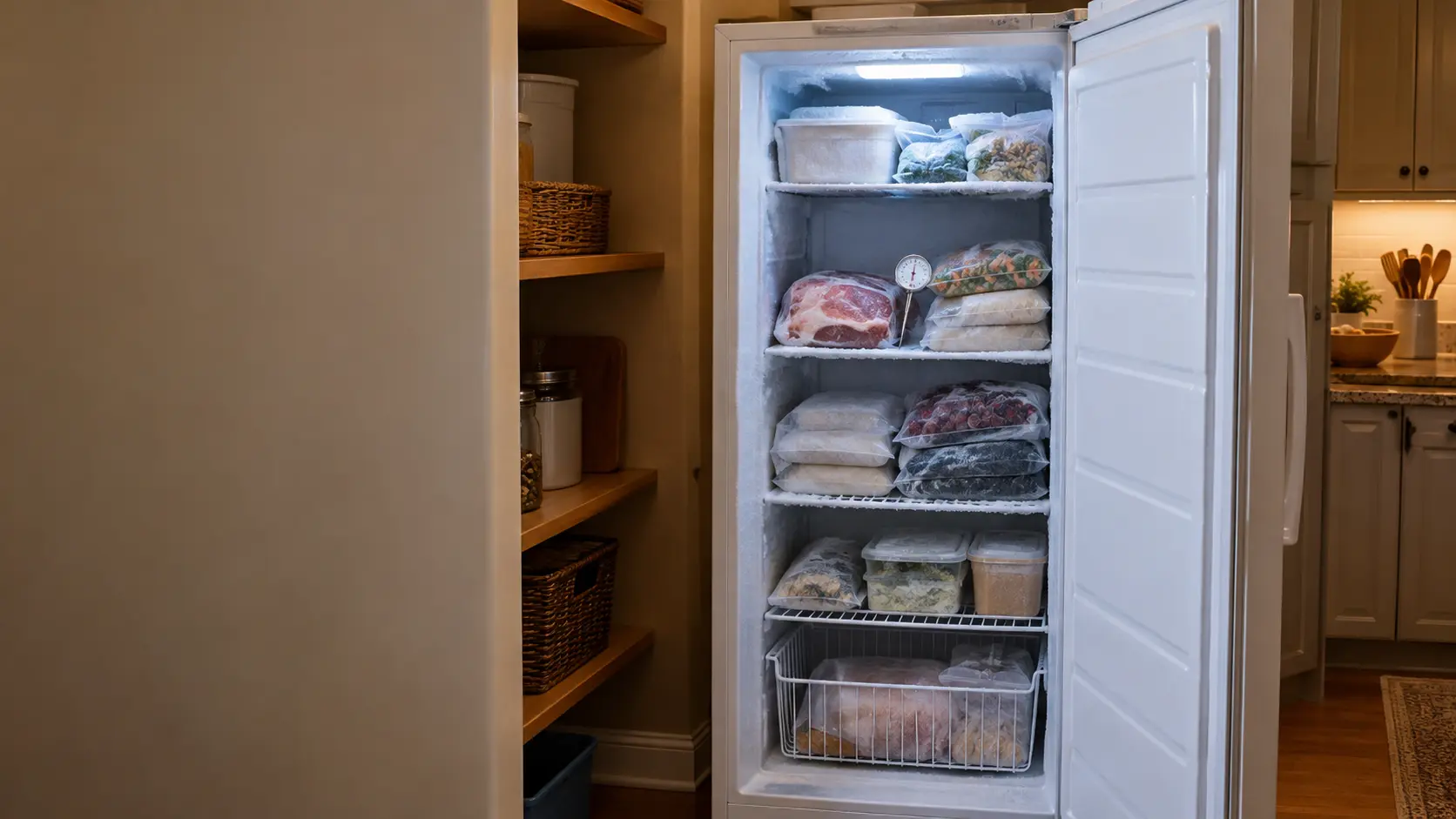
USDA recommends a freestanding freezer set at 0°F or below for long-term storage, and an appliance thermometer inside to confirm it. A freezer that drifts to 10°F or 15°F is not thawing anything, but it lets ice crystals grow and packages soften at the edges, which quietly turns a refreezing question into a daily one.
Source: USDA FSIS — Freezing and Food Safety — Freezing to 0°F inactivates but does not kill microbes; food kept at 0°F is always safe; refrigerator-thawed food may be refrozen with quality loss; do not refreeze food left out over 2 hours, 1 hour above 90°F; food with ice crystals or at 40°F may be refrozen; freezer burn is a quality issue
How it thawed decides what happens next
USDA lists three safe ways to thaw: in the refrigerator, in cold water and in the microwave. Only the first leaves you free to change your mind. A roast that thawed on a refrigerator shelf and then was not cooked can go straight back into the freezer raw, and cooked leftovers thawed the same way can have their unused portion refrozen.
The two quick methods are different. Food thawed in cold water, with the water changed every 30 minutes, or thawed in a microwave, where edges can start to cook, has to be cooked before it is frozen again. Once it is cooked, it can be frozen like any fresh dish.
- Thawed in the refrigerator, raw or cooked: refreeze it as it is.
- Thawed in cold water: cook it, then freeze it.
- Thawed in the microwave: cook it right away, then freeze what is left.
- Thawed on the counter, in a garage, in a car or outdoors: not a safe thaw, so it is not refrozen.
Source: USDA FSIS — The Big Thaw: Safe Defrosting Methods — Three safe thawing methods; change cold water every 30 minutes; food thawed in cold water or a microwave is cooked before refreezing; never thaw perishables on the counter or in hot water

The two-hour limit, and one hour in the heat
USDA's line for food left outside refrigeration is 2 hours, or 1 hour when the air is above 90°F. Past that point, food is not refrozen. The same guidance says perishables should never be thawed on the counter or in hot water at all.
This is where most mistakes happen: a bag of chicken set in the sink in the morning and remembered after lunch, groceries left in a hot trunk, a cooler whose ice gave out. Freezing it again will not reset what grew during those hours.
Meat that was frozen before you bought it
Much of the fish and some of the meat in stores was frozen earlier and thawed for display. USDA says it can be refrozen at home if it has been handled properly, which means it came home cold and went straight into the freezer rather than riding around through an afternoon of errands.
Source: USDA FSIS — Freezing and Food Safety — Freezing to 0°F inactivates but does not kill microbes; food kept at 0°F is always safe; refrigerator-thawed food may be refrozen with quality loss; do not refreeze food left out over 2 hours, 1 hour above 90°F; food with ice crystals or at 40°F may be refrozen; freezer burn is a quality issue; USDA FSIS — The Big Thaw: Safe Defrosting Methods — Three safe thawing methods; change cold water every 30 minutes; food thawed in cold water or a microwave is cooked before refreezing; never thaw perishables on the counter or in hot water
After a freezer stopped or a lid was left open
A power outage, a failed compressor and an upright door left ajar overnight all create the same question with no way to know exactly how warm it got. USDA and FDA answer it by the food itself: if it is partly frozen, still has ice crystals, or is as cold as 40°F, it is safe to refreeze or use, and raw food does not need cooking first.
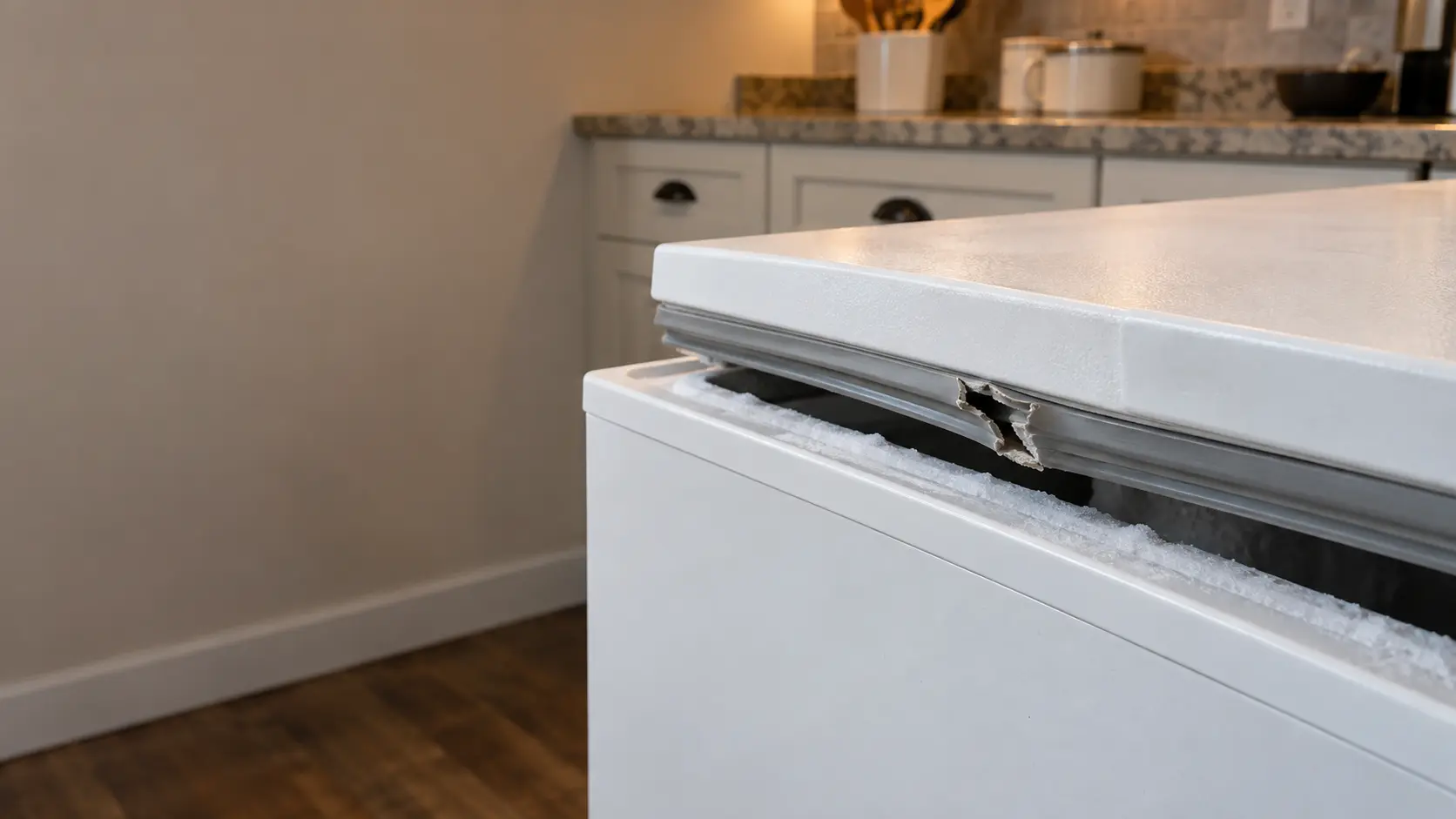
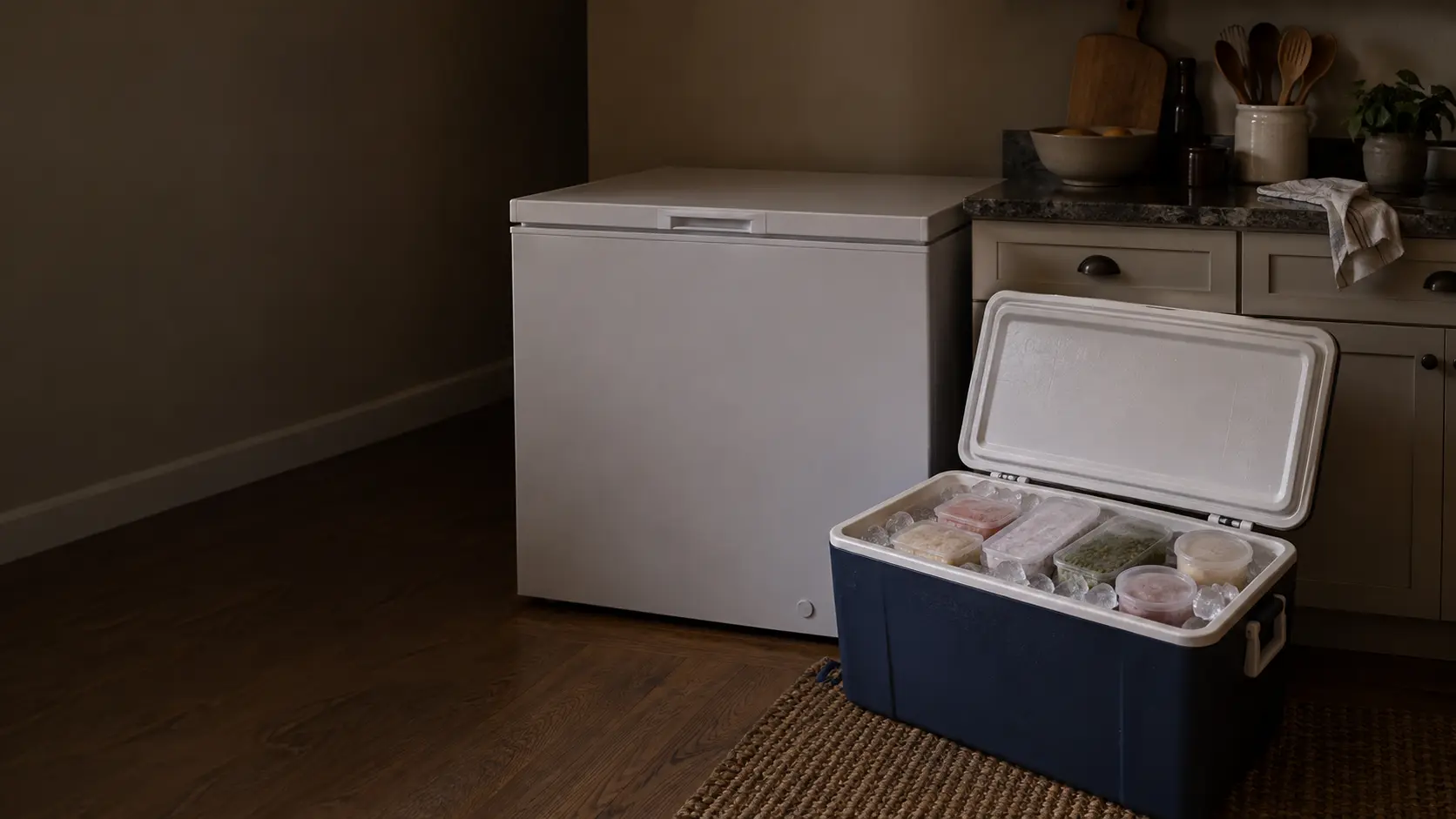
A chest freezer with a lid propped open by an overfilled basket is a special case. The top layer may be soft while the bottom is still rock hard, so check packages from each level rather than judging the whole load by the first bag you pick up.
- Icy center or firm core: refreeze.
- Fully soft but at 40°F or colder: refreeze or cook today.
- Above 40°F for 2 hours or more: discard perishables.
- Juice leaked onto other packages: discard the leaking package and wash the others.
Reading a partly thawed package
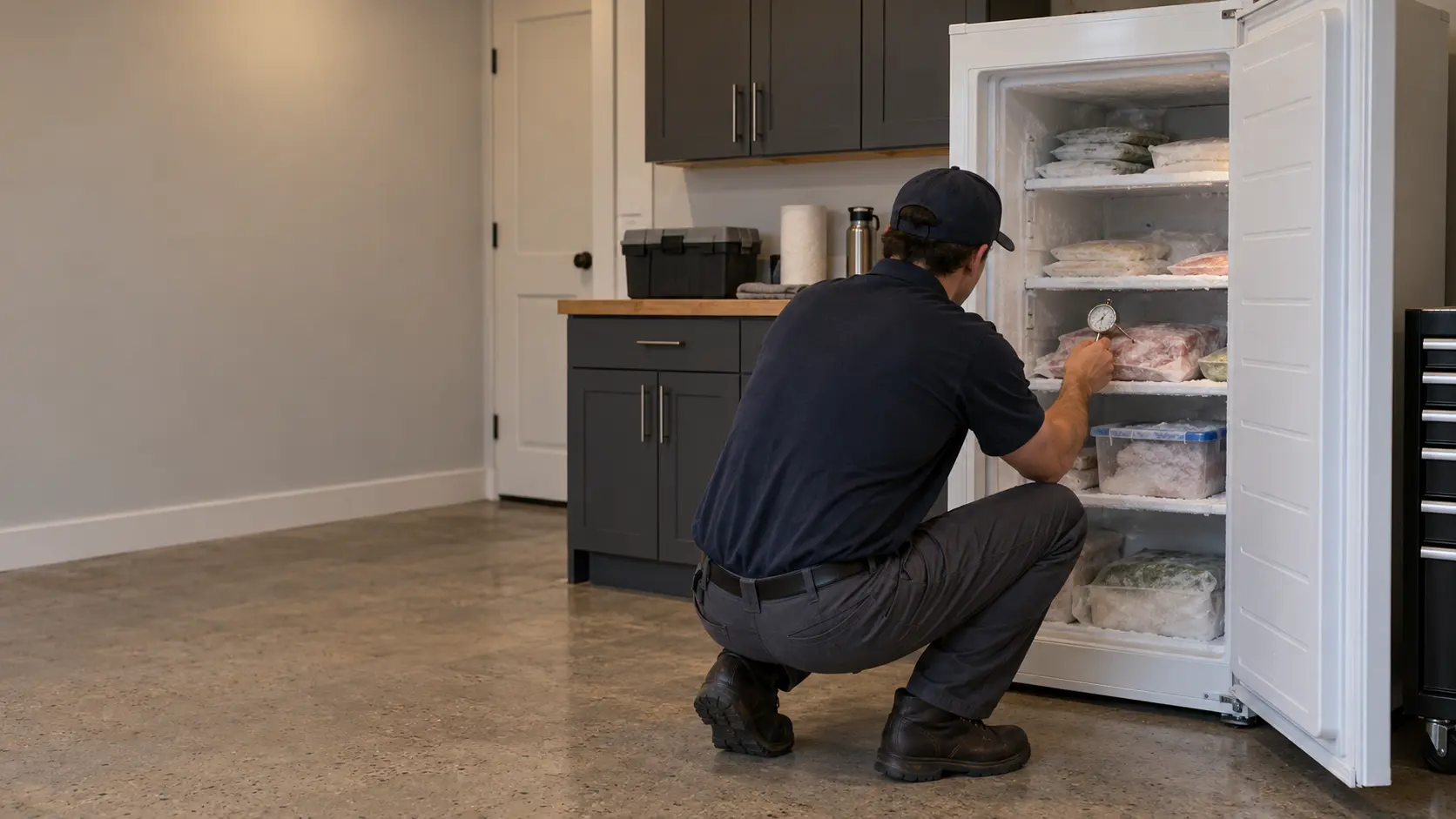
Press the center, not the corner. A package that is soft outside but still has a firm, icy core has ice crystals and qualifies. A probe thermometer pushed between two packages gives a better reading than one pushed into a single thin bag.
Source: USDA FSIS — Freezing and Food Safety — Freezing to 0°F inactivates but does not kill microbes; food kept at 0°F is always safe; refrigerator-thawed food may be refrozen with quality loss; do not refreeze food left out over 2 hours, 1 hour above 90°F; food with ice crystals or at 40°F may be refrozen; freezer burn is a quality issue; FDA — Power Outages: Key Tips for Consumers About Food Safety — Food with ice crystals or at 40°F or below is safe to refreeze or cook; discard perishables above 40°F for two hours or more
What refreezing costs in quality
USDA notes that refreezing loses some quality through the moisture lost in thawing. Each cycle lets ice crystals grow larger, and those crystals tear cell walls, which is why twice-frozen steak weeps on the plate and twice-frozen berries turn to pulp. Soups, stews, casseroles and ground meat headed for sauce hide the change best.
Freezer burn is a separate thing. USDA describes it as dry spots that do not make food unsafe; heavily burned food may be thrown away for quality alone. Refrozen food develops it faster when the wrapping is loose, so rewrap it tightly before it goes back in.
Mark a refrozen package with the date and the word "twice" in marker. It tells whoever pulls it out next to use it in a cooked dish rather than as a steak, and it keeps a package from going through a third cycle because nobody remembered the first two. Put those packages at the front of the basket so they are used first.
Source: USDA FSIS — Freezing and Food Safety — Freezing to 0°F inactivates but does not kill microbes; food kept at 0°F is always safe; refrigerator-thawed food may be refrozen with quality loss; do not refreeze food left out over 2 hours, 1 hour above 90°F; food with ice crystals or at 40°F may be refrozen; freezer burn is a quality issue