Why a chest freezer is a hiding place
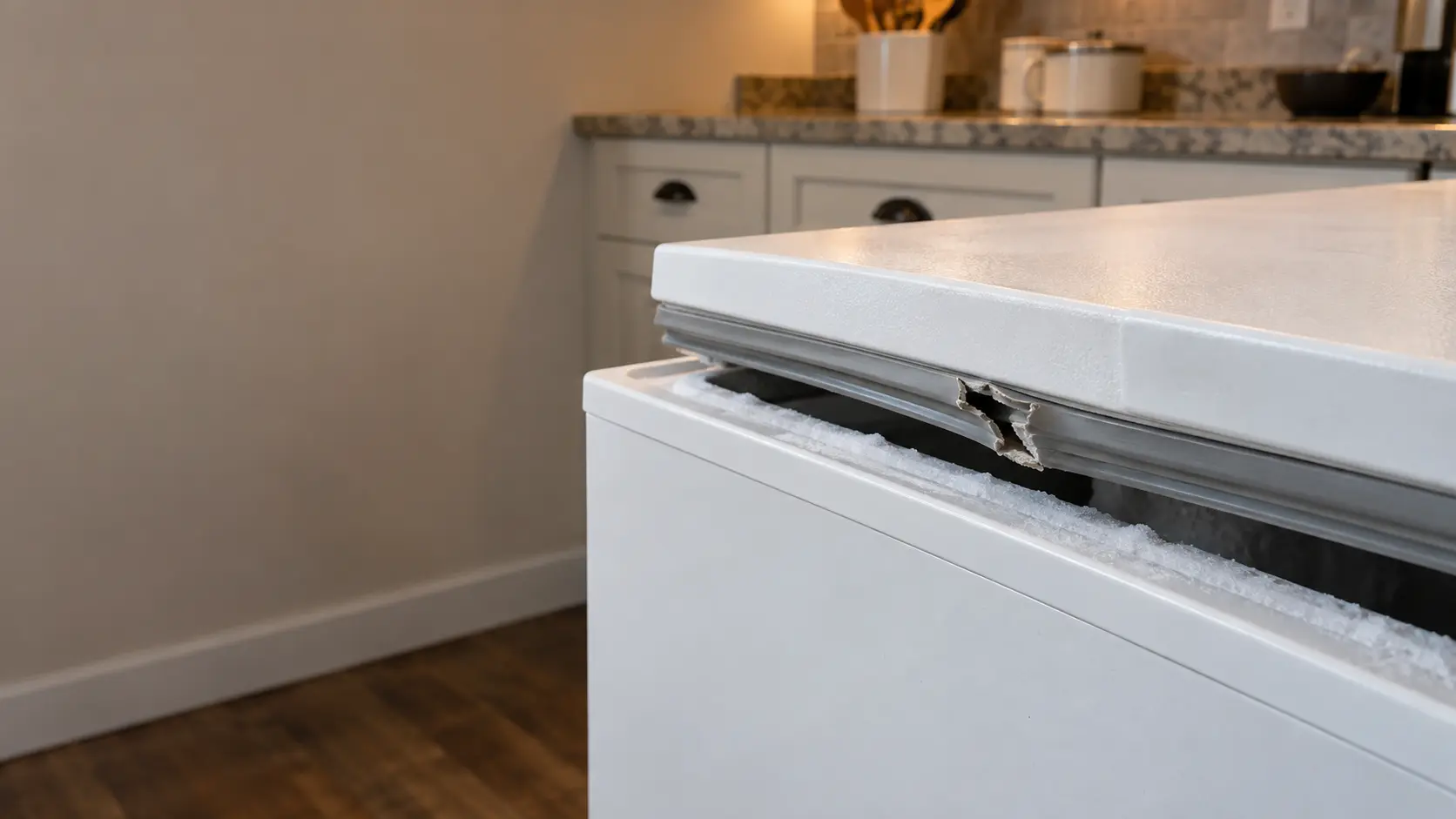
CPSC's account of these deaths is consistent: children, most of them four to seven years old, climbed into a latch-type freezer, chest or cooler during a game of hide-and-seek, and the lid closed. The tight gasket cut off air, and the insulated walls kept anyone from hearing them. CPSC's 2000 recall notice added that a child can suffocate in less than ten minutes.
The incidents CPSC describes happened in appliances stored or in use in kitchens, laundry rooms, basements and garages, and in non-working freezers left outside. Those are exactly the rooms where a spare chest freezer ends up.
Not only an old-appliance problem
Frigidaire's current chest freezer manual opens its warnings by saying that child entrapment and suffocation are not problems of the past. A modern lid with a magnetic gasket can be pushed open from inside, but a lid that is locked with a key, or one pinned shut by boxes stacked on top, cannot.
Source: CPSC — Freezer, Dryer, Cooler and Refrigerator Entrapment Deaths to Children (Publication 5073) — Most victims were four to seven, often playing hide-and-seek; the gasket cut off air and insulation muffled screams; incidents in kitchens, laundry rooms, basements and garages; take the door off before discarding, unlawful in many jurisdictions otherwise; CPSC — Voluntary Recall Initiative for Old Chest Freezers (2000) — Up to 9 million chest freezers made 1945–1970 before lids had to open from inside; 27 children died 1980–1999 in non-working units outside, in basements or garages; suffocation in under ten minutes; lid test by lifting the sides; dispose of or disable the latch; Frigidaire — Chest Freezer User Manual (A31283301) — Child entrapment is not a problem of the past; security lock with a pop-out key; keep keys out of reach of children and away from the freezer; lid left open on vacation only if children cannot get in; check with your utility about recycling; drilling the cabinet can damage wiring and the sealed system
Old chest freezers with a mechanical latch
In 2000, CPSC and the appliance makers' trade group launched a recall initiative for chest freezers made between 1945 and 1970, before voluntary standards required a lid that opens from inside. CPSC reported 27 children dead in such freezers between 1980 and 1999, all in non-working units stored outside, in basements or in garages.
Those freezers still turn up in estate sales, farm outbuildings and the corners of inherited basements. They are easy to recognize: a chrome or painted handle with a hook or a lever that catches a striker on the cabinet, rather than a lid held by a soft magnetic seal.
- Opens by lifting the sides: a magnetic lid, not the latch hazard.
- Opens only with the handle: dispose of it or disable the latch.
- Working but pre-1970: plan now for its disposal when it stops.
- Non-working and stored: dispose of it now rather than later.
The lid test CPSC describes
Close the lid, then try to open it by lifting the sides without touching the handle. CPSC says a freezer that opens this way is not the hazard. One that opens only with the handle has a latch that can trap a child, and CPSC's remedy is to dispose of it or disable the latch.
Source: CPSC — Voluntary Recall Initiative for Old Chest Freezers (2000) — Up to 9 million chest freezers made 1945–1970 before lids had to open from inside; 27 children died 1980–1999 in non-working units outside, in basements or garages; suffocation in under ten minutes; lid test by lifting the sides; dispose of or disable the latch

The lock and its key on a newer chest
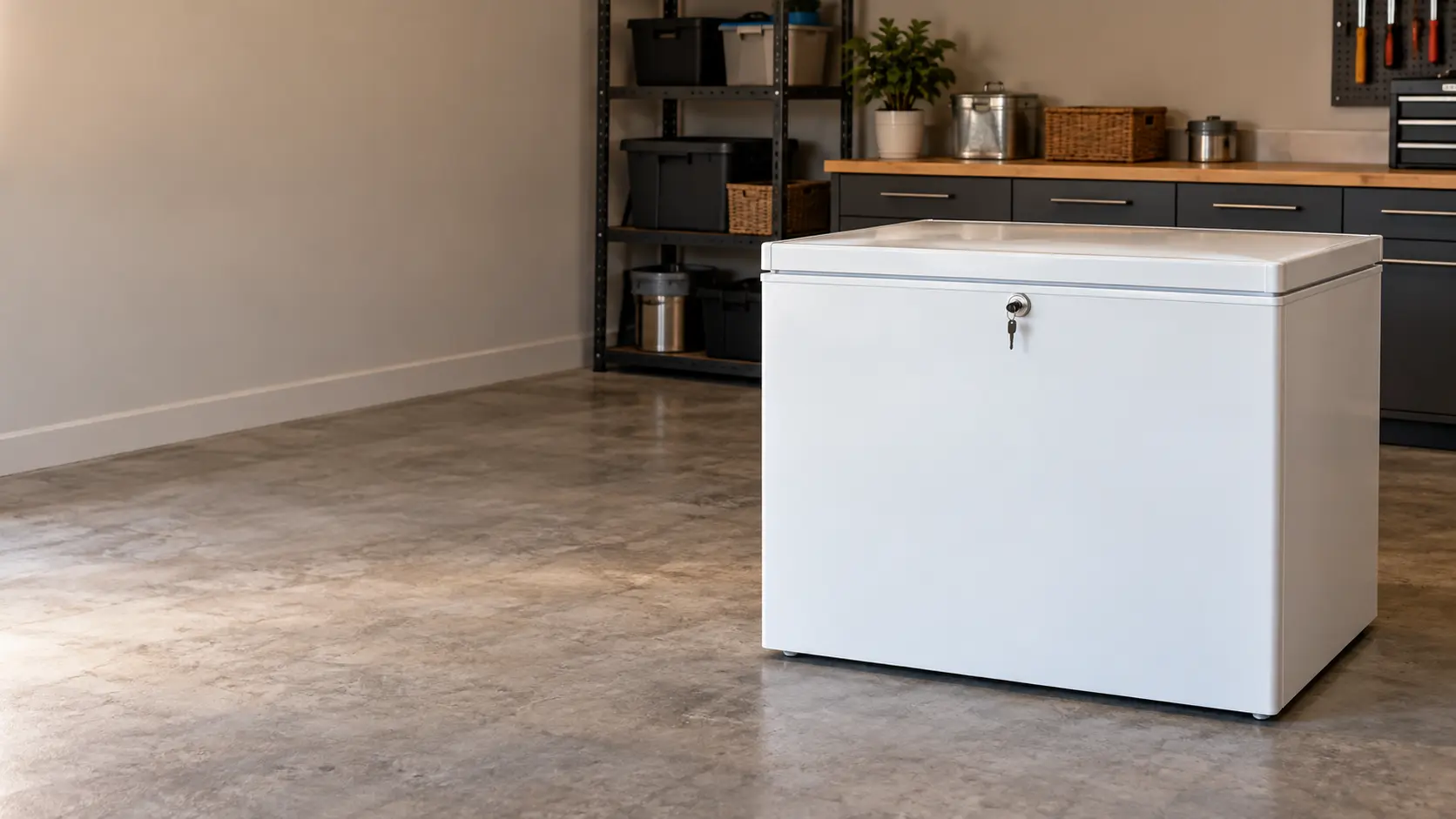
Many chest freezers ship with a security lock so food in a garage stays put. Frigidaire describes one with a pop-out key that fastens the lid snugly, and its manual warns that to prevent entrapment the keys must be kept out of reach of children and not in the vicinity of the freezer.
The common mistake is convenience: the key left in the lock, taped to the side, or hung on a nail above the chest. Each turns the lock into a way for a child to shut themselves in, or for a playmate to do it for them.
Where the key should live
Put it on the adult key ring or in a drawer in another room, and keep the spare somewhere different again. If the lock is not needed, leave it unlocked and store both keys away; a lid held only by its gasket is the safer default in a home with young children.
Source: Frigidaire — Chest Freezer User Manual (A31283301) — Child entrapment is not a problem of the past; security lock with a pop-out key; keep keys out of reach of children and away from the freezer; lid left open on vacation only if children cannot get in; check with your utility about recycling; drilling the cabinet can damage wiring and the sealed system
A freezer that is empty or switched off
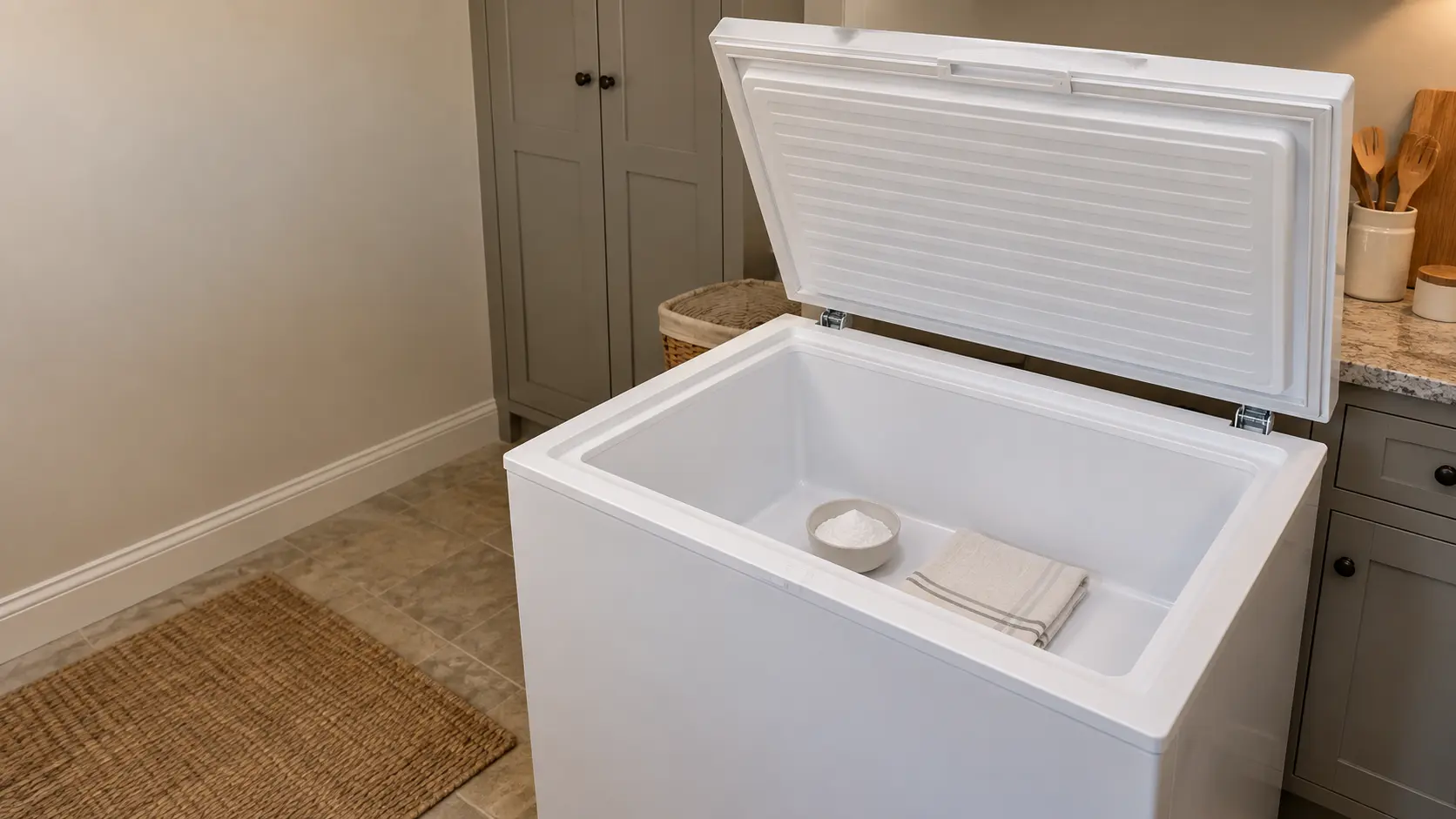
Owners often prop the lid open on an unplugged freezer to stop odors and mildew, which Frigidaire recommends for longer shutdowns. The same manual warns that when a lid is left open on vacation, you must make certain children cannot get into the appliance. An open, empty chest in a garage is an invitation.
Lock the door to the room it is in, or block the lid with a secured spacer that holds it open and cannot be knocked out. A freezer waiting for a repair visit falls under the same rule: empty, unplugged and not a place anyone can hide.
Source: Frigidaire — Chest Freezer User Manual (A31283301) — Child entrapment is not a problem of the past; security lock with a pop-out key; keep keys out of reach of children and away from the freezer; lid left open on vacation only if children cannot get in; check with your utility about recycling; drilling the cabinet can damage wiring and the sealed system
Getting rid of a chest freezer safely
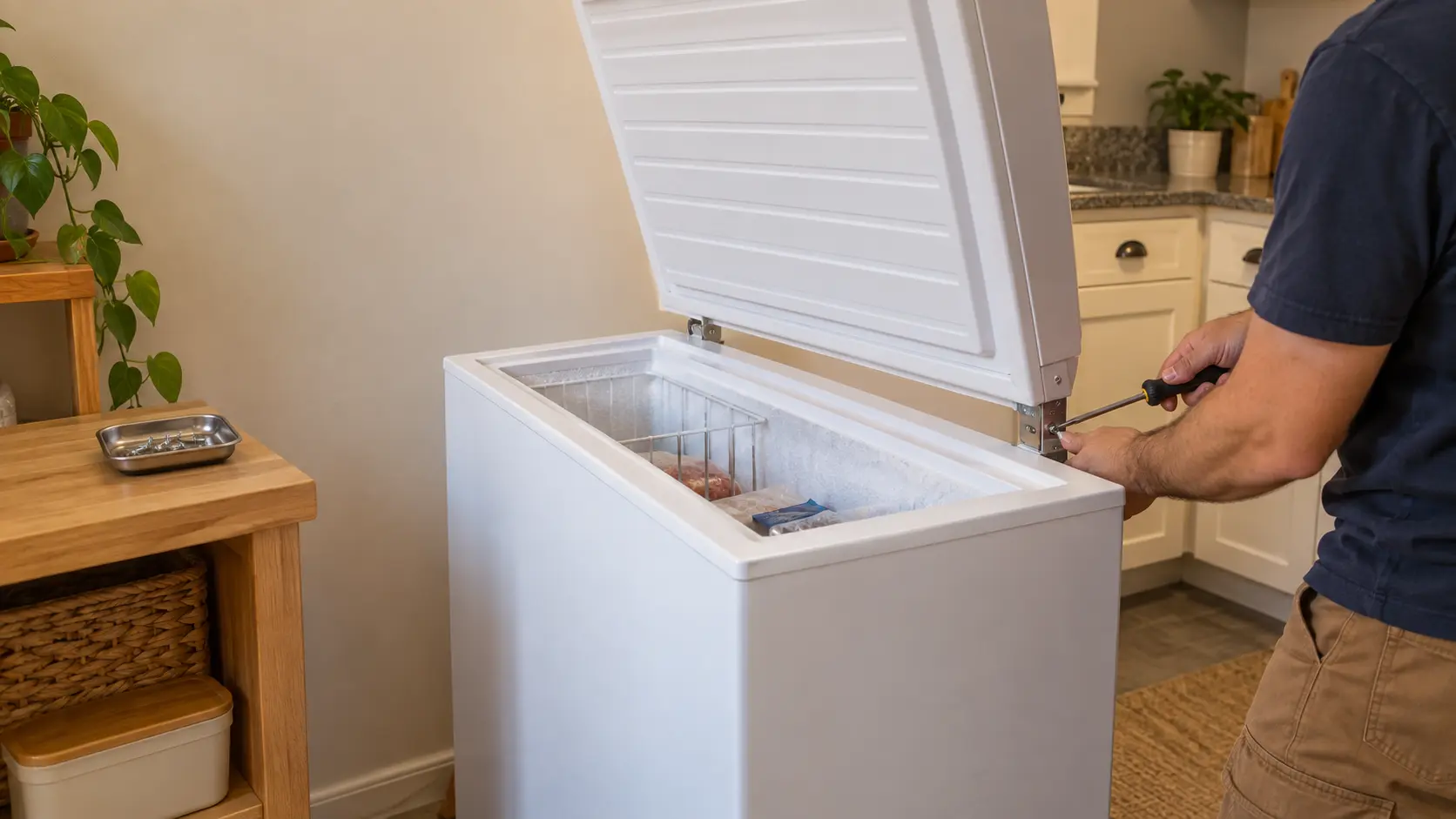
CPSC's surest method for a discarded or stored appliance is to take the door off completely, usually a job for a screwdriver, and notes that many local jurisdictions make it unlawful to discard an old refrigerator without removing the door. For a chest freezer the lid comes off at its hinges.
Frigidaire encourages responsible recycling and suggests checking with your utility about appliance pickup programs. A recycler also deals with the refrigerant sealed inside, which is one more reason a freezer left at the curb is the wrong ending.
- Unplug it and cut or tie up the cord.
- Remove the lid at the hinges, or remove the latch on an old unit.
- Arrange recycling through the utility, the retailer or the local waste service.
- Never leave it outside, at the curb or in a yard with the lid attached.
Source: CPSC — Freezer, Dryer, Cooler and Refrigerator Entrapment Deaths to Children (Publication 5073) — Most victims were four to seven, often playing hide-and-seek; the gasket cut off air and insulation muffled screams; incidents in kitchens, laundry rooms, basements and garages; take the door off before discarding, unlawful in many jurisdictions otherwise; Frigidaire — Chest Freezer User Manual (A31283301) — Child entrapment is not a problem of the past; security lock with a pop-out key; keep keys out of reach of children and away from the freezer; lid left open on vacation only if children cannot get in; check with your utility about recycling; drilling the cabinet can damage wiring and the sealed system