Where a freezer gets rid of its heat
Every freezer moves heat out of the cabinet and releases it into the room through its condenser. What differs is where that condenser sits. GE explains that on its chest and upright freezers the condenser tubing runs between the inner and outer walls, so the outer case itself sheds the heat. That is why the sides feel warm, sometimes hot, and GE says they can run up to 30°F warmer than the room.
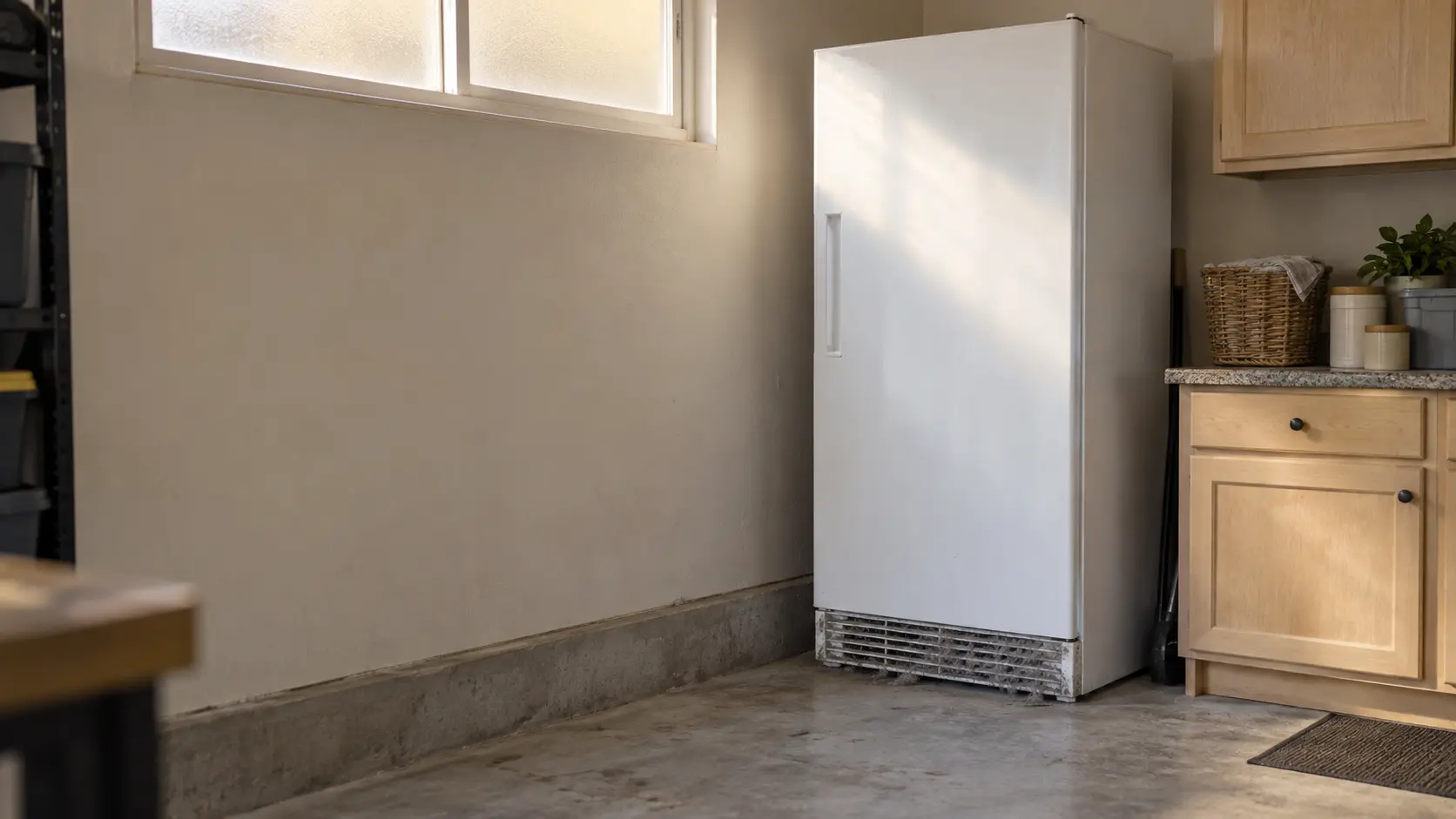
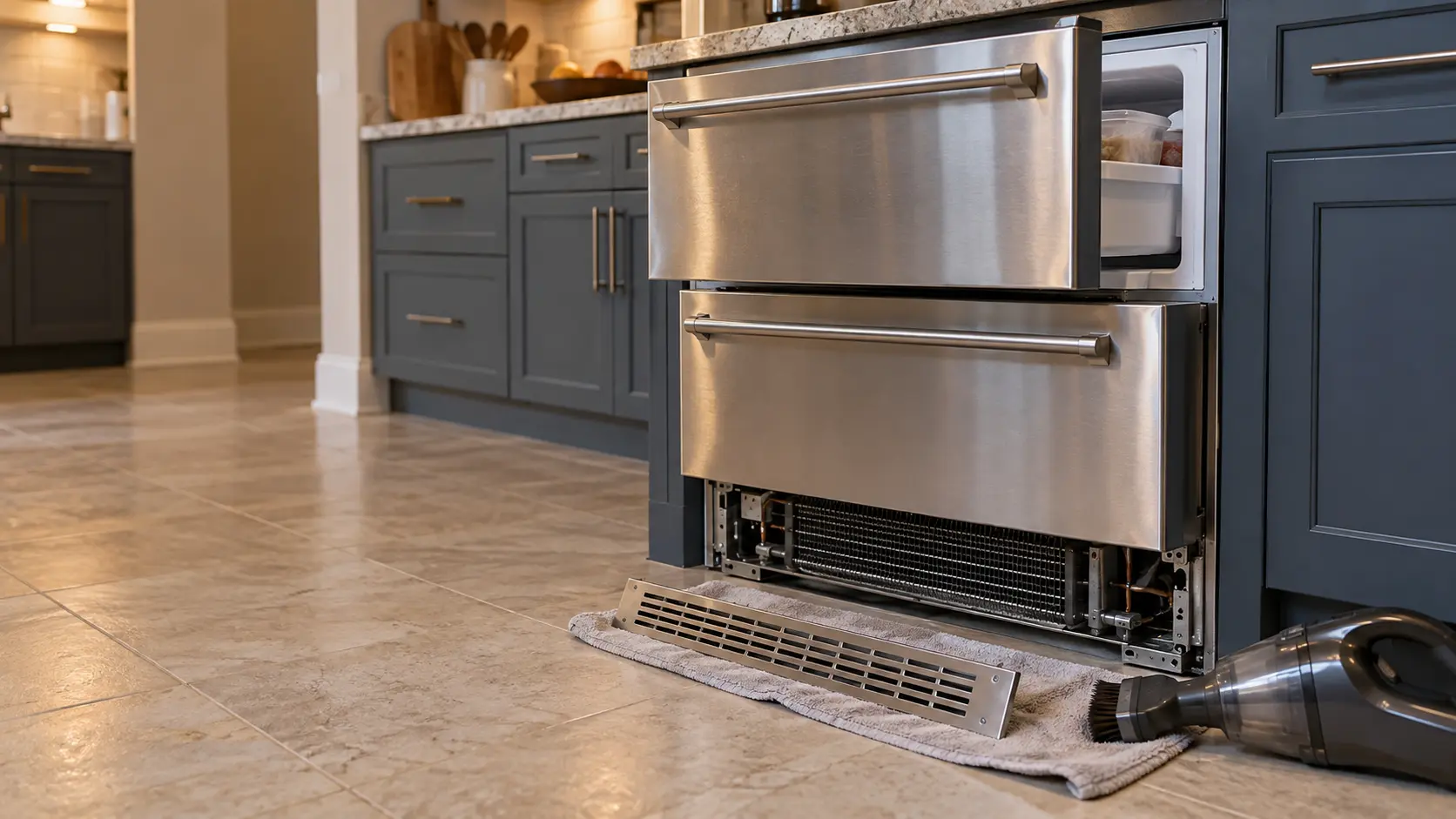
Built-in models cannot use their sides that way, because cabinetry surrounds them. Their freezer condenser coils sit behind a grille where a fan pushes air across them, and that open coil is what collects dust.
Chest freezers
The condenser wraps around the back, sides and front just behind the skin. The only exposed part is the machine compartment at one end, with its compressor and sometimes a small fan behind a vented cover.
Upright freezers
Most household uprights use the same wrap-around design across the back, sides and top. Some larger or commercial-style uprights have a coil at the bottom behind a front grille instead; the use and care guide says which yours is.
Freezer columns and undercounter drawers
These have an open coil, usually at the top behind a louvered grille or at the bottom behind the kickplate. On Sub-Zero columns you open the door to reach the kickplate.
Source: GE Appliances — Upright and chest freezer: wrap-around condenser and evaporator — Condenser tubing runs between the inner and outer walls: around back, sides and front on chests, back, sides and top on uprights; GE Appliances — Upright and chest freezer: exterior case warm — Case walls can be up to 30°F warmer than the room; most upright and chest freezers need 3 inches of clearance on top and all sides
Cleaning an exposed condenser
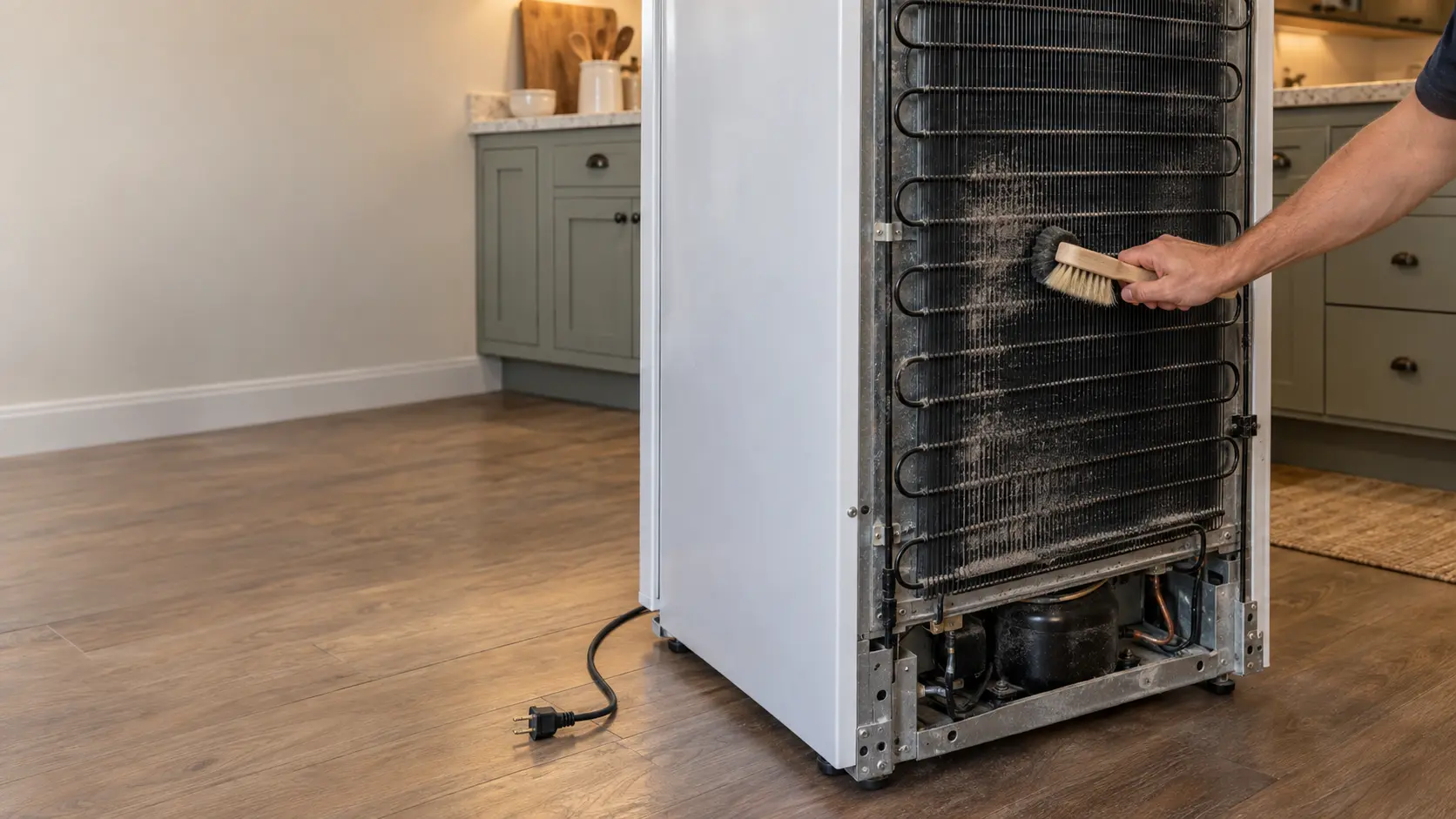
Sub-Zero asks for its condensers to be cleaned every six to twelve months, and more often in homes with pets, warning that a clogged one can lead to temperature loss or mechanical damage. A soft-bristle brush attachment on a vacuum does most of the work.
Sub-Zero also says specialty coil cleaners and degreasers are not needed and not recommended, and that it can take up to 24 hours for temperatures to settle after a cleaning. A freezer that is still warm a day later has something besides dust wrong with it.
- Switch the freezer off at its control or unplug it if the plug is reachable.
- Remove the grille or kickplate as the manual describes.
- Vacuum along the fins, not across them, with a soft brush attachment.
- Never bend the thin aluminum fins; a flattened patch blocks airflow.
- Refit the grille, restore power and check the thermometer the next day.
Source: Sub-Zero — Clean the condenser — Clean the condenser every 6 to 12 months, more often with pets; do not bend the fins; cleaning chemicals are not recommended; temperatures may take up to 24 hours to return

When the condenser is inside the walls
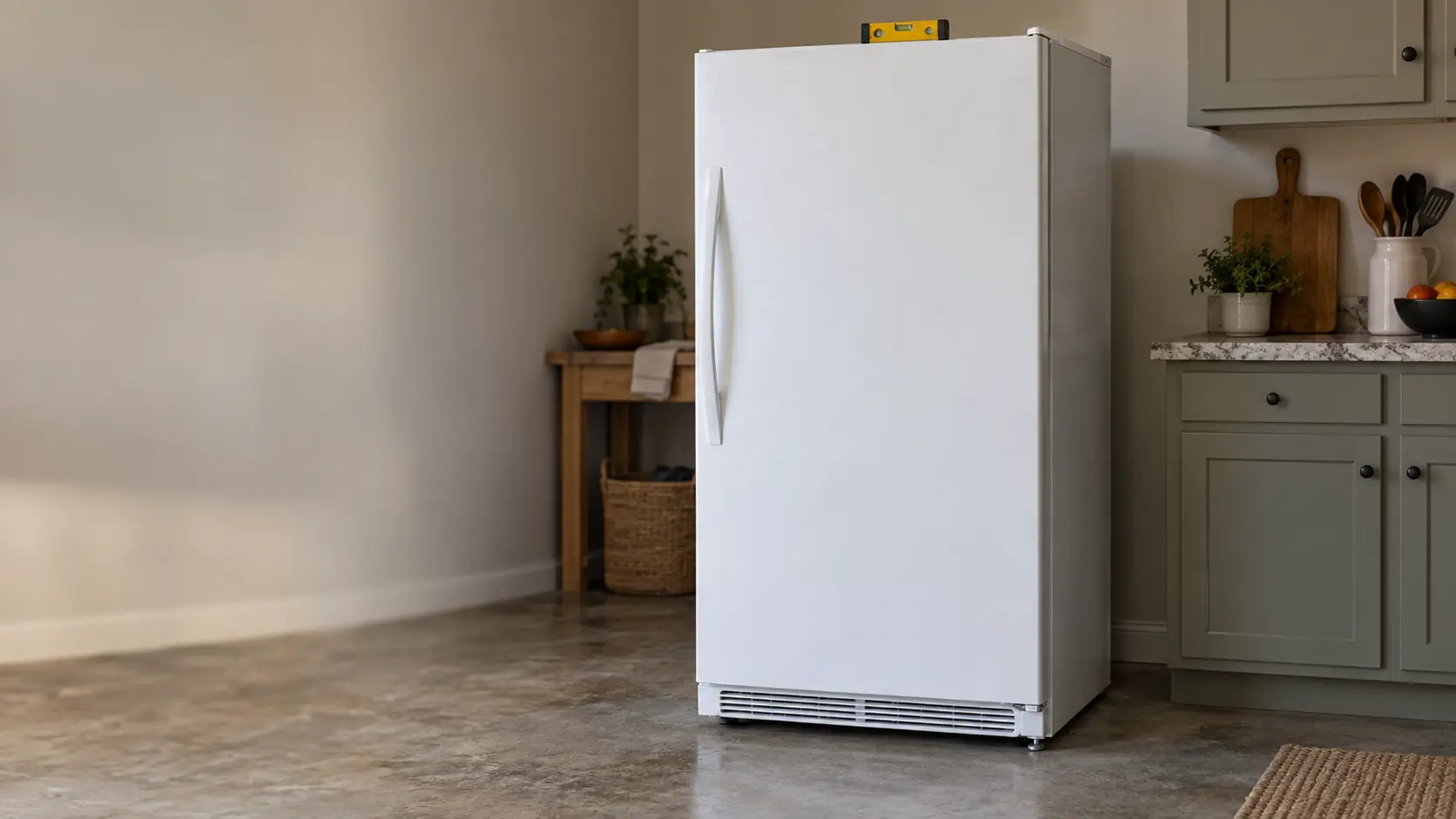
A wrap-around condenser needs air, not brushing. GE asks for roughly 3 inches of clear air above the cabinet and beside each wall on most of its chests and uprights. Boxes stacked against a chest, or an upright squeezed into an alcove, trap the warm air against the case and make the compressor run longer.
Twice a year, pull the freezer out a little, vacuum the floor around and behind it and brush off the vented cover over the compressor compartment. GE notes that the outside may sweat in hot, humid weather; wipe it dry and check that the clearance is still there rather than assuming a problem.
Source: GE Appliances — Upright and chest freezer: exterior case warm — Case walls can be up to 30°F warmer than the room; most upright and chest freezers need 3 inches of clearance on top and all sides; GE Appliances — Upright and chest freezer: sweats on the exterior — Exterior sweating in hot, humid weather is typically normal; wipe it dry and check the clearances
Looking after the lid or door seal
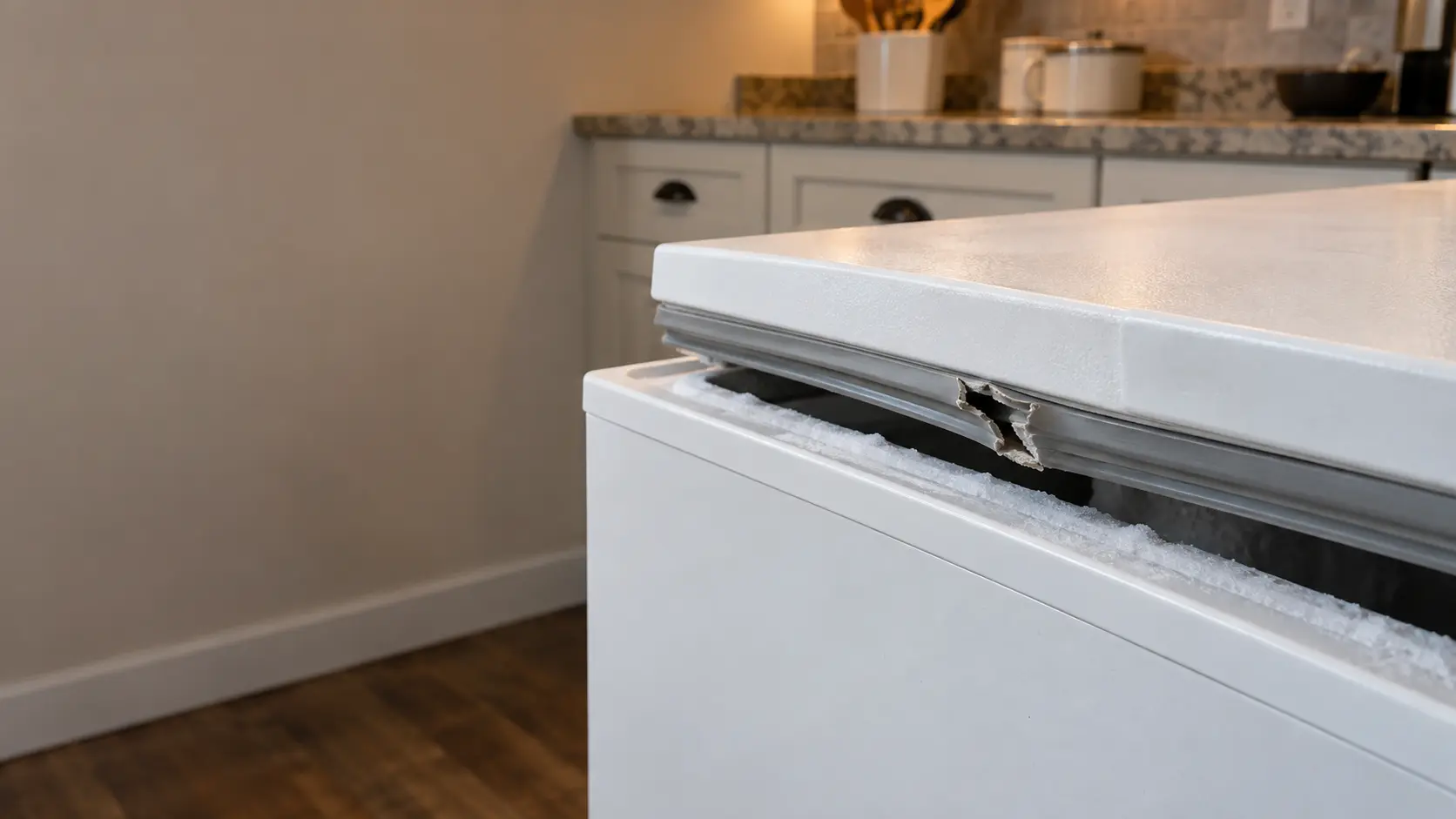
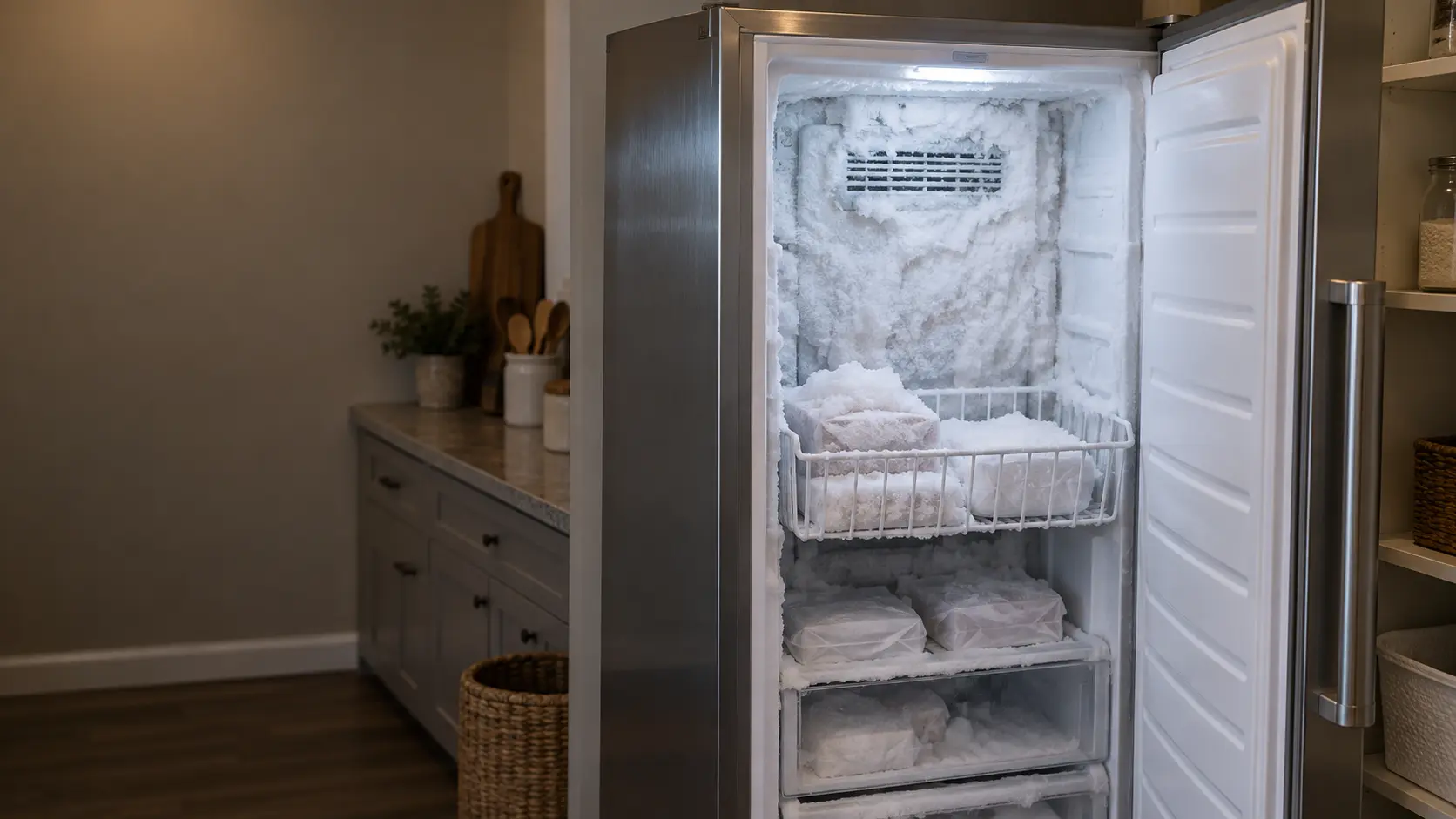
The gasket keeps room air out, and on a freezer that air brings moisture that turns straight to frost. GE's cleaning guidance applies the same solution to the gasket as to the interior: one tablespoon of baking soda in a quart of warm water, a rinse with clean water and a thorough drying. Abrasive pads roughen the vinyl and shorten its life.
While the seal is clean, look at it closely. Our own quick test is to close the lid or door on a strip of paper in several places and pull it out: it should drag, not slide free.
- Tears or splits, especially at the corners near the hinges.
- Flattened sections that no longer spring back after you press them.
- A ridge of ice along one side, which points to a gap there.
- Stiff or brittle vinyl on a freezer that lives in a cold garage.
- Crumbs or sticky residue in the folds that stop the seal seating.
Source: GE Appliances — Upright and chest freezer: proper cleaning — Clean the interior at least once a year; one tablespoon of baking soda per quart of warm water for the interior and gasket; no abrasive cleaners
A cleaning calendar by type
These intervals are house rules from our own visits, apart from the Sub-Zero figure. Stretch them in a clean, cool room and shorten them in a dusty garage or a home with shedding pets.
Chest freezers: vacuum around the cabinet and wash the lid seal every six months, and clean the interior whenever you defrost. Upright freezers: the same, plus a look at any bottom grille. Freezer columns and undercounter drawers: clean the exposed condenser every six to twelve months and wash the door or drawer seals at the same visit. GE adds that the interior of any upright or chest freezer should be cleaned at least once a year.
Source: Sub-Zero — Clean the condenser — Clean the condenser every 6 to 12 months, more often with pets; do not bend the fins; cleaning chemicals are not recommended; temperatures may take up to 24 hours to return; GE Appliances — Upright and chest freezer: proper cleaning — Clean the interior at least once a year; one tablespoon of baking soda per quart of warm water for the interior and gasket; no abrasive cleaners