When the frost says it is time
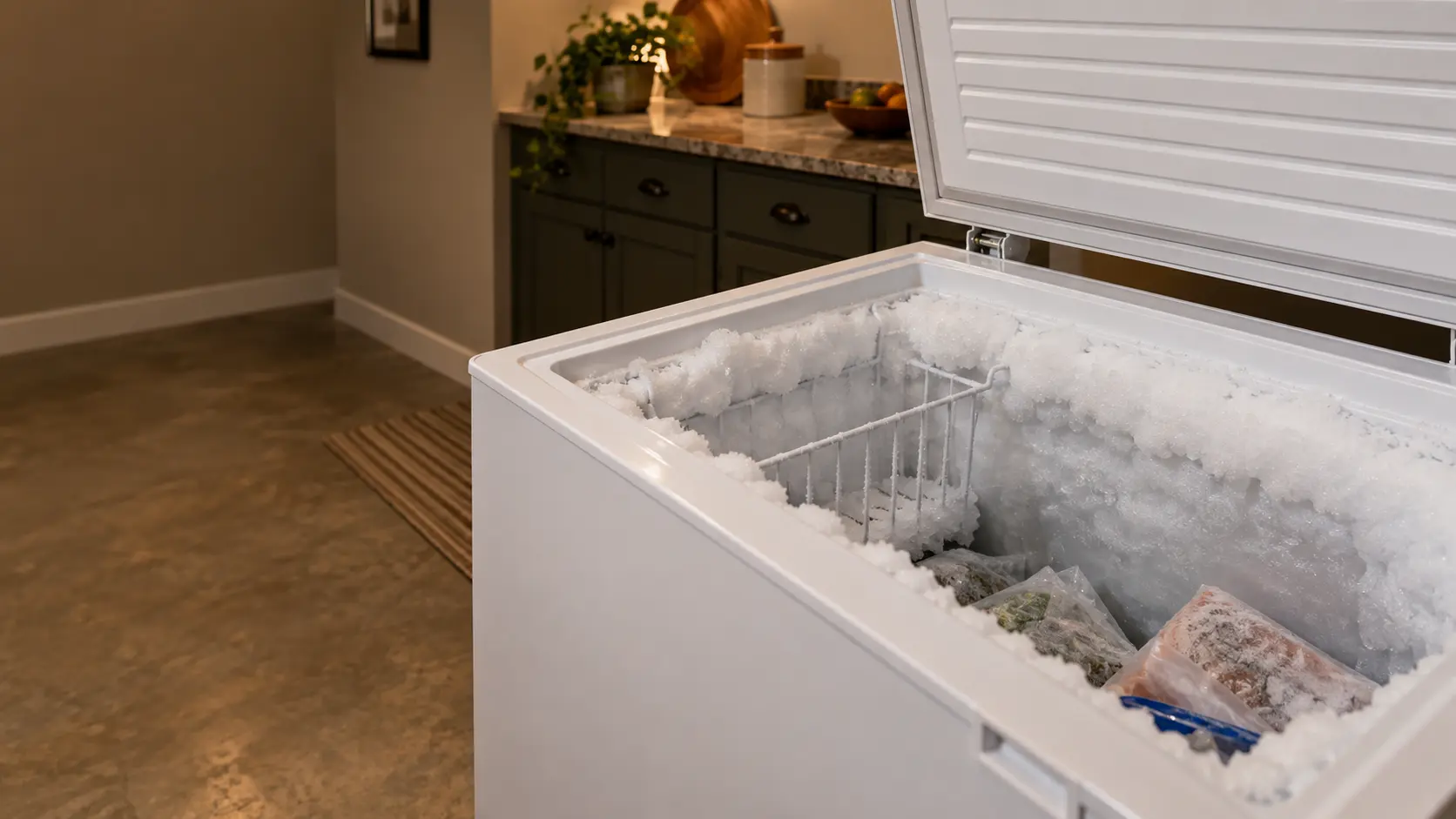
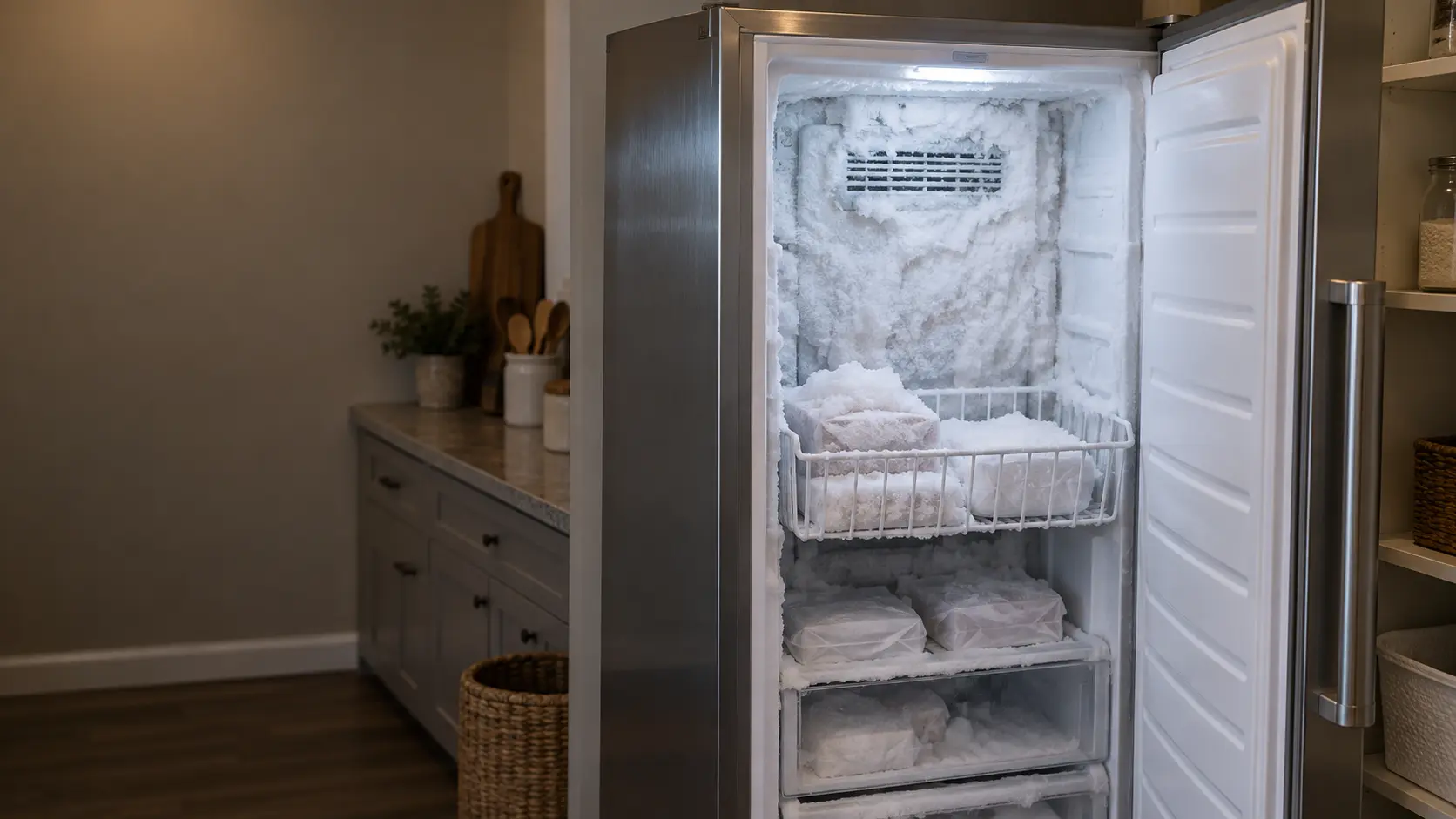
A chest freezer's evaporator is bonded to the inside of its walls, so every time the lid opens, moisture from the room freezes onto those walls. ENERGY STAR says frost on a manual defrost freezer should not be allowed past a quarter of an inch; GE's instructions give 1/4 to 1/2 inch. Past that point the frost insulates the food from the cold, and the compressor runs longer to make up for it.
In most homes that means one or two defrosts a year. A chest in a humid basement, or one opened many times a day in summer, frosts faster. Knowing how to defrost a chest freezer properly matters more than doing it often: the steps below take one afternoon and leave the liner and the tubing behind it untouched.
Measuring the frost
Press a plastic ruler or a credit card edge into the frost on the upper walls, where it is usually thickest. If the layer is as thick as a pencil, plan the defrost for the next cool, dry day.
Signs besides thickness
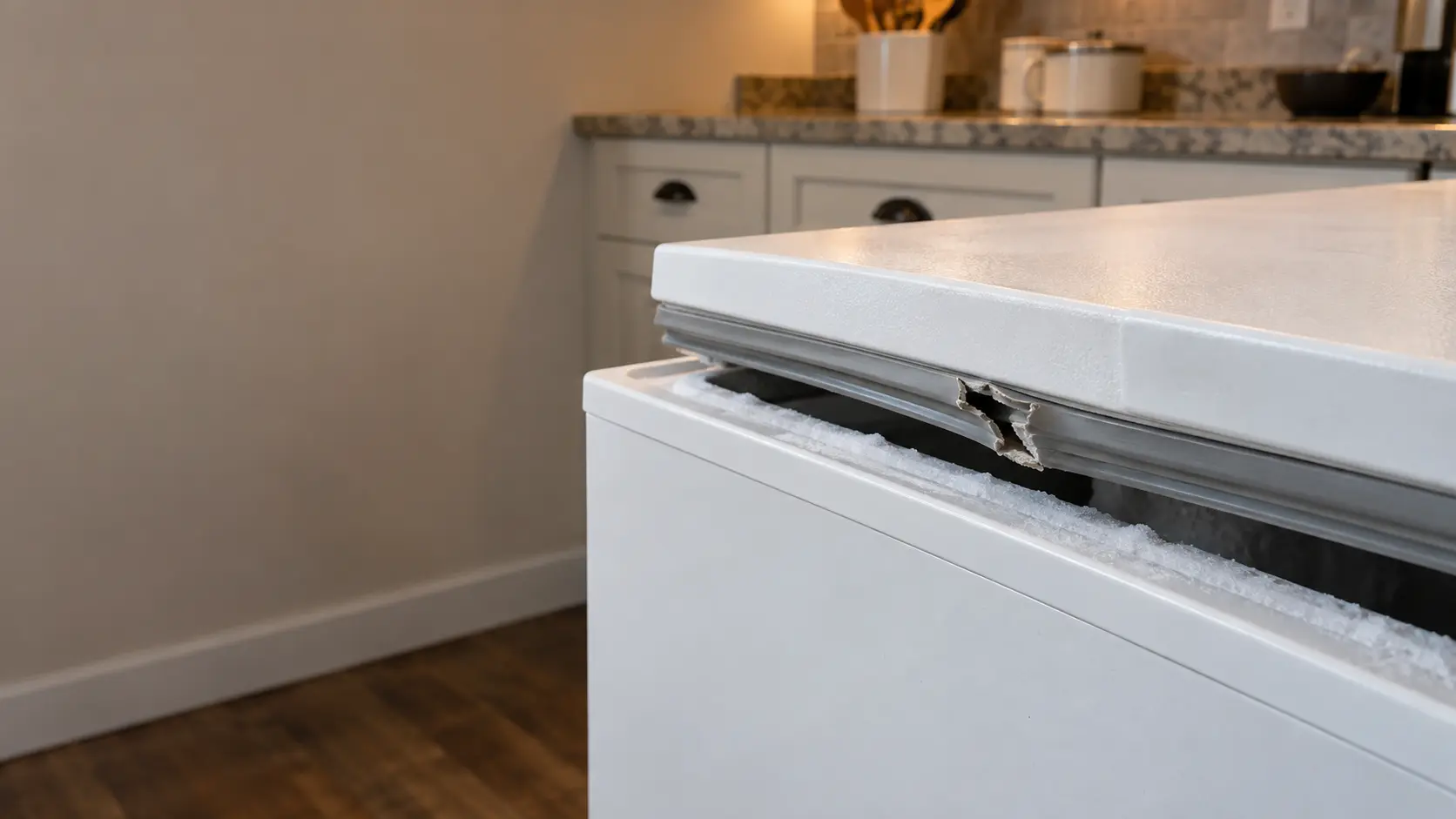
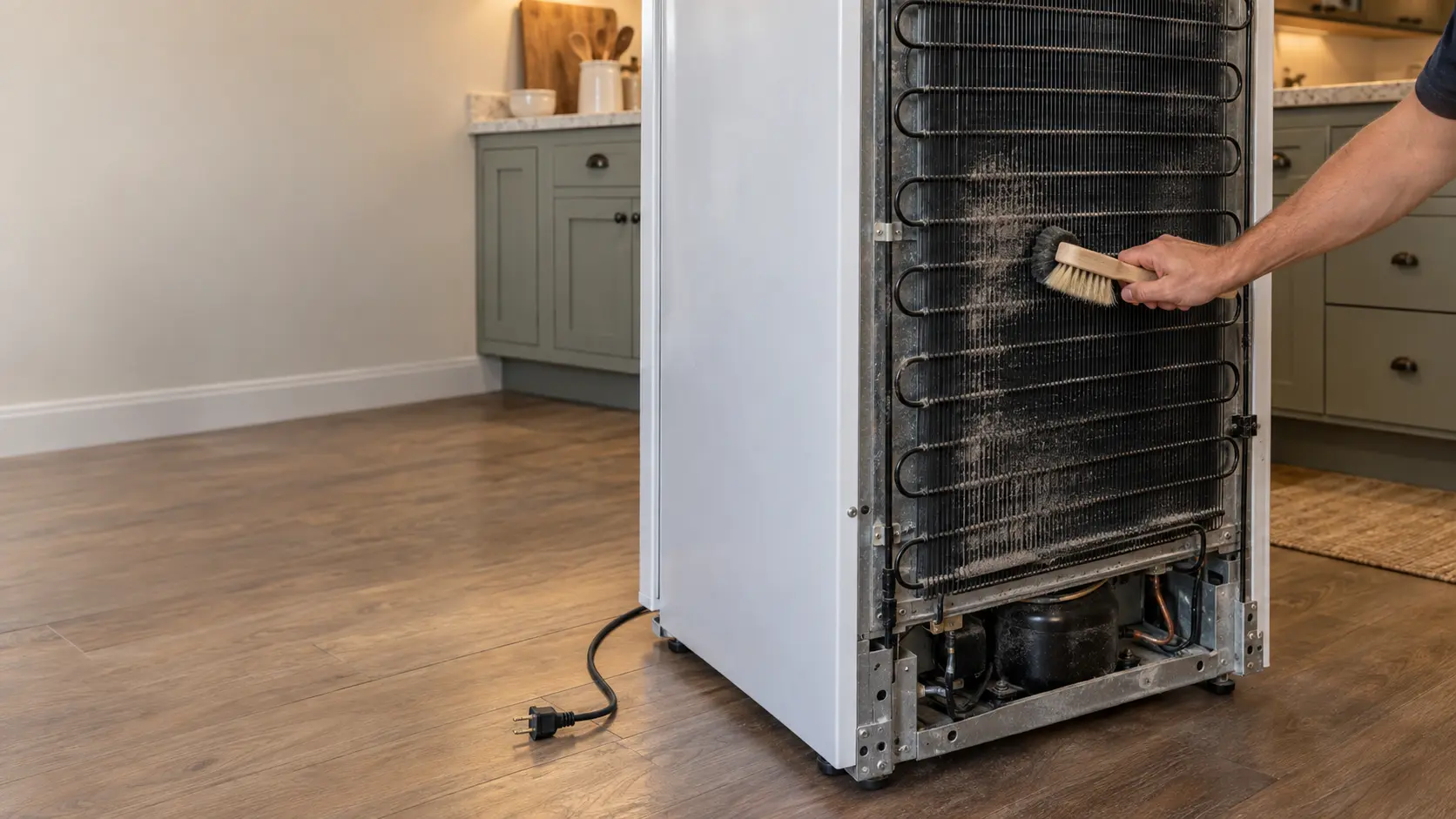
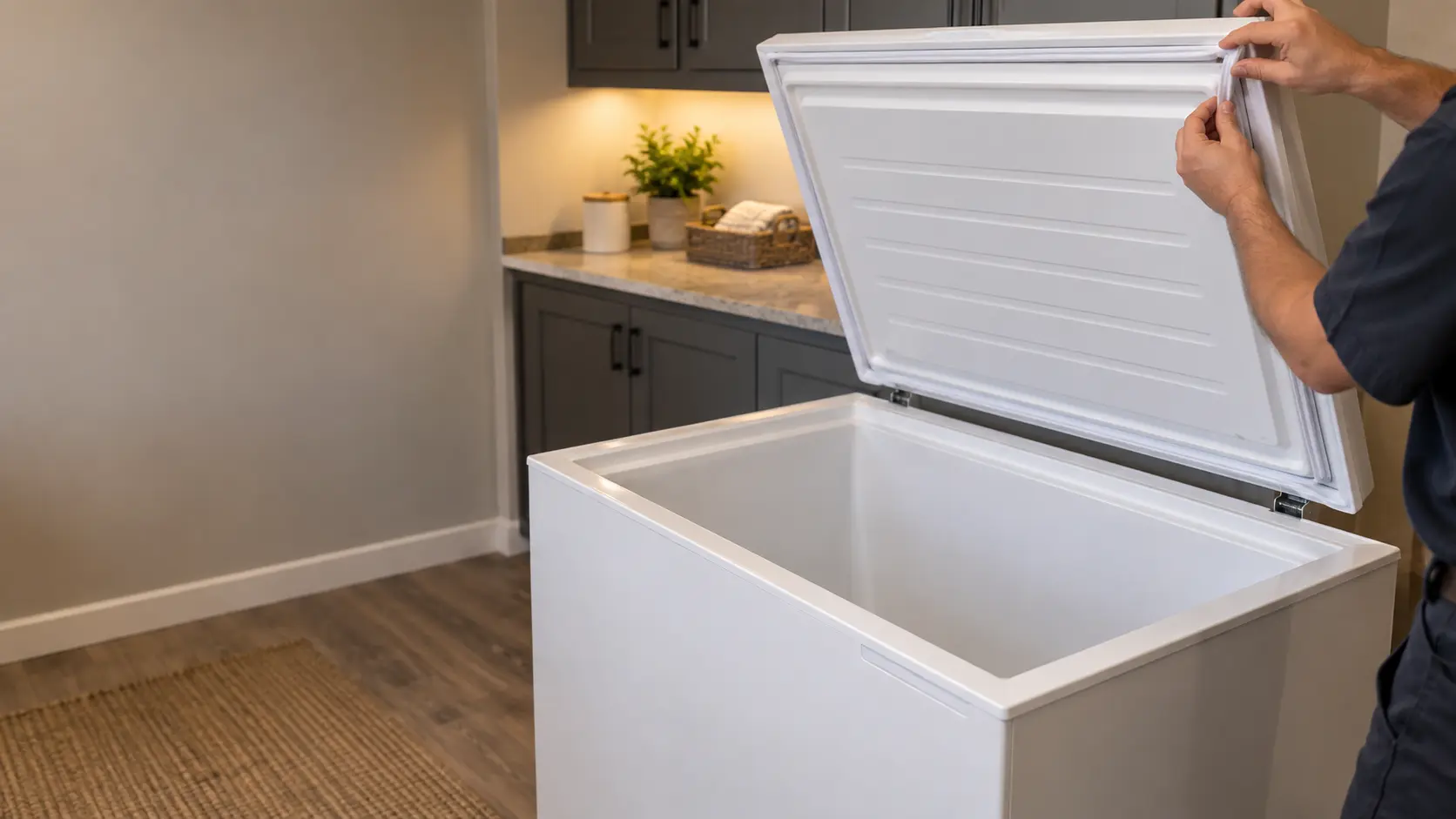
A lid that no longer closes flat, a ridge of ice along the gasket, or a compressor that seems to run far longer than it used to are all reasons to defrost now rather than later. If frost returns within weeks, the lid seal is the likelier issue.
Source: GE Appliances — Chest freezer: manual defrosting instructions — Defrost at 1/4 to 1/2 inch of frost; store food in boxes, insulated bags or coolers; front drain with hose adapter, no garden hose; open lid, remove loose frost, pans of hot water; rinse with baking soda solution, dry, refit plug and cap; ENERGY STAR — Freezers — Do not let frost on a manual defrost freezer build up past one-quarter of an inch
Plan for the food before you unplug
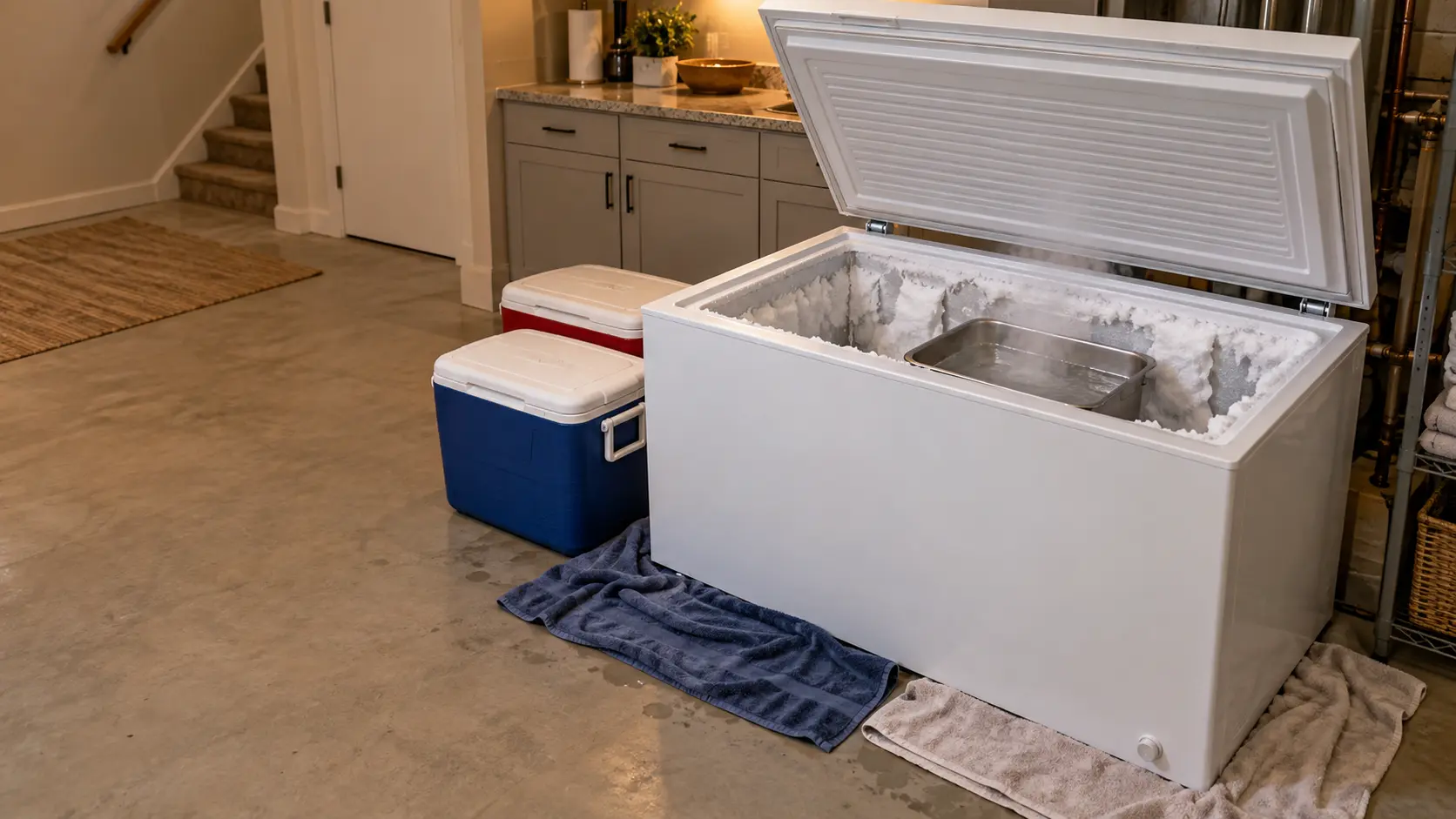
GE's defrost instructions say to remove all the food and store it temporarily in large boxes, insulated bags or picnic coolers, using towels and newspaper as insulation. Pack the coolers tight and keep them closed: frozen packages keep each other cold. A cool morning makes the job easier, and a garage in August makes it harder.
The food is safe while it stays frozen. FDA advises that frozen food that still has ice crystals, or is at 40°F or below, can be refrozen, so a few hours in a well-packed cooler costs nothing. Use the job as a chance to sort out anything that has been in there too long.
- Two or three coolers, or boxes lined with towels and newspaper.
- Old towels and a shallow pan or two for the floor.
- A plastic scraper or spatula, never metal.
- A few pots of hot water, not boiling.
- Baking soda, warm water and soft cloths for the wash.
Source: GE Appliances — Chest freezer: manual defrosting instructions — Defrost at 1/4 to 1/2 inch of frost; store food in boxes, insulated bags or coolers; front drain with hose adapter, no garden hose; open lid, remove loose frost, pans of hot water; rinse with baking soda solution, dry, refit plug and cap; FDA — Are you storing food safely? — Food that still contains ice crystals or is at 40°F or below is safe to refreeze
Getting the water out
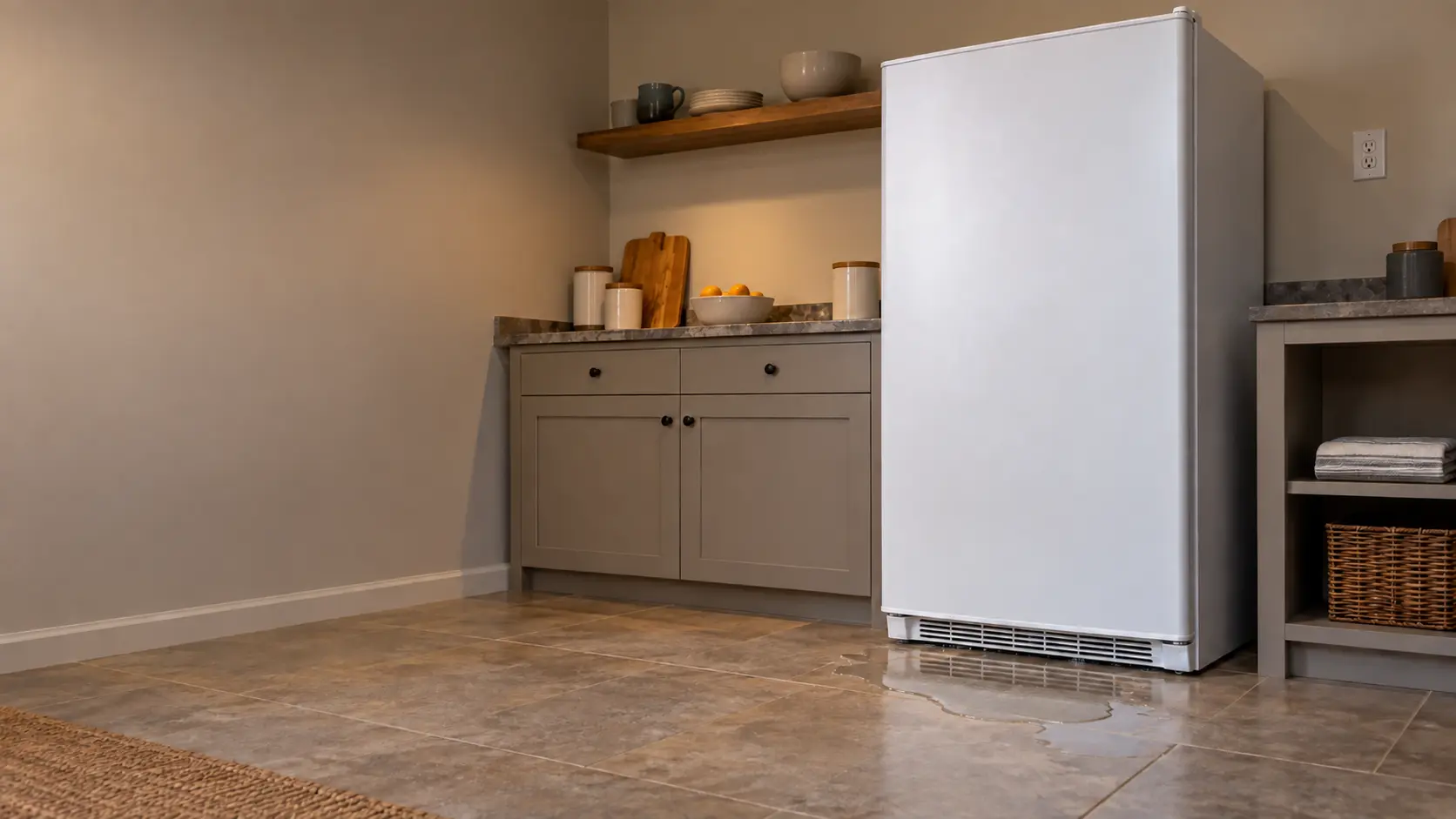
A chest that has built up half an inch of frost gives back more water than people expect, and it all collects in the bottom. How it leaves depends on the model.
Chests with a front drain
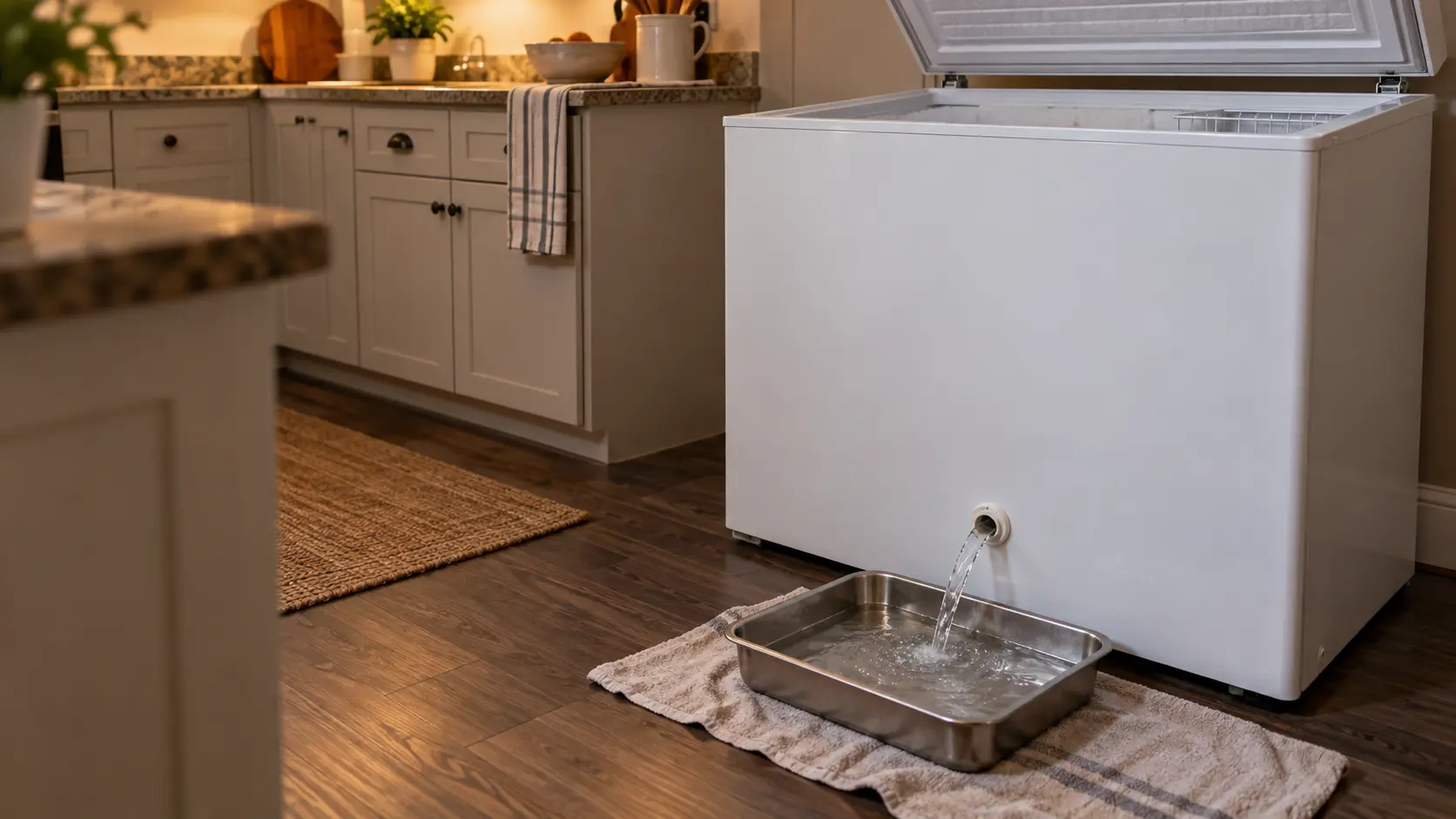
Some chests have a drain at the front, low on the cabinet. On GE models so equipped, you remove the outside cap, fit the hose adapter, which usually ships in a bag in the bottom of the freezer, then pull the drain plug inside. GE advises against attaching a garden hose to that adapter; run the water into a shallow pan instead and empty it as it fills.
Chests with no drain
Smaller chests often have no drain at all. Lay towels in the bottom to soak up meltwater and sponge out the rest into a bucket, wringing the towels out as you go. A wet-dry shop vacuum speeds this up, provided it stays on dry floor and away from the freezer's power cord.
Speeding it up without harming the liner
GE suggests leaving the lid open, lifting out large loose pieces of frost before they melt and setting pans of hot water inside. Swap the pans for fresh hot water as they cool. Frost usually starts letting go in sheets after half an hour or so, and a plastic spatula can then ease those sheets off.
The things people reach for in a hurry are the ones that cost a freezer. The liner of a chest is thin, and the evaporator tubing sits right behind it, so one slip with a sharp tool can punch a refrigerant leak into a wall that cannot be opened.
- Knives, ice picks, screwdrivers or any metal scraper.
- A heat gun, which can warp or melt the plastic liner.
- A hair dryer or electric heater close to a pool of meltwater.
- Boiling water poured directly onto the walls or the gasket.
Source: GE Appliances — Chest freezer: manual defrosting instructions — Defrost at 1/4 to 1/2 inch of frost; store food in boxes, insulated bags or coolers; front drain with hose adapter, no garden hose; open lid, remove loose frost, pans of hot water; rinse with baking soda solution, dry, refit plug and cap
Cleaning, drying and the restart
Once the walls are bare, GE's instructions call for rinsing the interior with a baking soda and water solution, then rinsing and drying. Its cleaning guidance gives the mix as one tablespoon of baking soda per quart of warm water, the same solution it recommends for the gasket. Avoid abrasive cleaners, which scratch the liner and give the next frost a better grip.
Dry every surface thoroughly, because water left in the corners freezes as soon as the compressor starts. Refit the drain plug and the outside cap, plug the freezer in and set the control back to its normal position. GE's steps return the food at that point; packing it in quickly, with the lid shut, helps the freezer pull down again.
Source: GE Appliances — Chest freezer: manual defrosting instructions — Defrost at 1/4 to 1/2 inch of frost; store food in boxes, insulated bags or coolers; front drain with hose adapter, no garden hose; open lid, remove loose frost, pans of hot water; rinse with baking soda solution, dry, refit plug and cap; GE Appliances — Upright and chest freezer: proper cleaning — Clean the interior and gasket with one tablespoon of baking soda per quart of warm water; no abrasive cleaners