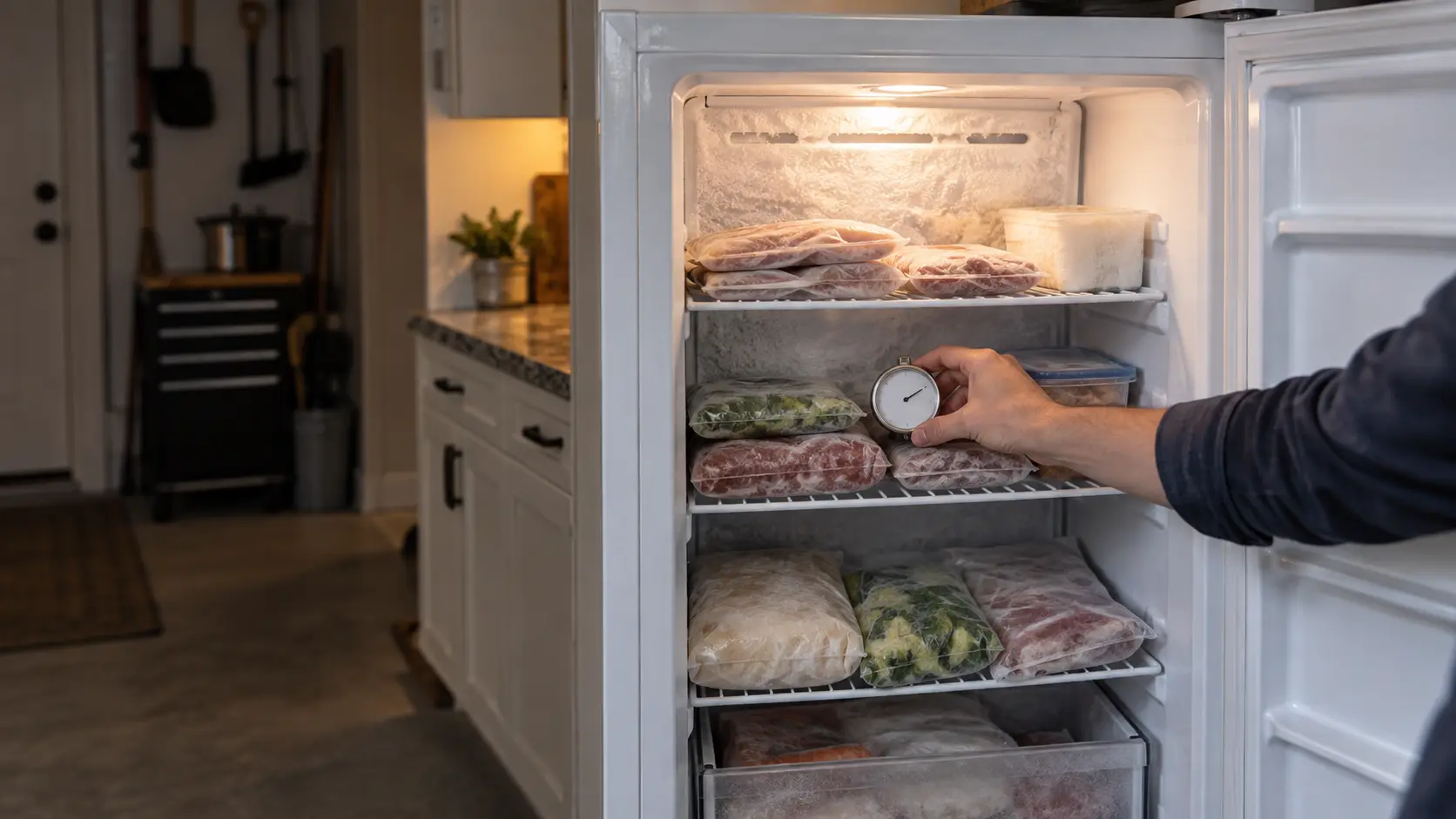
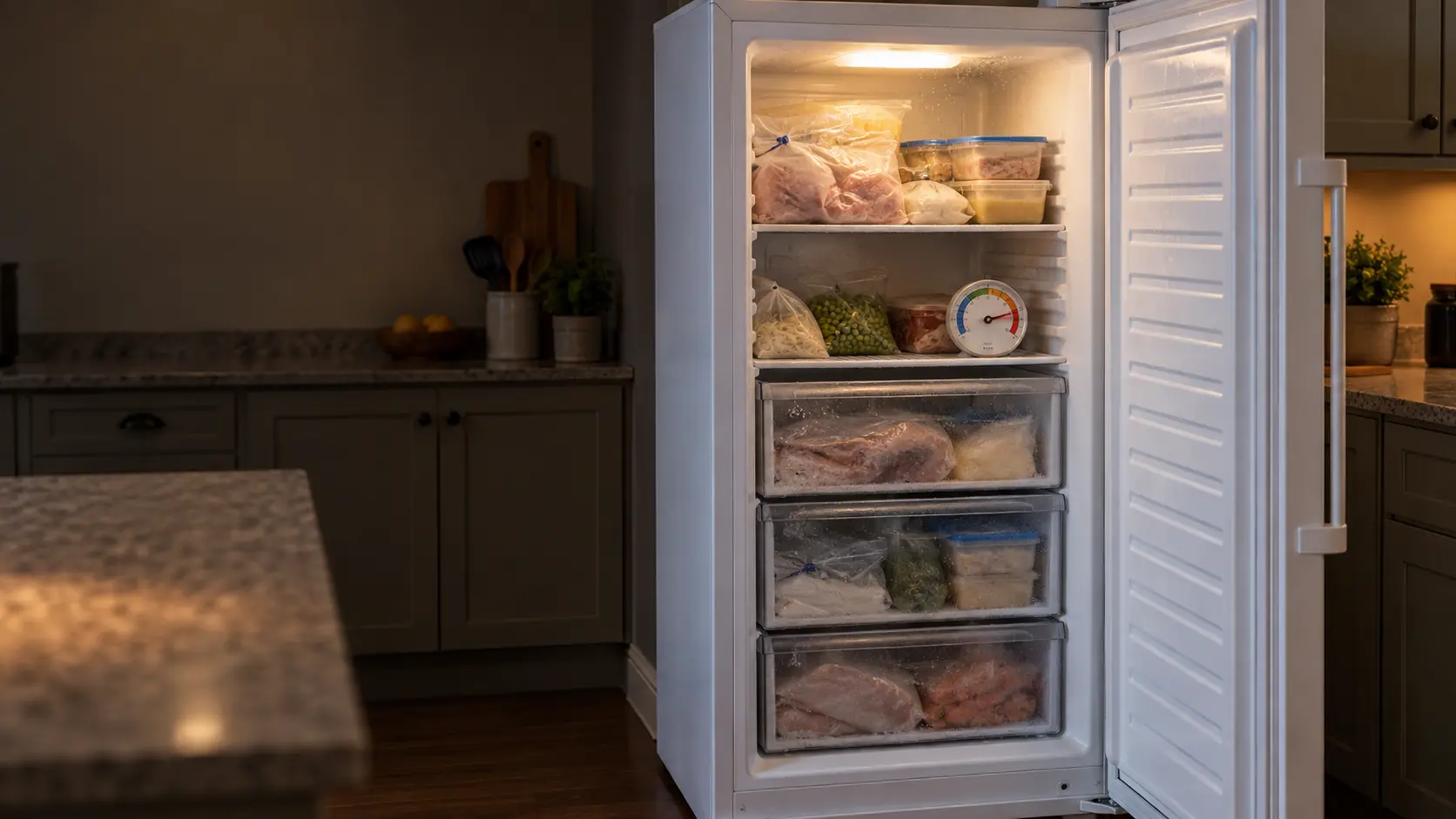
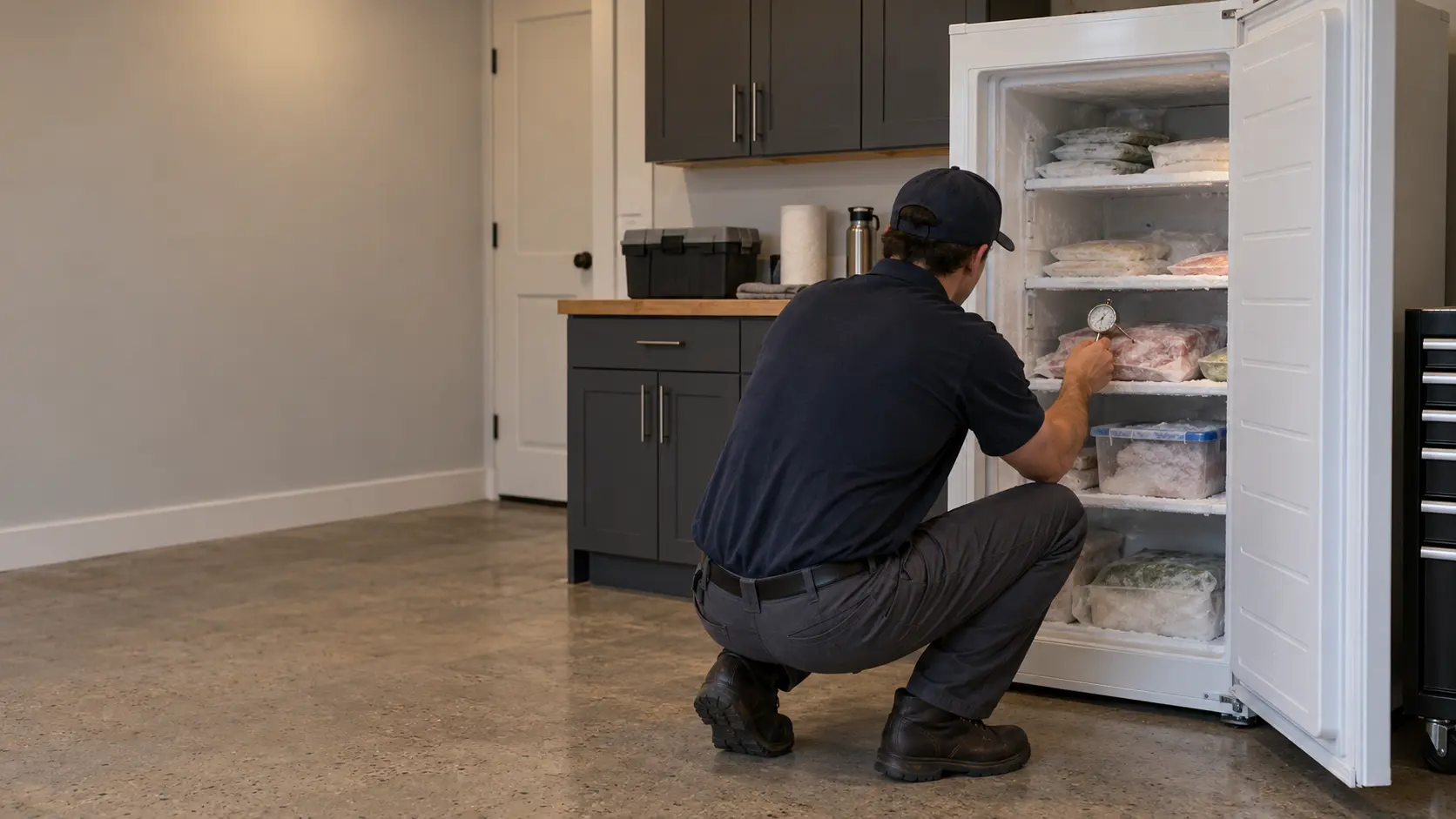
Confirm the problem with a number, not a hand
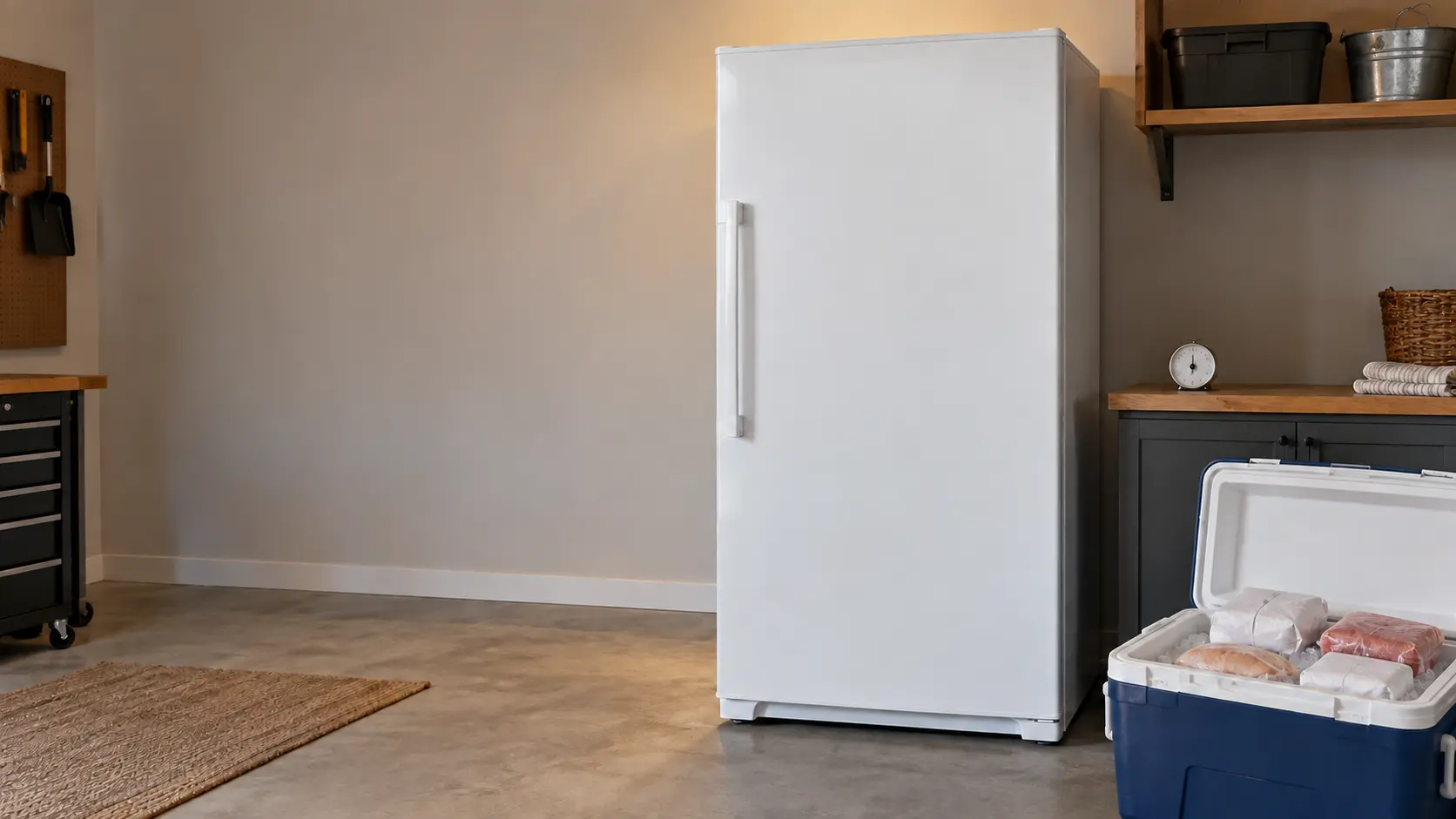
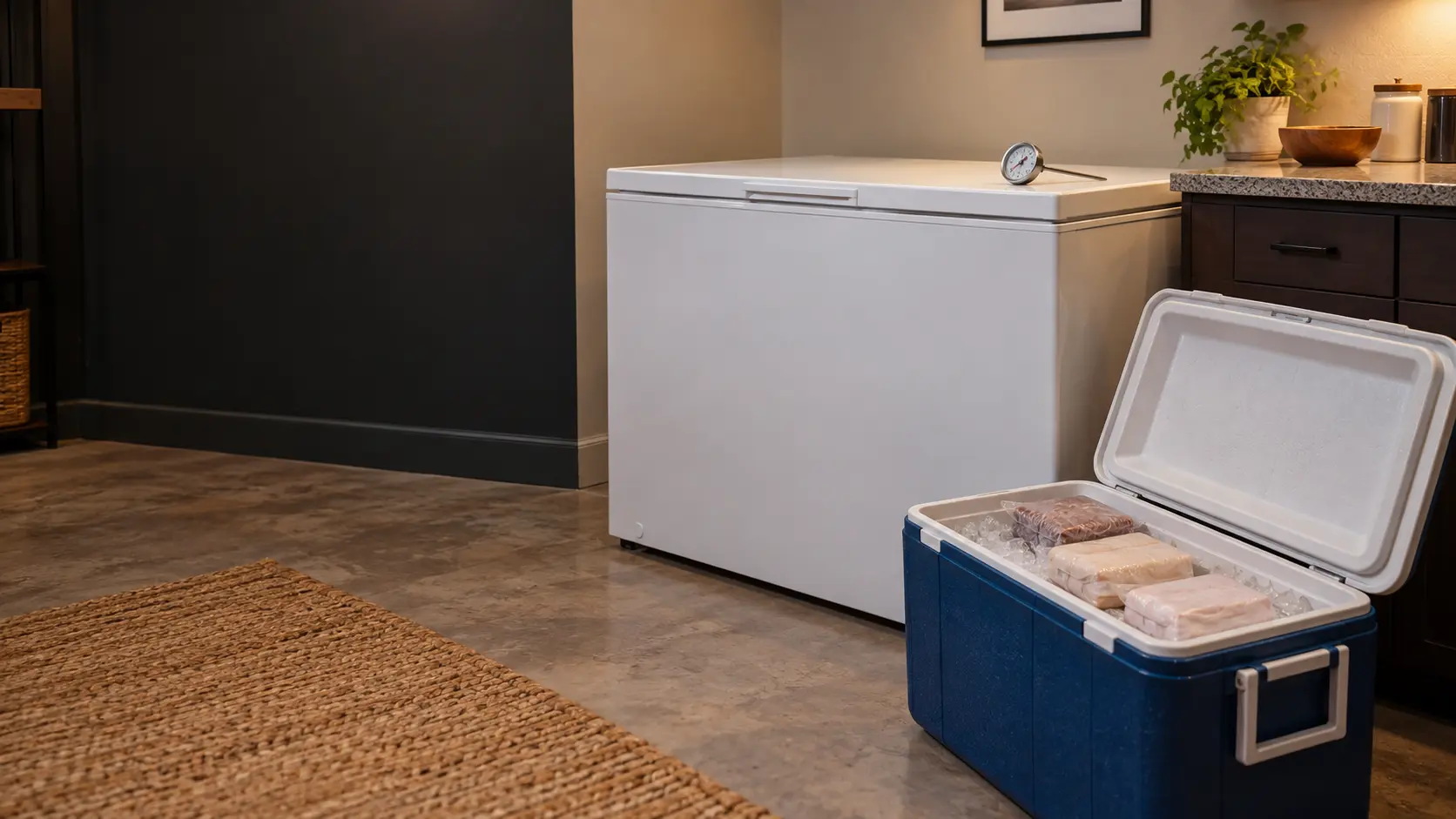
Soft ice cream and a tray of cubes gone cloudy are the usual first signs, yet a hand inside the cabinet cannot tell 10°F from 25°F. Tuck an appliance thermometer between frozen packages in the center of the cabinet, away from the walls and the door, and read it after the door or lid has stayed closed for several hours. FDA puts a working freezer at 0°F or below.
The reading splits the problem in two. Anything between about 5°F and 15°F is a freezer struggling, which usually points to air or heat. A reading near 32°F or above, with packages going soft, means cooling has nearly stopped, and the food decision comes before the diagnosis.
- Near 0°F with only one soft item: check that the item was not warm when it went in, or stacked against the door.
- Between 5°F and 15°F: look at the door or lid, the grille and the frost first.
- Above 25°F with everything softening: move the food, then work through the rest of this guide.
Source: FDA — Food and Water Safety During Power Outages and Floods — Freezer at or below 0°F; with the door kept shut, roughly 48 hours of cold when full and 24 when half full
Listen before you look: running, clicking or silent
Stand beside the cabinet in a quiet room for a full minute. What you hear, or do not hear, narrows the list faster than any inspection, because each sound belongs to a different part of the freezer.
No sound and no light
Start at the wall. A plug nudged halfway out by a mop or a storage bin, a tripped breaker, or a garage outlet with test and reset buttons that has cut out will all leave a freezer completely dead. GE's chest freezer manual points out that turning its dial to Off halts cooling but leaves the cabinet powered, which means an indicator light may shine above a freezer doing no work at all. Turn the dial back to the middle before suspecting anything else.
A click every few minutes and then quiet
A click from the lower back, a brief hum and then silence, repeating every few minutes, is the compressor trying to start and its protector shutting it off. Right after a power cut, a slow start is normal: GE attributes it to built-in overload protection. If the clicking goes on for an hour or more, the start relay, the overload or the compressor itself is involved, and all three are a technician's work.
A steady hum, yet the inside stays warm
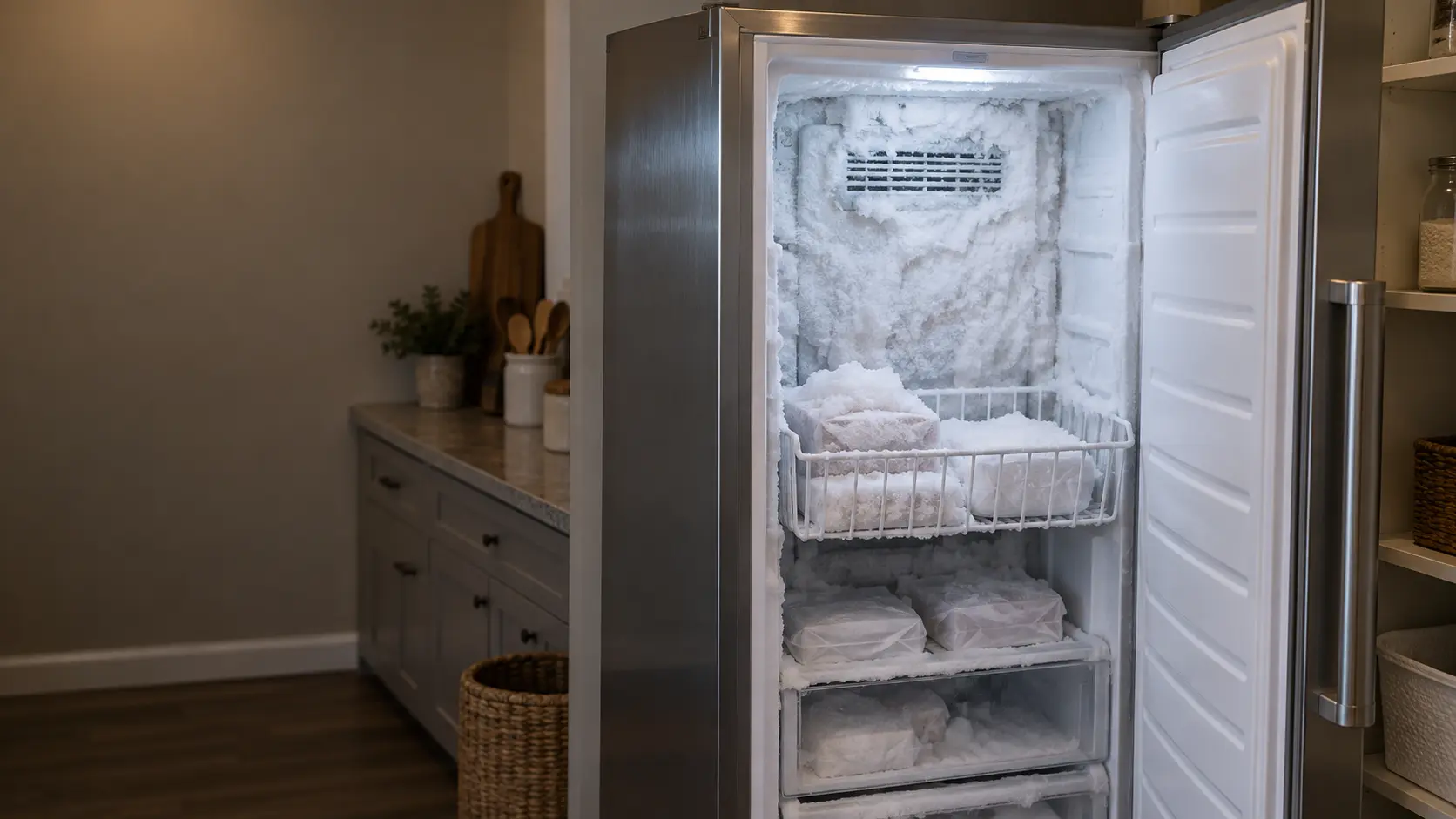
Here the compressor works, yet the chill never arrives at the shelves. On a frost-free upright, listen at the panel inside the back wall for the fan; many models pause it with the door open, so hold the door switch in with a finger while you listen. Silence behind the panel with a hum from below means the fan, or a coil so iced over that the fan cannot turn.
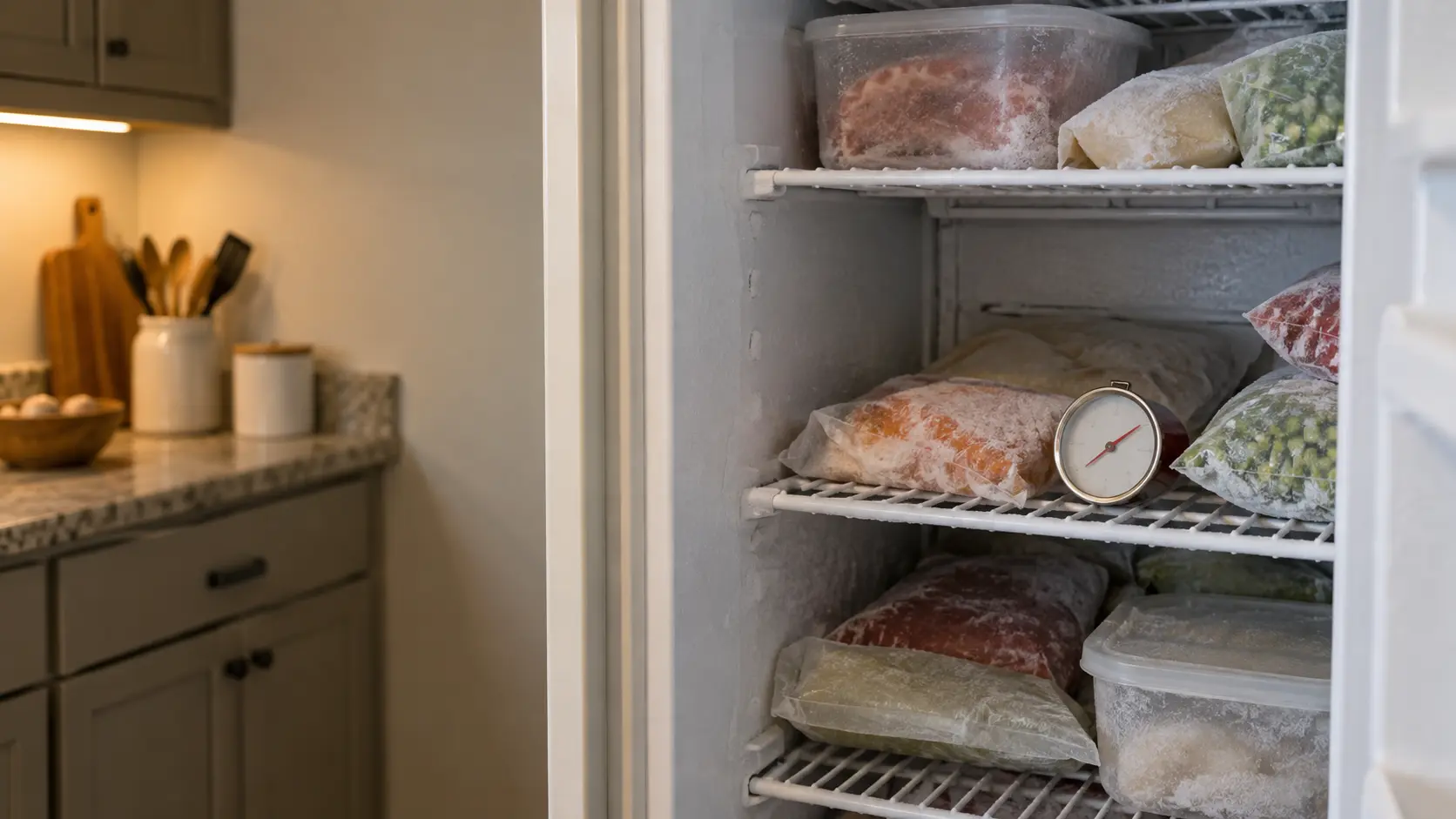
Frost as a record of what went wrong
Frost is a record of where warm, damp air has been getting in or where cold has been piling up without moving. On a frost-free upright, a white, even coat across the rear panel inside, or frost leaking out from the vents, says the timed melting cycle has quit and the coil behind the panel has choked on ice. The freezer then runs constantly while the shelves slowly warm.
On a manual-defrost chest, frost is normal until it gets thick. ENERGY STAR advises clearing it before it reaches about 1/4 inch, while GE treats 1/2 inch as the most its chests should carry before efficiency drops. Ice several inches deep near the rim, by contrast, points to a lid that is not closing on its gasket. Frost that appears only on the packages themselves, as fine crystals inside the wrap, means the temperature has been rising and falling.
Source: GE Appliances — Chest freezers owner's manual, FCM5 and FCM7 (49-1000422) — Off on the control stops cooling without cutting power; a slow start after being off is built-in overload protection; do not let more than 1/2 inch of frost build up; 3 inches of clearance at top, back and sides; a warm cabinet exterior is normal; install only where the room stays between 0°F and 110°F; ENERGY STAR — Freezers — Do not allow frost to build up more than one-quarter of an inch on a manual-defrost freezer
The heat has to leave the cabinet somewhere
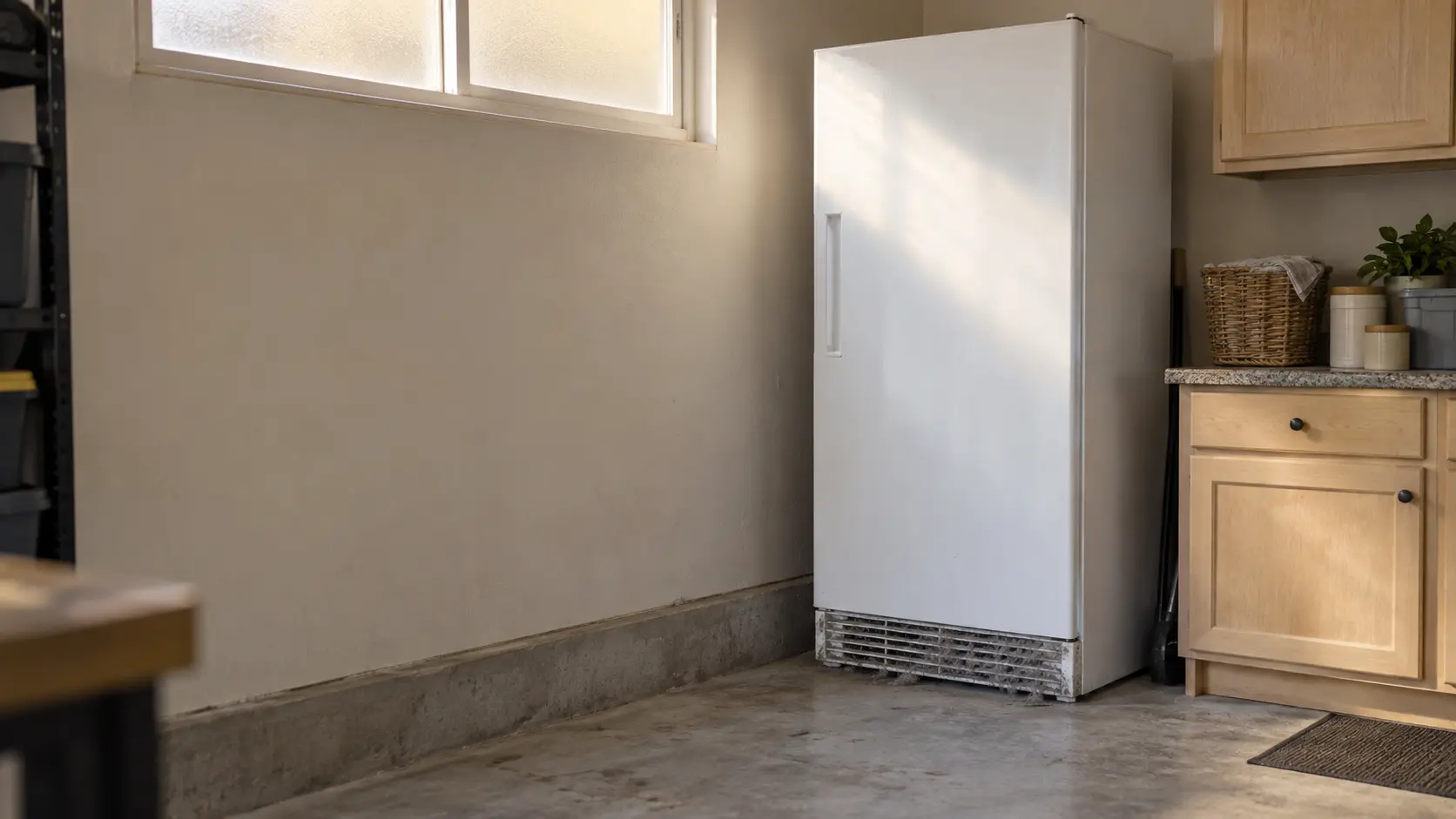
Every freezer pushes the heat it removes out into the room, and when that path is blocked the inside warms even with every part working. GE's chest and upright manuals both want a 3-inch gap above the cabinet and on its back and sides. A freezer boxed in by shelving, pushed flat against a wall or buried under laundry and coats will lose ground on the first hot day.
On many chests the heat leaves through tubing bonded to the inside of the outer skin, which is why GE calls a warm cabinet exterior normal. Uprights more often use a coil at the back or a fan-cooled coil behind a toe grille. Built-in freezer columns and undercounter freezer drawers breathe through the front grille alone, so lint and pet hair on that grille matter more on them than on anything else.
- Pull stored items at least a few inches away from the back and sides.
- Vacuum a front toe grille with a brush attachment, with the power off.
- Feel for warm air at the grille while the freezer runs; no air at all suggests the condenser fan.
- Note the room: a garage in summer or a closed utility closet adds hours of running.
Source: GE Appliances — Chest freezers owner's manual, FCM5 and FCM7 (49-1000422) — Off on the control stops cooling without cutting power; a slow start after being off is built-in overload protection; do not let more than 1/2 inch of frost build up; 3 inches of clearance at top, back and sides; a warm cabinet exterior is normal; install only where the room stays between 0°F and 110°F; GE Appliances — Upright no-frost freezers owner's manual, FUF14, FUF17 and FUF21 (49-60763) — An upright needs 4 hours to cool down completely after being disconnected; allow clearance for air circulation; slow starting after being off is built-in overload protection
The likely cause changes with the kind of freezer
The same symptom has different favorite causes on different designs, which is why the type matters before the brand. The pattern below reflects how each design is built and where each one keeps its moving parts.
Frost-free uprights and freezer columns
These put the longest chain of parts between compressor and food: a fan pushing air over a hidden coil, a heater that melts it clear, whatever tells that heater when to switch on, and a drain for the meltwater. A warm upright with a frosted rear panel usually traces to that defrost chain. Built-in columns add a front condenser and a fan behind the grille, so a dusty grille and a failed defrost are the two leading suspects.
Chest freezers and undercounter drawers
A manual-defrost chest is simple: a gasket, a thermostat, a starting relay and overload, and the sealed system are nearly the whole list. When a chest has power, clicks normally and still will not freeze, the thermostat or the sealed system is more likely than on any other type. Undercounter drawers work hard in a small box, often in a warm bar or kitchen island, so blocked front ventilation comes first.