When long running is the freezer doing its job
Modern freezers are built with heavy insulation and efficient compressors, and many of them run for long stretches at low power rather than in short, noisy bursts. Long running on its own is not a symptom. Running combined with a rising thermometer is.
GE's upright manual says a freezer runs continuously for its first several hours, and that one which has been disconnected needs about 4 hours to cool down completely. The same manual limits fresh food to about 3 pounds per cubic foot at a time, so a 20 cubic foot upright filled with 80 pounds of just-bought meat has hours of honest work ahead of it.
- A new freezer, or one restarted after cleaning or a move.
- A large load of unfrozen or room-temperature food.
- A hot day in a garage, porch closet or attic storage room.
- Frequent openings during a party, a cooking session or a child's search for popsicles.
Source: GE Appliances — Upright no-frost freezers owner's manual, FUF14, FUF17 and FUF21 (49-60763) — Runs continuously for the first several hours; 4 hours to cool down after being disconnected; freeze about 3 pounds of fresh food per cubic foot at a time; causes of operating too long include a door held open, frequent openings, a cold setting, tight clearances and a hot room; packages must not extend past the shelves; the front is raised so the door closes when opened halfway; outer walls can be 30°F warmer than the room; no need to turn the control colder when freezing food
How to tell real nonstop running from a busy day
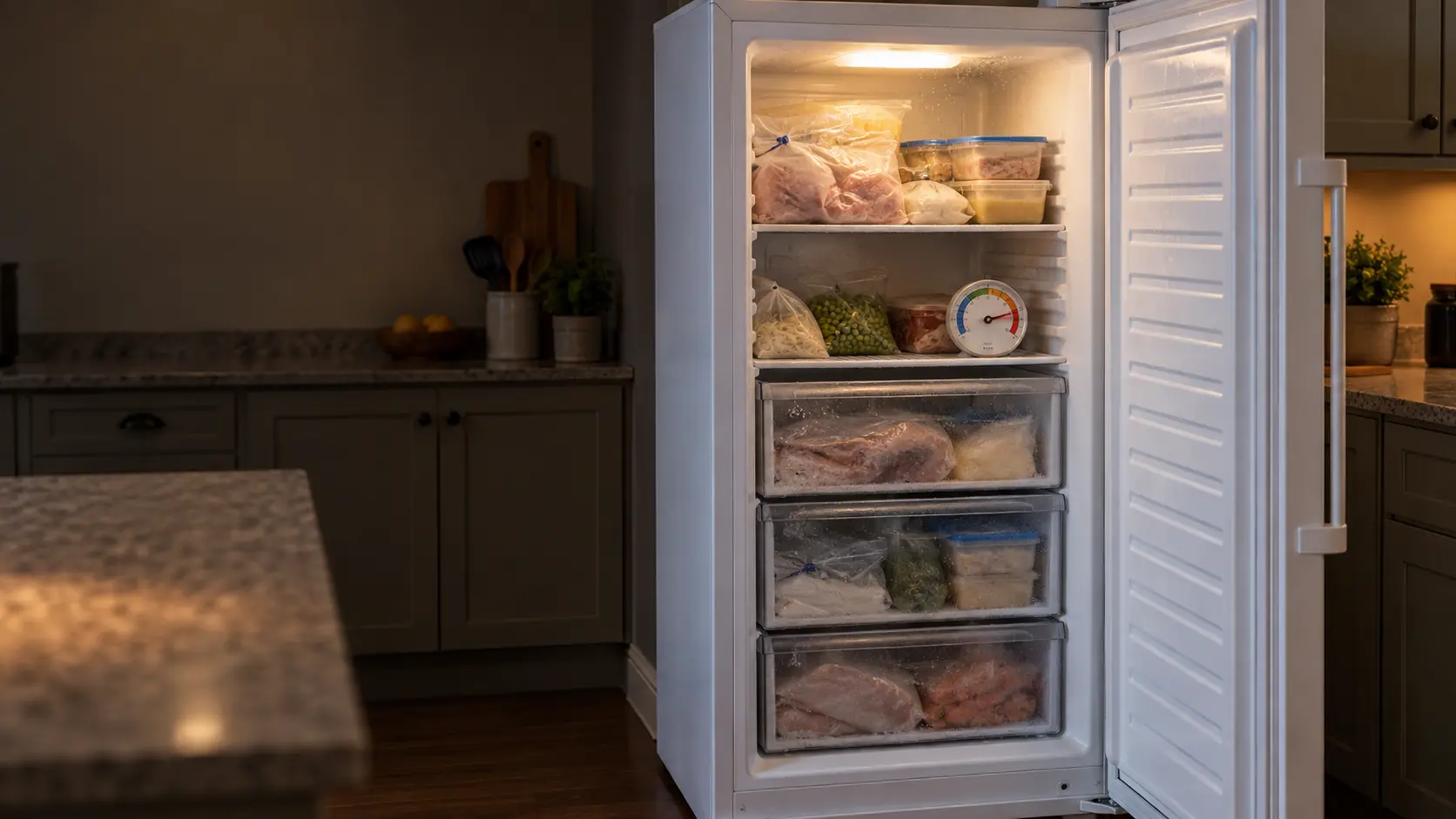
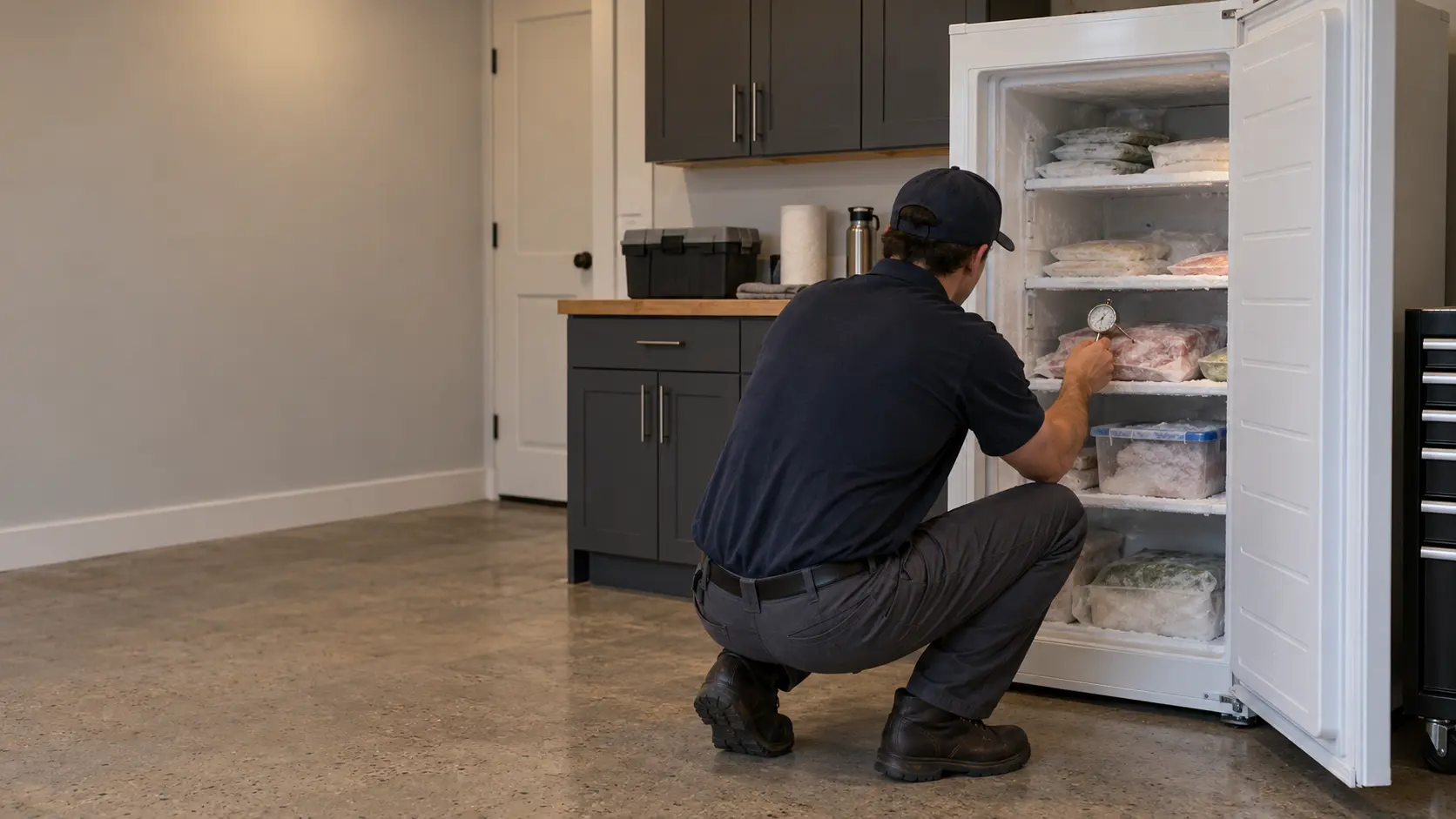
Listening for a few minutes proves nothing, because every freezer runs for a while each time it starts. Give it a fair test instead: no new food, the door or lid kept shut, and a thermometer in the middle of the load. Check twice, several hours apart, noting whether the compressor ever paused and what the thermometer read each time.
If it cycles off at least now and then and the thermometer holds near 0°F, the freezer is healthy and the room or the load explains the noise. If it never pauses in a whole day and the reading drifts above 5°F, something is either letting heat in or keeping heat from leaving.

Warm air getting in around the door or lid
The most common reason is also the cheapest to fix. GE's troubleshooting table lists a door left open, a package holding it open and long or frequent openings as the first causes of a freezer that operates too long, on both its chest and upright models.
A package or basket in the way
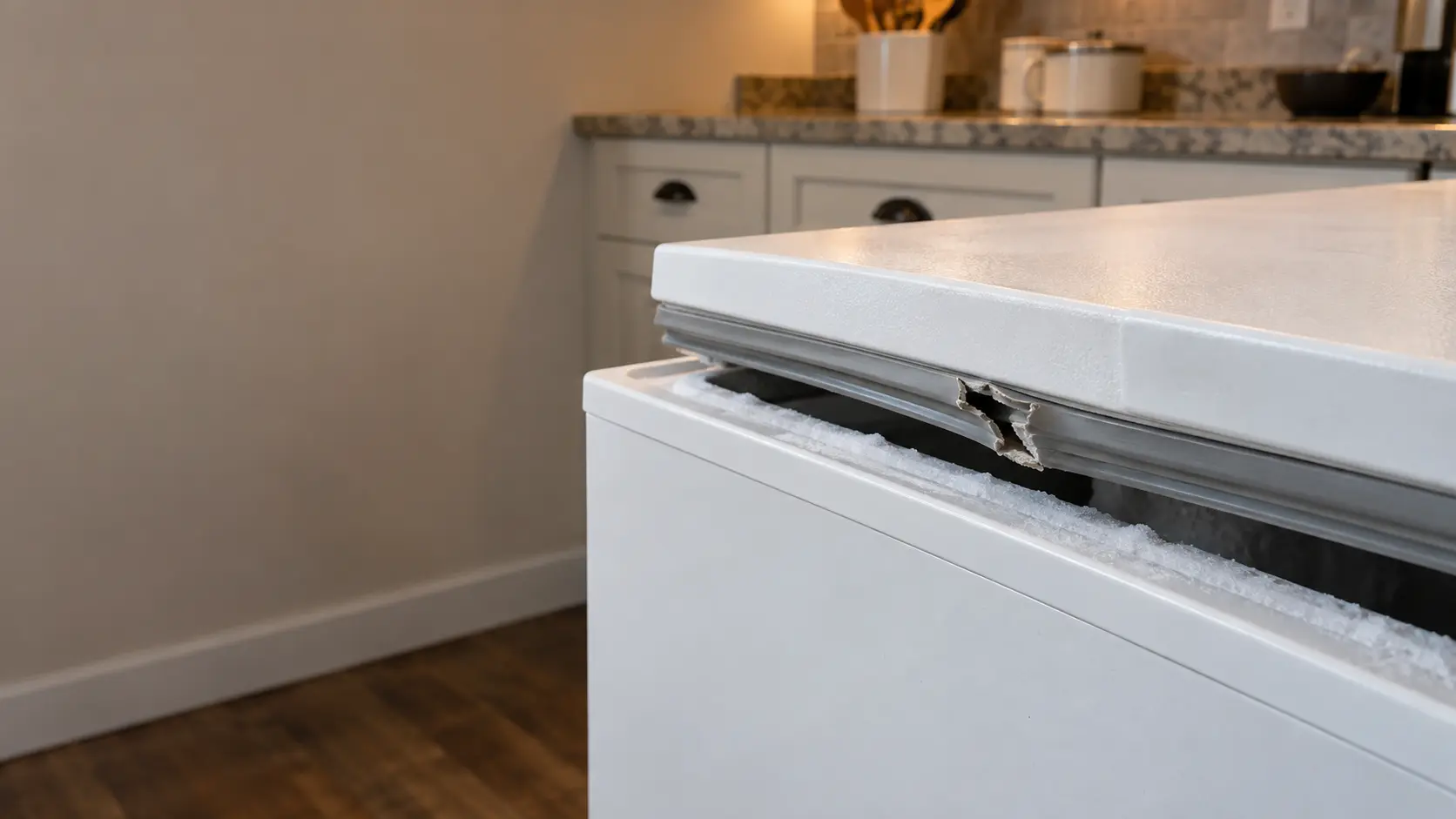
On an upright, a bag of vegetables sliding past the shelf edge or a door bin loaded too high keeps the door a fraction open. GE warns against letting packages stick out past the front of the shelves. On a chest, a box standing on end or a basket not seated on its ledge props the lid a quarter inch, which is enough to let humid air stream in all day.
A gasket that has flattened or torn
Run a flashlight around the closed door after dark from inside a dim room, or shine one inside and look from outside for light escaping at the edge. A split corner, a flattened section at the hinge side or a gasket stuck and folded back on itself will each show up. Frost gathered in one corner of the cabinet usually sits right behind the leak.
An upright door that does not swing shut
GE sets its uprights so the front stands slightly higher than the back, and a door opened about halfway should close on its own. If the freezer tilts forward, because a leg has turned or the floor is uneven, the door can stop short of sealing. Turning the front legs a few turns to raise the front usually fixes it.
Source: GE Appliances — Upright no-frost freezers owner's manual, FUF14, FUF17 and FUF21 (49-60763) — Runs continuously for the first several hours; 4 hours to cool down after being disconnected; freeze about 3 pounds of fresh food per cubic foot at a time; causes of operating too long include a door held open, frequent openings, a cold setting, tight clearances and a hot room; packages must not extend past the shelves; the front is raised so the door closes when opened halfway; outer walls can be 30°F warmer than the room; no need to turn the control colder when freezing food; GE Appliances — Chest freezers owner's manual, FCM5 and FCM7 (49-1000422) — Door or lid left open and frequent openings as causes; 3 inches of clearance at top, back and sides
Heat that cannot get out of the cabinet
A freezer removes heat from the food and dumps it through the condenser and the outer walls. On GE's uprights, side walls sitting up to 30°F above room temperature fall inside normal behavior. What is not normal is a condenser starved of air, and that shows up as long running long before the food warms.
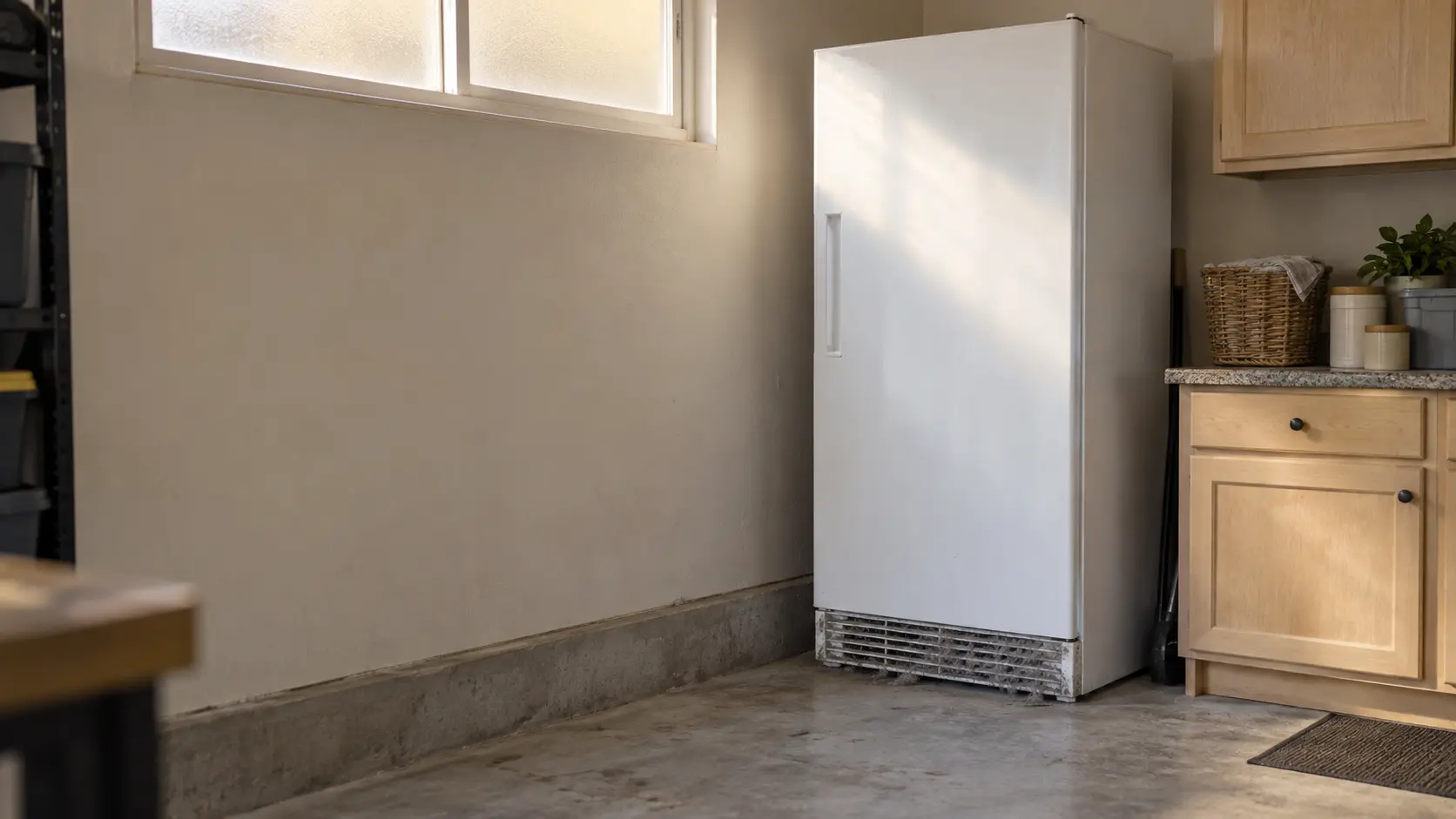
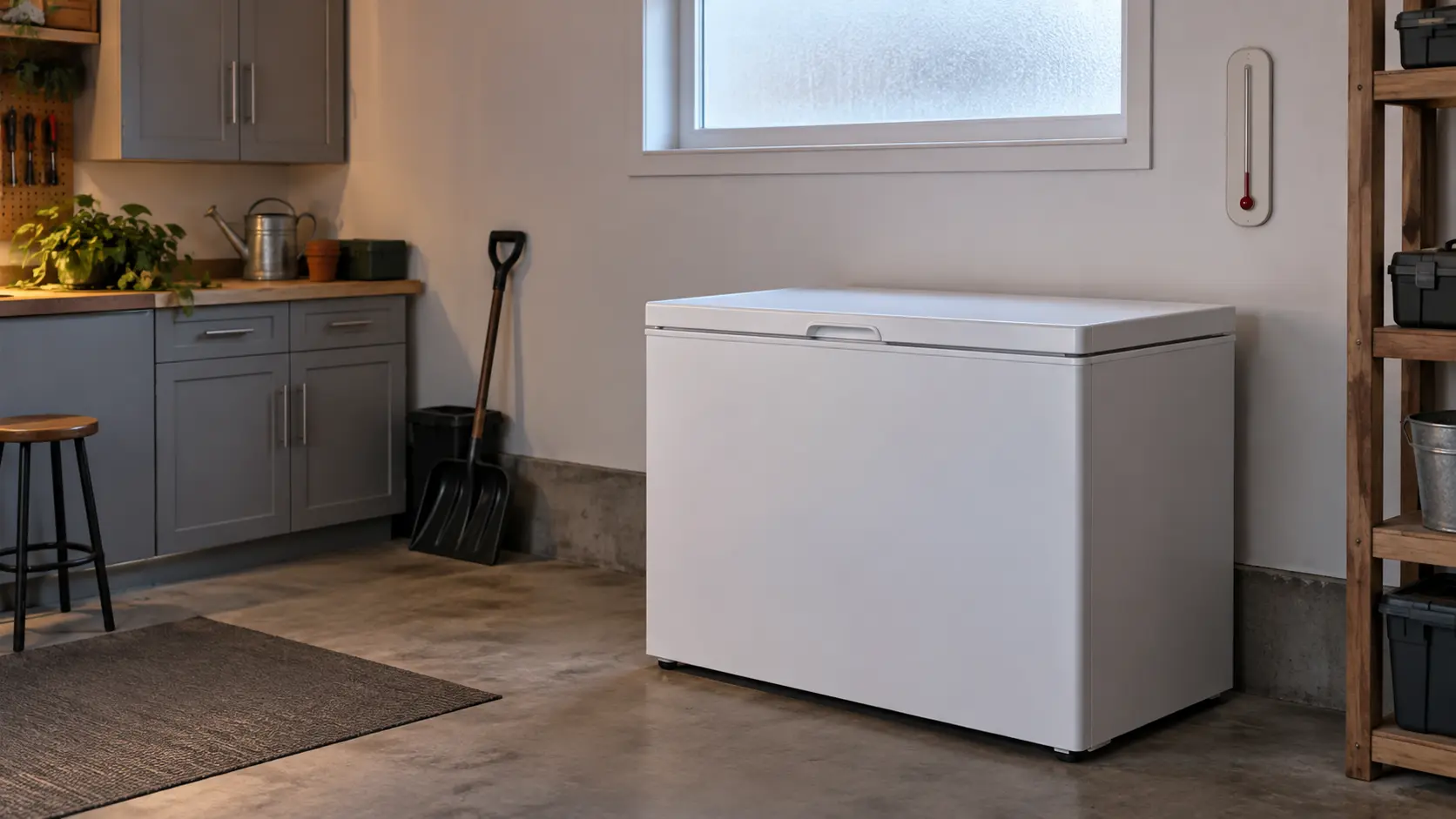
The GE manuals set 3 inches as the minimum on every side that is not the front. ENERGY STAR's own advice is a few inches of air behind the cabinet and, outside mild climates, a spot inside the house, a basement for example, rather than an outbuilding. A garage that reaches the high 90s in summer makes any freezer run longer, and a dead fan at the condenser turns long running into constant running.
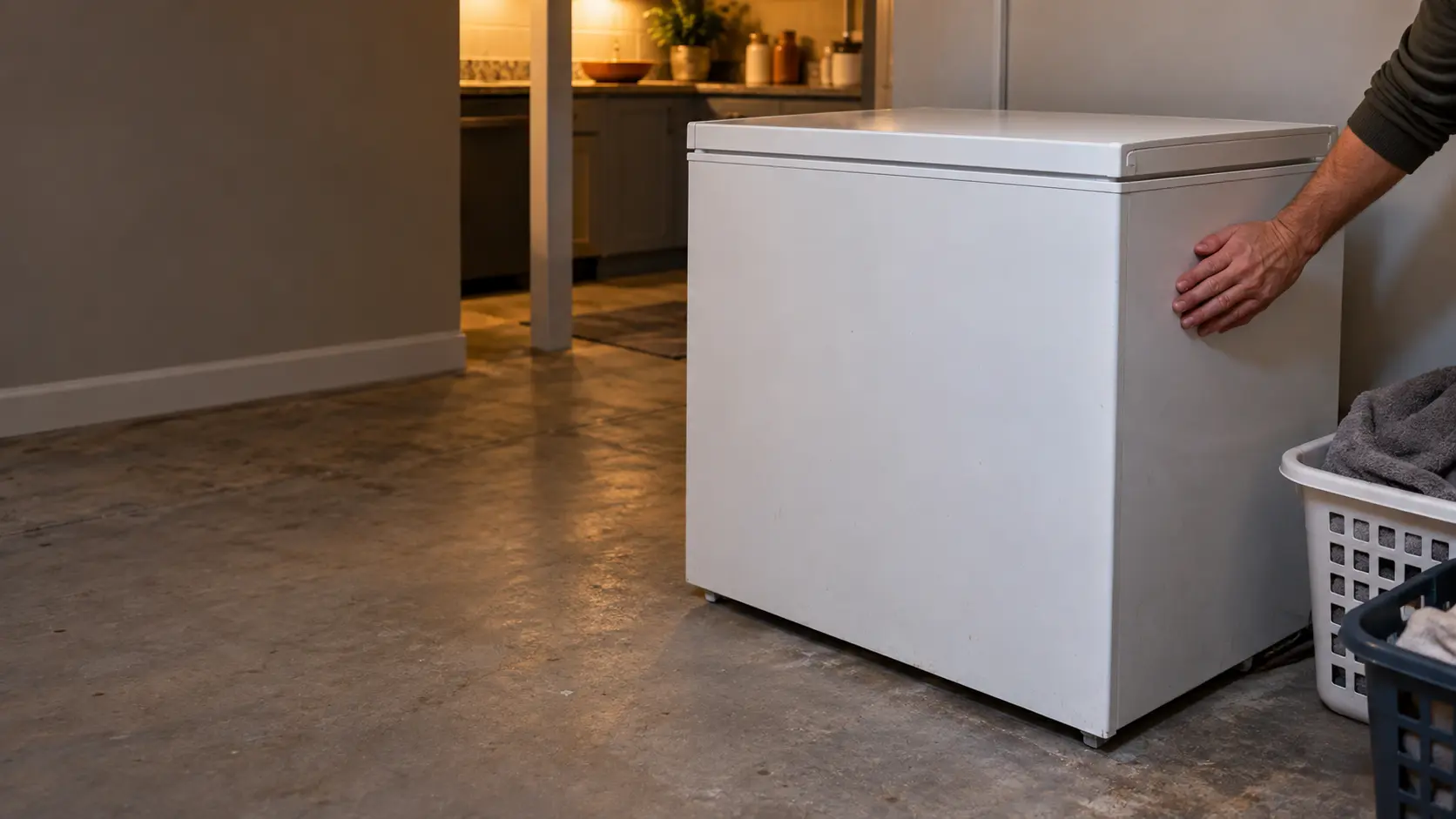
- Rest a hand on the side panels of a chest freezer: evenly warm is normal, cold on one side and hot on the other is worth mentioning to a technician.
- On an upright or column with a toe grille, feel for warm air coming out while it runs.
- Look for dust matting on any coil you can see at the back or behind the grille.
- Check that nothing is stored on top of a chest or leaning against the back of an upright.
Source: GE Appliances — Upright no-frost freezers owner's manual, FUF14, FUF17 and FUF21 (49-60763) — Runs continuously for the first several hours; 4 hours to cool down after being disconnected; freeze about 3 pounds of fresh food per cubic foot at a time; causes of operating too long include a door held open, frequent openings, a cold setting, tight clearances and a hot room; packages must not extend past the shelves; the front is raised so the door closes when opened halfway; outer walls can be 30°F warmer than the room; no need to turn the control colder when freezing food; GE Appliances — Chest freezers owner's manual, FCM5 and FCM7 (49-1000422) — Door or lid left open and frequent openings as causes; 3 inches of clearance at top, back and sides; ENERGY STAR — Freezers — Leave a few inches between the freezer and walls or cabinets; keep a freezer indoors, such as in a basement, unless the climate is mild; chest freezers usually lose less cold air than uprights
Problems inside: frost, fans and the sealed system
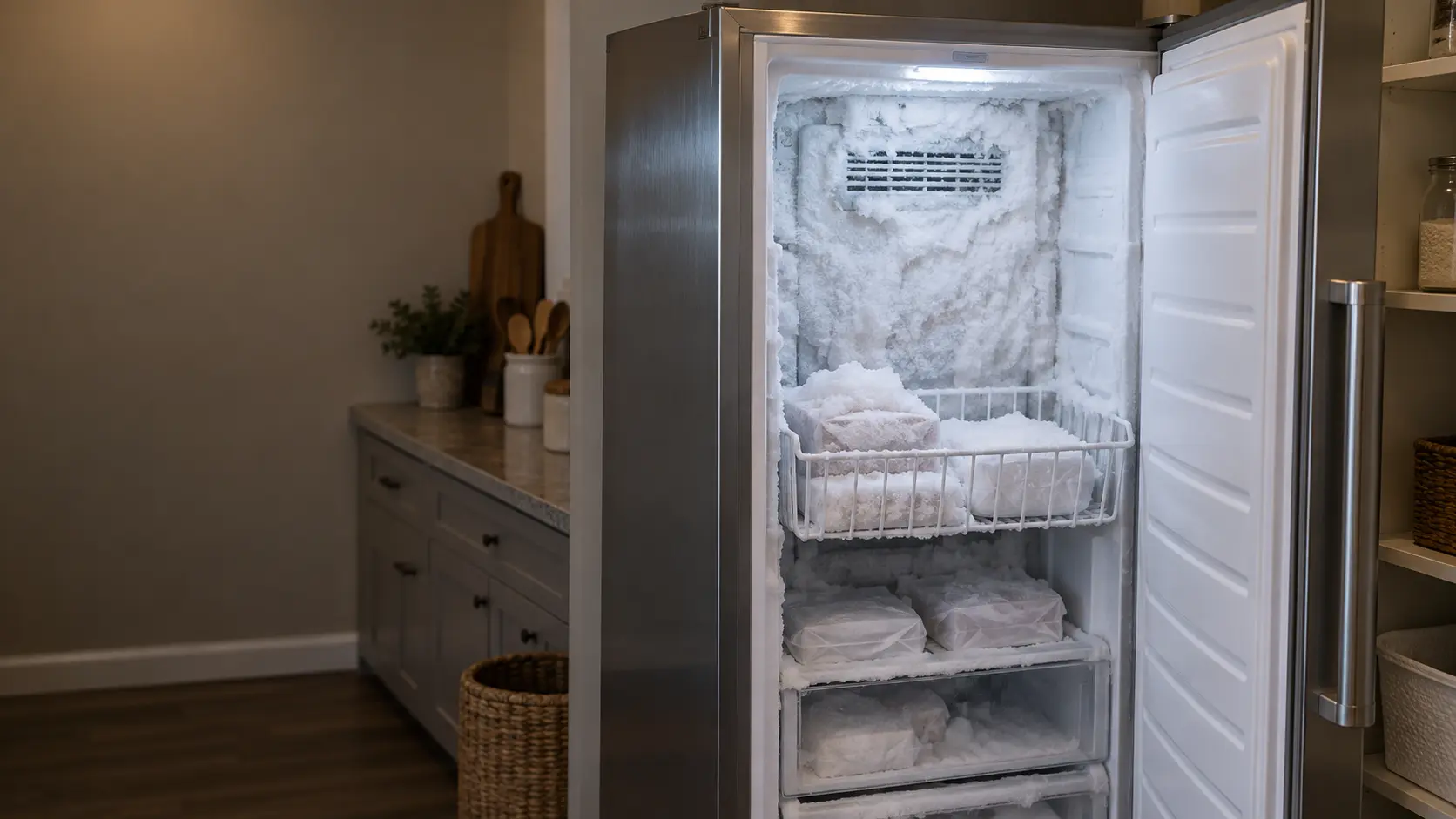
When the door seals and the condenser breathes, the remaining causes sit behind panels. A frost-free upright or column whose automatic defrost has stopped builds ice on the evaporator coil until air barely passes, so the compressor runs endlessly while the shelves warm. Frost on the inside back panel is the tell.
An evaporator fan that has stopped does the same thing without the frost: the coil gets very cold, but the air never reaches the food. On a chest freezer there is usually no inner fan at all, so continuous running with a warm cabinet and little new frost moves the suspicion to the thermostat or to a slow refrigerant leak. Both of those need a technician with gauges and the right tools.