First know which kind of freezer you own
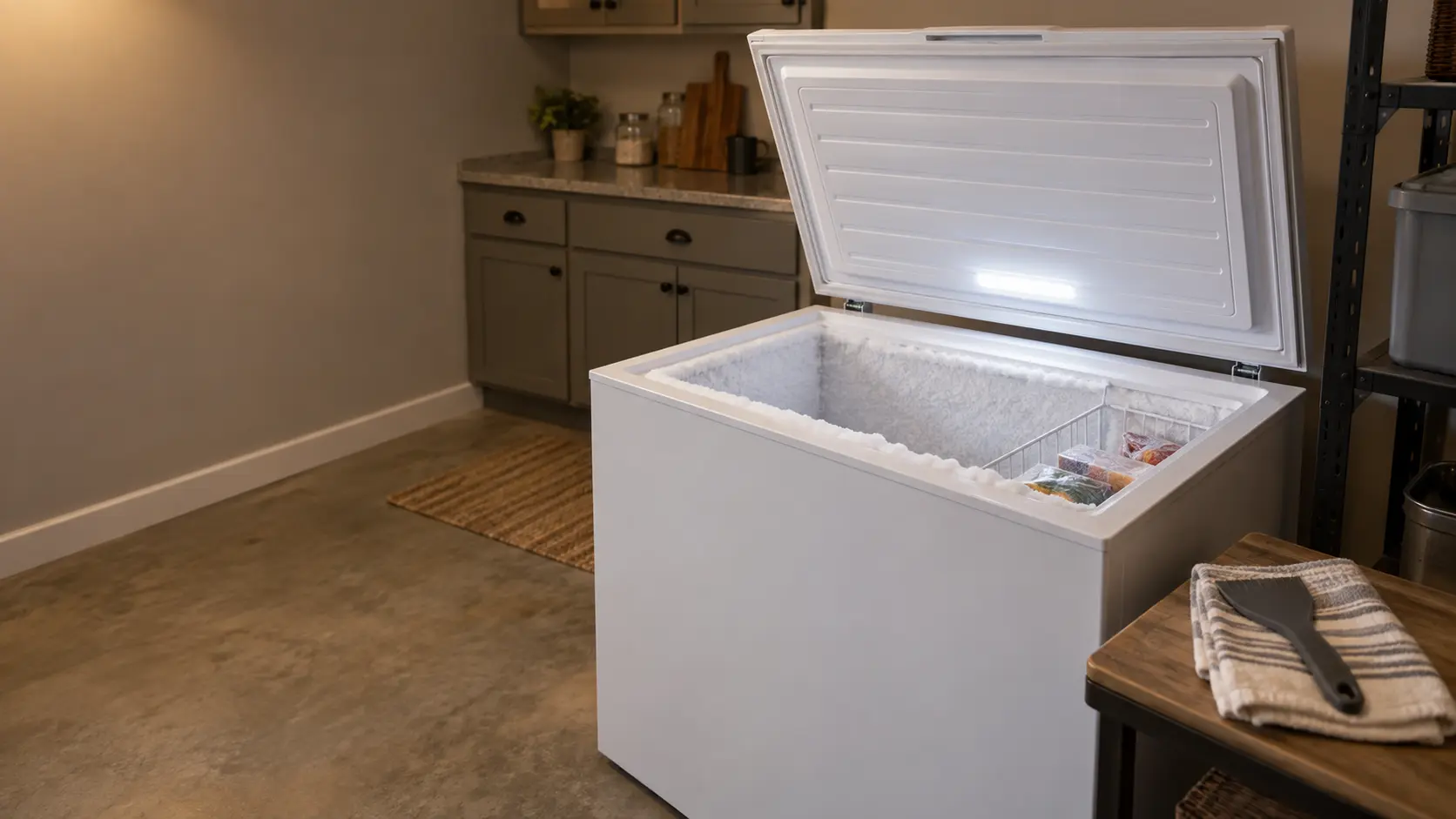
Freezers handle frost in one of two ways. A manual-defrost model, which covers nearly every chest freezer and a few compact uprights, has its cooling tubes inside the walls and lets frost collect on the liner until you remove it. ENERGY STAR says these use about half the energy of automatic-defrost models, as long as they are defrosted when needed.
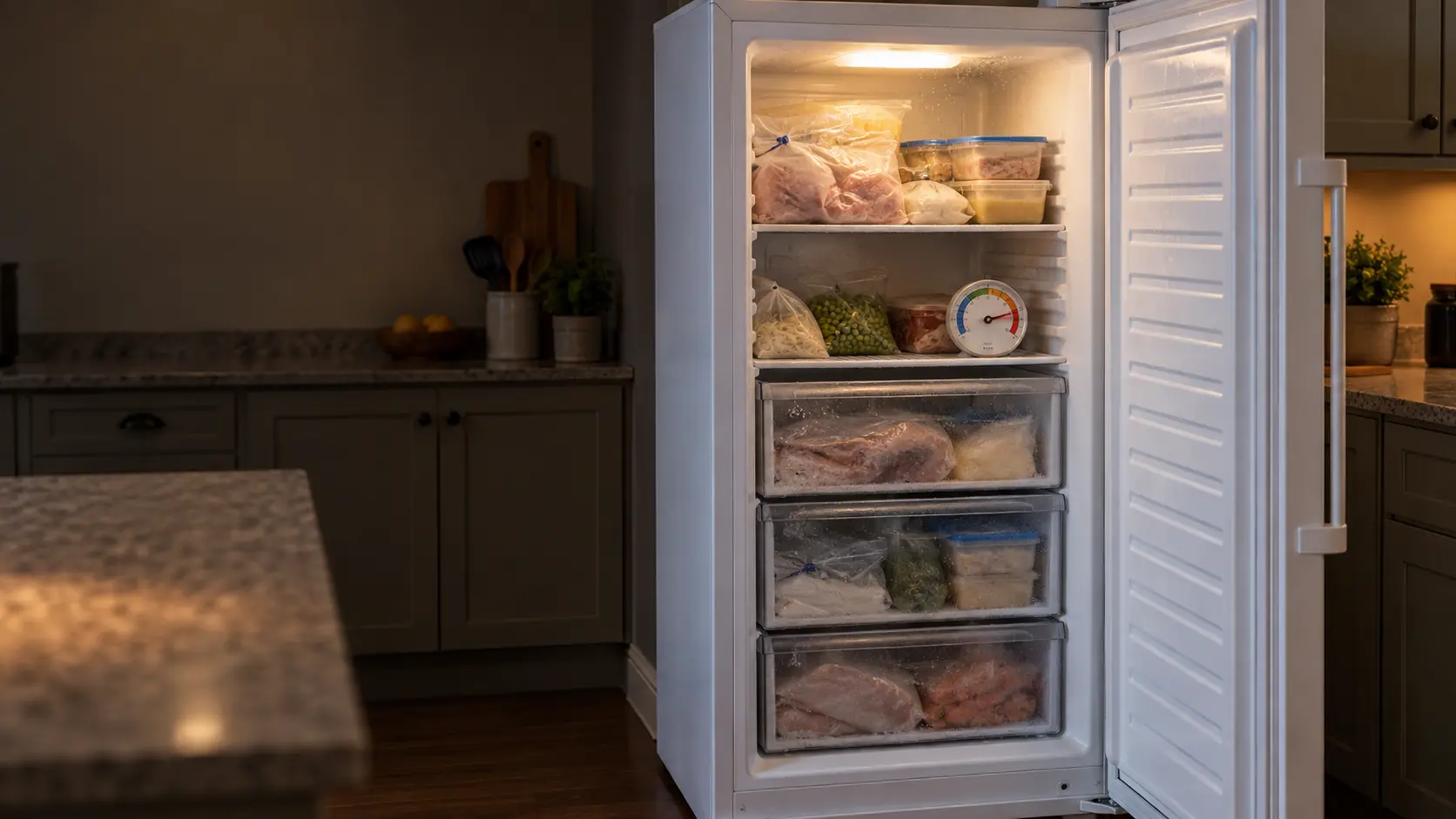
A frost-free model, which covers most full-size uprights, built-in freezer columns and many undercounter drawers, hides its coil behind a panel and melts the frost off it on a schedule with a small heater, sending the water down a drain. GE's upright manual tells owners they never have to defrost it. On these, visible frost inside the cabinet is a sign that something has changed.
Source: ENERGY STAR — Freezers — Manual-defrost freezers use half the energy of automatic-defrost models but must be defrosted periodically; do not let frost pass one-quarter of an inch; GE Appliances — Upright no-frost freezers owner's manual, FUF14, FUF17 and FUF21 (49-60763) — A no-frost upright never needs defrosting; a door that will not close is traced to the legs or a package; petroleum jelly on the hinge side of the gasket keeps it from sticking and bending
Reading the pattern before you scrape
Before scraping anything, take a photo and look at the pattern. Frost is a map of where the warm air came from, and the map disappears the moment it is cleared.
An even, thin coat on a chest's walls
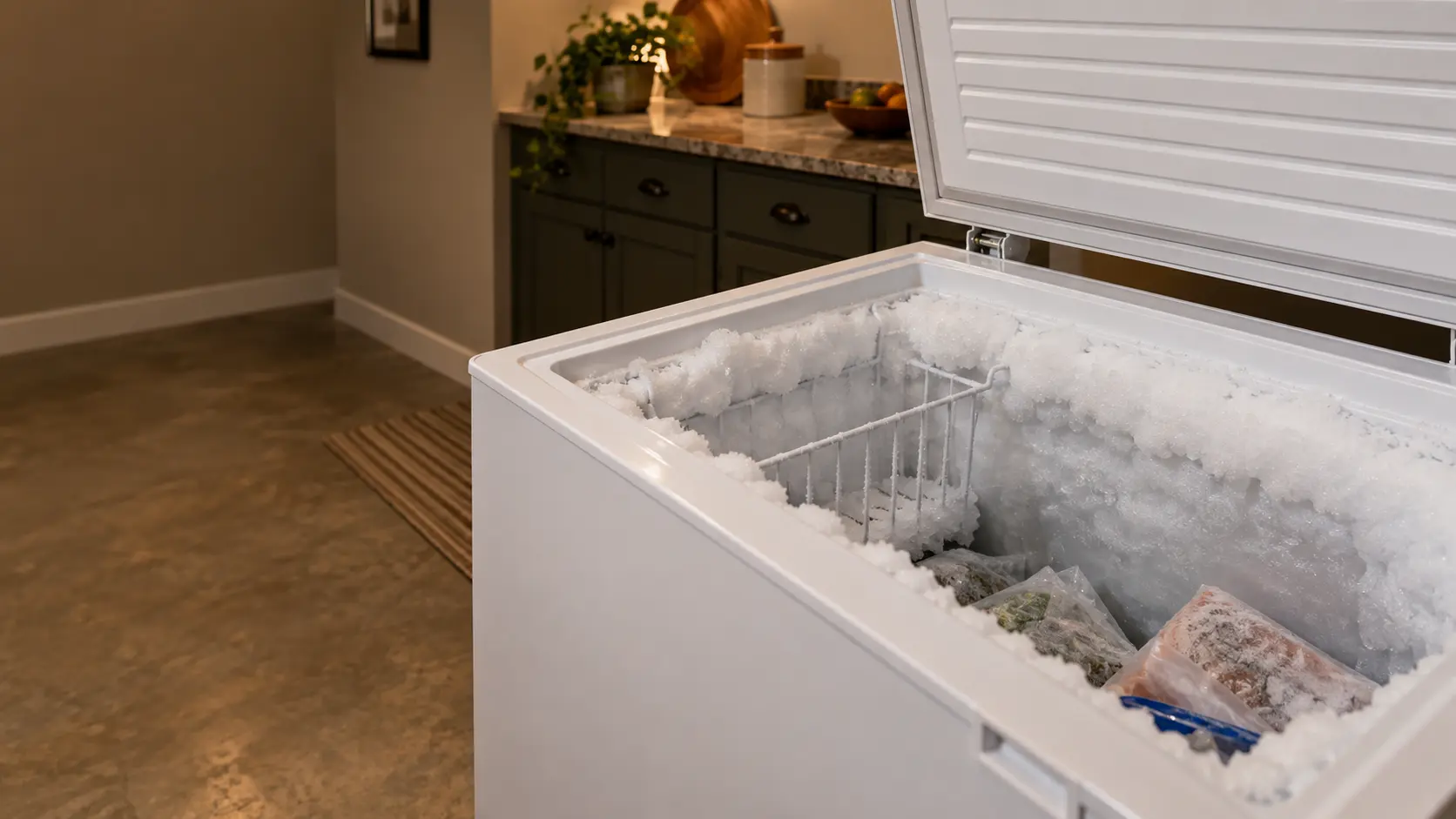
A soft layer spread evenly over the walls of a manual-defrost chest is the design working as intended. Every time the lid lifts, some room air falls in, and its moisture ends up on the liner. GE notes that ice also forms inside the lid insulation during openings and drips from the back of the lid while the freezer is being defrosted, which is normal.
A thick ridge along one edge or corner
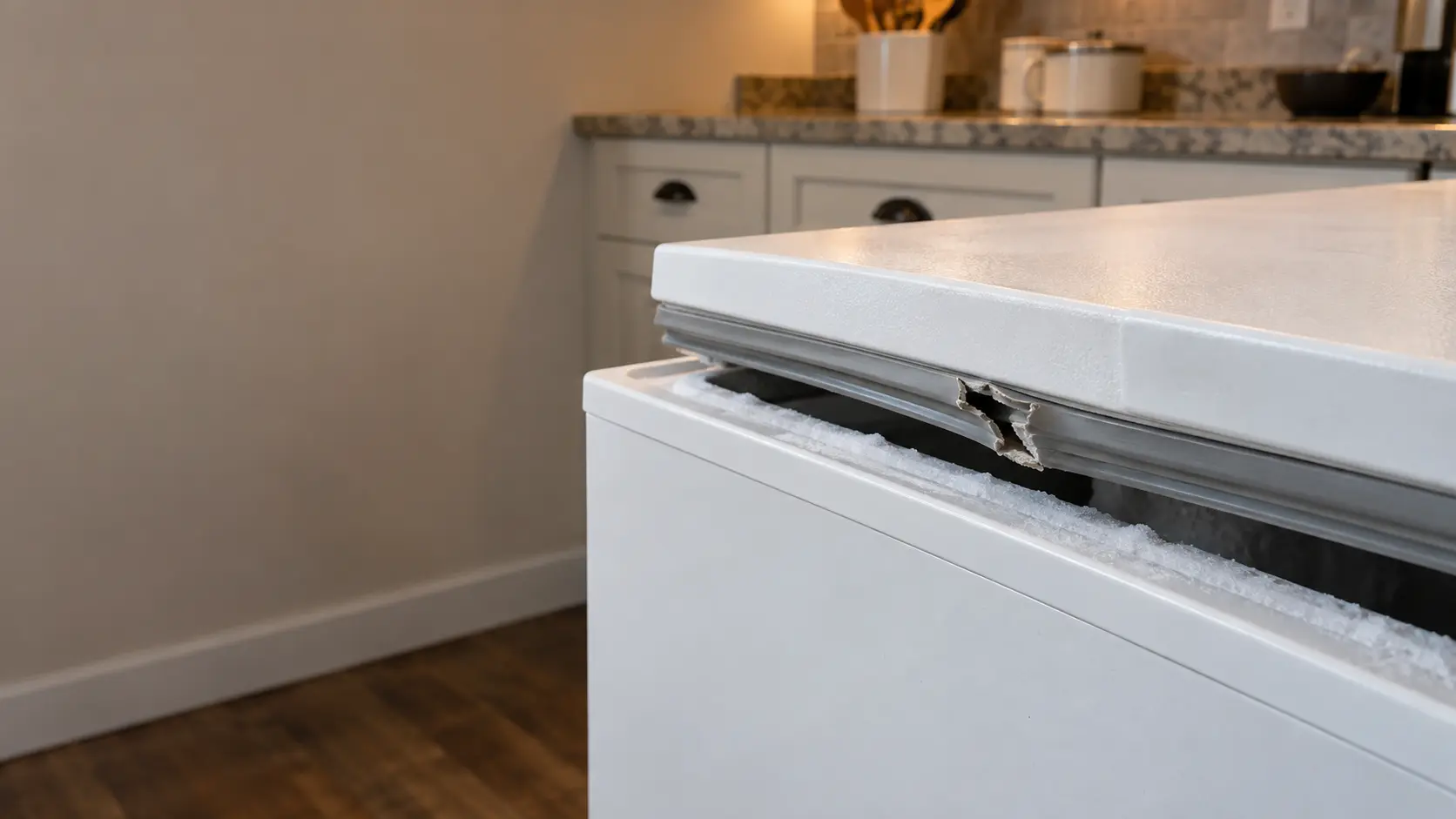
Frost piled high along the front rim of a chest, or in one upper corner of an upright, sits right behind a gap in the seal. The gasket may be torn, flattened, stiff with age or pulled away from its channel. On an upright, a door that no longer swings fully closed does the same, and GE traces that to the leveling legs or a package in the way.
White frost across the back panel of a frost-free model
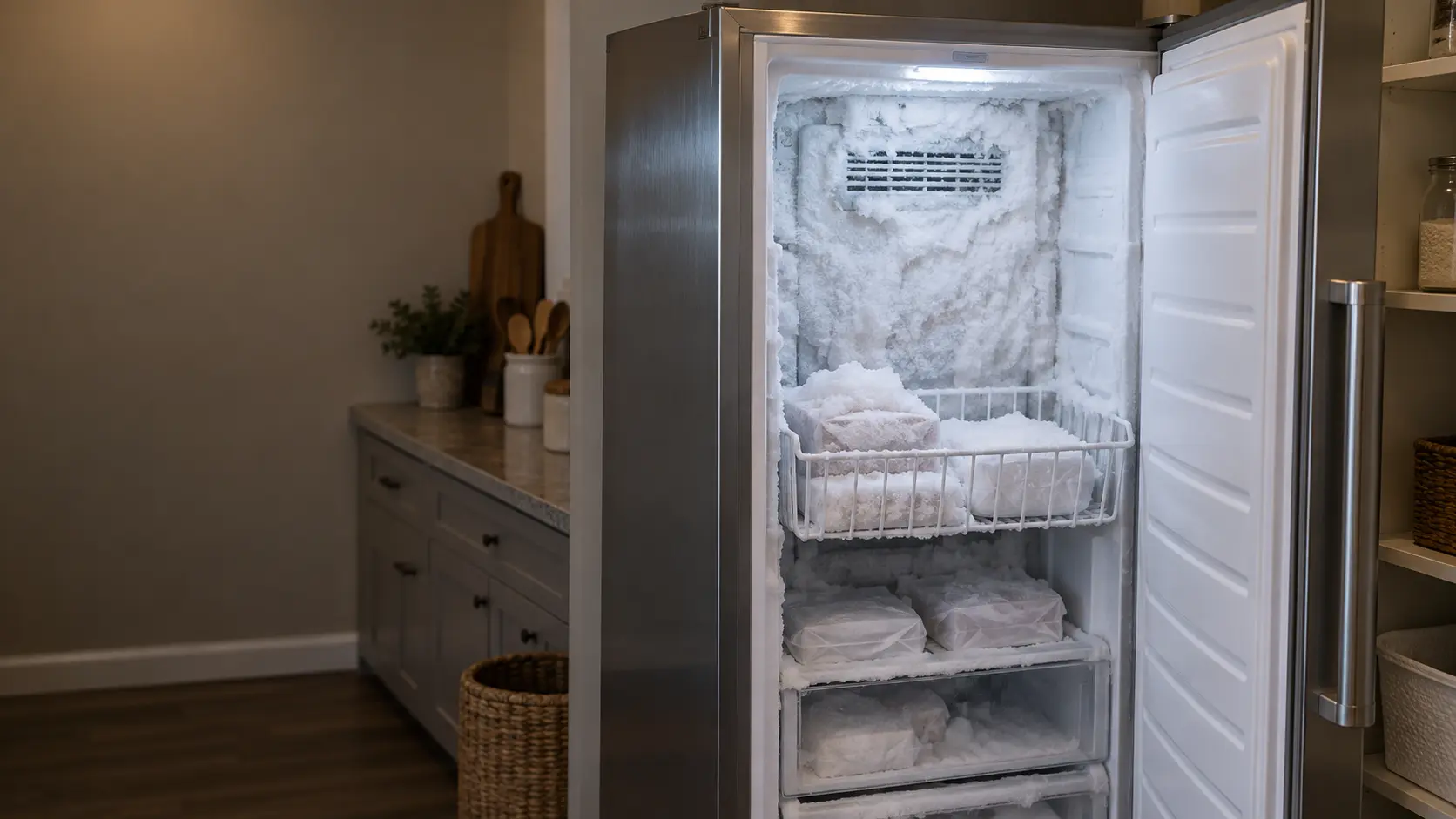
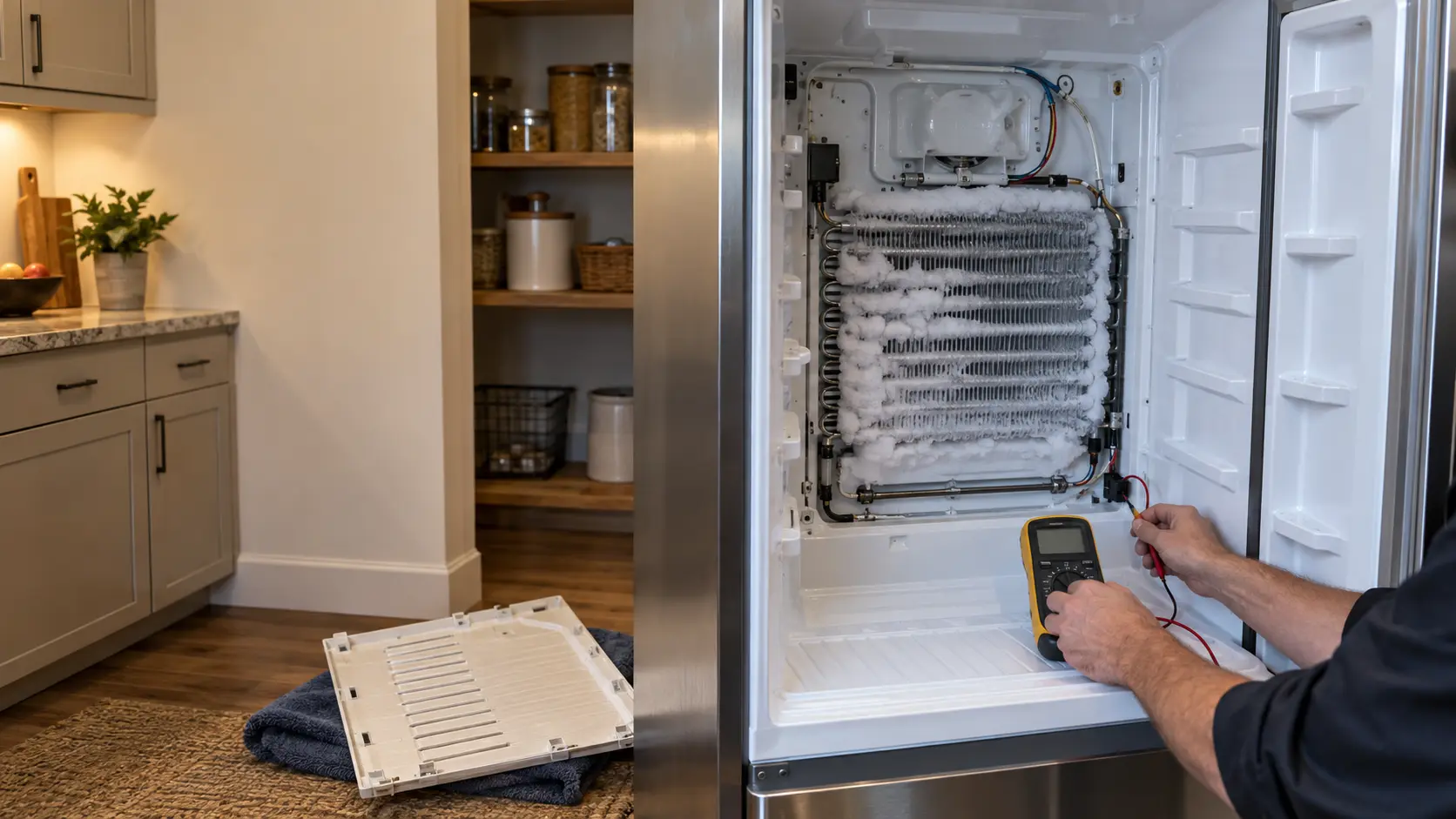
Ice spreading across the inside rear panel, or poking out of the air vents, usually means the defrost heater, its control or its temperature sensor has stopped melting the coil. The freezer keeps running while less and less air gets through, and the food slowly warms. This is a repair, not a cleaning job.
Crystals inside the packages
Fine frost inside a sealed bag and dry, pale patches on meat mean moisture has left the food and refrozen on the wrap. It happens with loose wrapping and with a temperature that rises and falls, for example in a freezer opened constantly or one that is losing its seal.

Why the frost has suddenly got worse
A chest that used to need clearing twice a year and now needs it every month has a new source of moisture. GE's troubleshooting table names the same three causes for excessive frost on its chest and upright models: a door or lid left open, openings that are too frequent or too long, and humid weather. Those account for most of it.
Humidity matters more than people expect. A basement freezer during a damp summer, or a garage freezer next to a door opened all day, collects frost several times faster than the same freezer in a dry, air-conditioned room. A dehumidifier in the basement often does more for frost than any repair.
- Count the openings on a normal day, including children and quick checks.
- Look for a basket, box or bag stopping the lid or door from closing on its seal.
- Check the gasket at the hinge side, where it folds most often.
- Notice whether the frost returned faster after a humid week or after a move.
Source: GE Appliances — Chest freezers owner's manual, FCM5 and FCM7 (49-1000422) — Defrosting needed about twice a year; do not let more than 1/2 inch accumulate; ice builds in the lid insulation and melts during defrosting; excessive frost from an open lid, frequent openings or humidity; scrape with plastic or wood only, never metal; no electrical device to defrost; remove the drain cap outside and the plug inside
Clearing it without damaging the freezer
The right way to clear frost from a manual-defrost freezer is slow and dull: power off, the food packed into coolers, pans of hot water to loosen the frost and a plastic or wooden scraper. GE warns that an ice pick or any metal or sharp tool can puncture the liner and the refrigerant tubing behind it, and many current freezers use flammable isobutane refrigerant. It also asks owners not to use any electrical device to defrost.
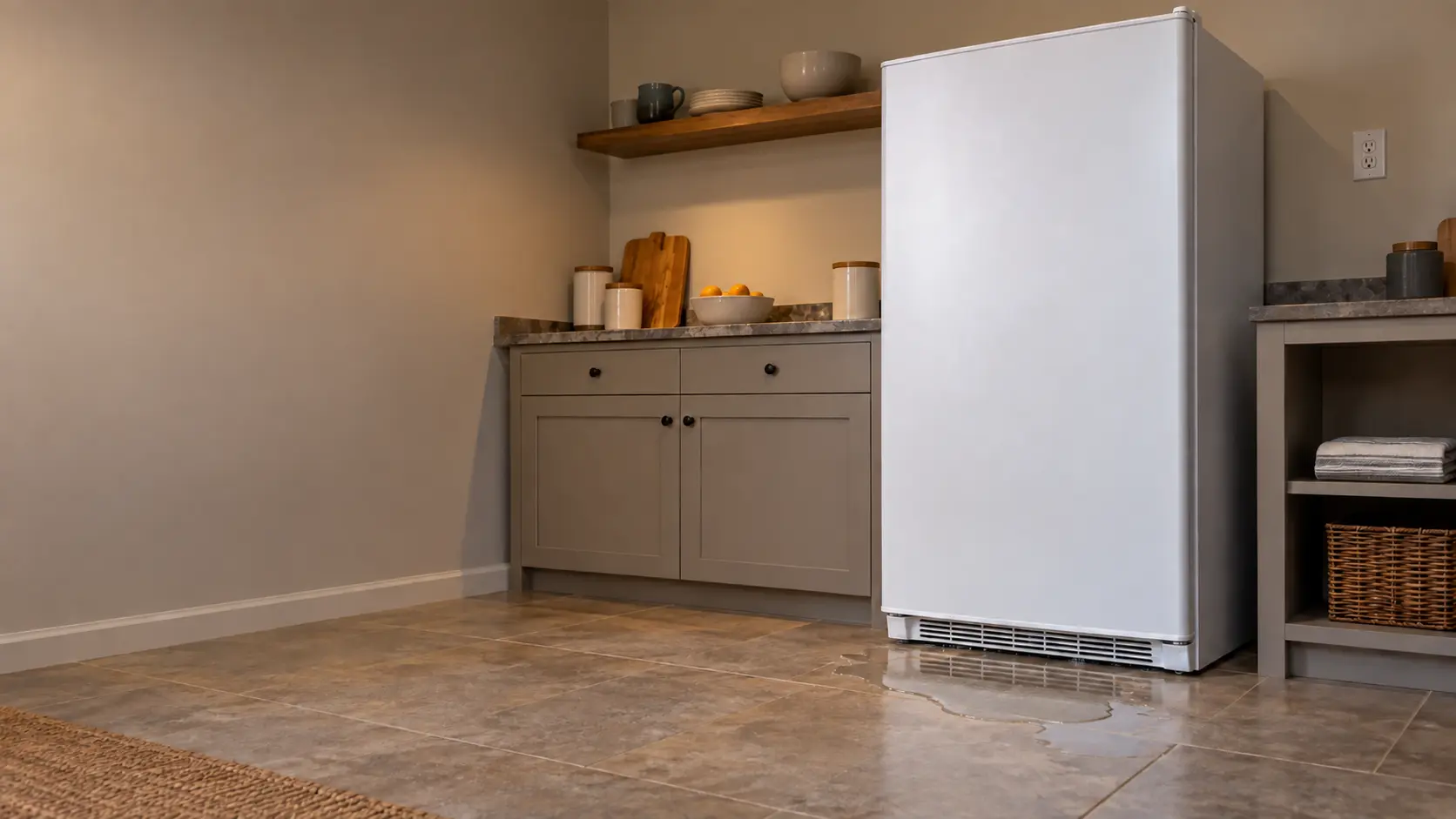
Chest freezers have a drain at the front: GE's instructions are to remove the outside cap and the inside plug before the frost melts, then refit both. A frost-free model should never need scraping; if yours does, clear enough to see the problem and book a defrost check. The step-by-step job is in the chest defrosting guide in the maintenance section.
Source: GE Appliances — Chest freezers owner's manual, FCM5 and FCM7 (49-1000422) — Defrosting needed about twice a year; do not let more than 1/2 inch accumulate; ice builds in the lid insulation and melts during defrosting; excessive frost from an open lid, frequent openings or humidity; scrape with plastic or wood only, never metal; no electrical device to defrost; remove the drain cap outside and the plug inside
Keeping frost down between defrosts
Most prevention is about keeping damp air out. A freezer that stays reasonably full loses less cold air per opening, and packages wrapped tightly give up less moisture. On an upright, GE suggests a thin layer of petroleum jelly on the hinge side of the gasket after cleaning, which helps it stay soft and seal instead of sticking and bending out of shape.
- Plan what to take out before lifting the lid.
- Let cooked food cool to room temperature, within the usual food-safety time, before freezing.
- Keep the freezer out of humid spots next to a clothes line, sink or open garage door.
- Wipe the gasket and the rim it seals against a few times a year.
Source: GE Appliances — Upright no-frost freezers owner's manual, FUF14, FUF17 and FUF21 (49-60763) — A no-frost upright never needs defrosting; a door that will not close is traced to the legs or a package; petroleum jelly on the hinge side of the gasket keeps it from sticking and bending